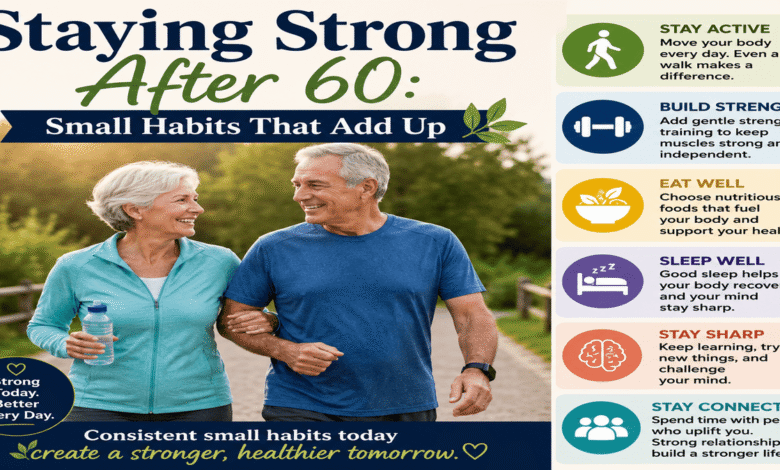
Staying Strong After 60: Small Habits That Add Up
Maintaining strength, energy, and independence after the age of 60 is a goal shared by many older adults. While aging naturally brings changes to the body, it does not mean that vitality and resilience must decline rapidly. In fact, small and consistent lifestyle habits can make a meaningful difference in overall health, mobility, and quality of life.
Rather than focusing on dramatic transformations, the most sustainable approach to aging well comes from building daily routines that support physical, mental, and emotional well being. These simple habits, when practiced regularly, can help individuals stay active, confident, and engaged in the years ahead.

Prioritizing Consistent Physical Activity
Regular movement is one of the most effective ways to maintain strength and flexibility after 60. Physical activity supports muscle tone, joint stability, and cardiovascular health, all of which are essential for preserving independence. The key is consistency rather than intensity.
Activities such as walking, swimming, and light strength training can provide lasting benefits without placing unnecessary strain on the body. Incorporating balance exercises also becomes increasingly important, as they help reduce the risk of falls and improve coordination. Even gentle stretching routines can enhance flexibility and make everyday movements more comfortable.
Establishing a routine that includes daily movement helps reinforce long term health. This does not require lengthy workouts or specialized equipment. Instead, small efforts such as taking regular walks or performing simple exercises at home can build a foundation for lasting strength.
Staying physically active also contributes to mental health by promoting a sense of accomplishment and improving mood. Over time, these positive effects create a cycle that encourages continued participation in healthy habits.
Nourishing the Body with Thoughtful Choices
Nutrition plays a significant role in maintaining strength and energy levels. As the body ages, it becomes more important to consume foods that provide essential nutrients without excess calories. A balanced diet supports muscle function, bone density, and overall vitality.
Protein is particularly important for preserving muscle mass, while calcium and vitamin D contribute to bone health. Including a variety of fruits, vegetables, whole grains, and lean proteins ensures that the body receives the necessary nutrients to function effectively. Hydration is equally critical, as adequate water intake supports digestion, circulation, and joint health.
Making thoughtful dietary choices does not require strict restrictions. Instead, it involves creating a balanced approach that emphasizes moderation and variety. Preparing meals at home, reading nutritional labels, and staying mindful of portion sizes can all support healthier eating habits.
Over time, these small adjustments help sustain energy and reduce the risk of chronic conditions, contributing to a stronger and more active lifestyle.
Supporting Mental and Emotional Well Being
Strength after 60 is not limited to physical health. Mental and emotional wellness are equally important in maintaining a fulfilling and balanced life. Engaging the mind through learning, creativity, and social interaction helps preserve cognitive function and supports emotional resilience.
Activities such as reading, puzzles, or exploring new hobbies can stimulate the brain and encourage curiosity. Social connections also play a crucial role. Regular interaction with friends, family, or community groups reduces feelings of isolation and provides a sense of belonging.
Many individuals find value in structured environments that encourage both social and mental engagement. Communities like Diamond Ridge offer opportunities for connection, activities, and support that promote overall well being. These environments can help individuals stay mentally active while building meaningful relationships.
Emotional health also benefits from practices such as mindfulness, reflection, or relaxation techniques. Taking time to manage stress and focus on positive experiences contributes to a stronger and more balanced outlook on life.
Establishing Healthy Daily Routines
Consistency is a key factor in maintaining strength over time. Establishing daily routines helps create structure and reinforces habits that support health and well being. Simple practices such as waking up at the same time each day, scheduling regular meals, and setting aside time for activity can make a lasting impact.
Routines also help individuals stay organized and reduce the likelihood of neglecting important aspects of self care. For example, setting reminders for medication, appointments, or exercise ensures that these tasks remain a priority.
Sleep is another essential component of a healthy routine. Adequate rest allows the body to recover and supports cognitive function. Creating a calming bedtime routine and maintaining a consistent sleep schedule can improve the quality of rest and overall energy levels.
Over time, these routines become second nature, making it easier to maintain a healthy lifestyle without feeling overwhelmed.
Embracing Preventive Health and Regular Checkups
Preventive care is an important aspect of staying strong after 60. Regular medical checkups allow individuals to monitor their health, detect potential issues early, and make informed decisions about their care. This proactive approach supports long term well being and reduces the risk of complications.
Routine screenings, vaccinations, and discussions with healthcare providers help ensure that any changes in health are addressed promptly. Staying informed about personal health conditions also empowers individuals to take an active role in their care.
In addition to medical visits, preventive health includes listening to the body and responding to its needs. Recognizing signs of fatigue, discomfort, or stress allows individuals to make adjustments that support recovery and prevent further strain.
By prioritizing preventive care, individuals can maintain greater control over their health and continue to live actively and independently.
Conclusion
Remaining strong and resilient after 60 is achievable through a combination of small, consistent habits that support the body and mind. Physical activity, balanced nutrition, emotional well being, structured routines, and preventive care all contribute to a healthier and more fulfilling lifestyle.
These habits do not require major changes or complex plans. Instead, they rely on everyday choices that build over time. By focusing on steady progress and maintaining a positive outlook, individuals can continue to enjoy independence, vitality, and meaningful experiences well into later life.
You may also read
Puzutask Com: A Complete Guide to Understanding Puzutask Com and Its Growing Online Presence