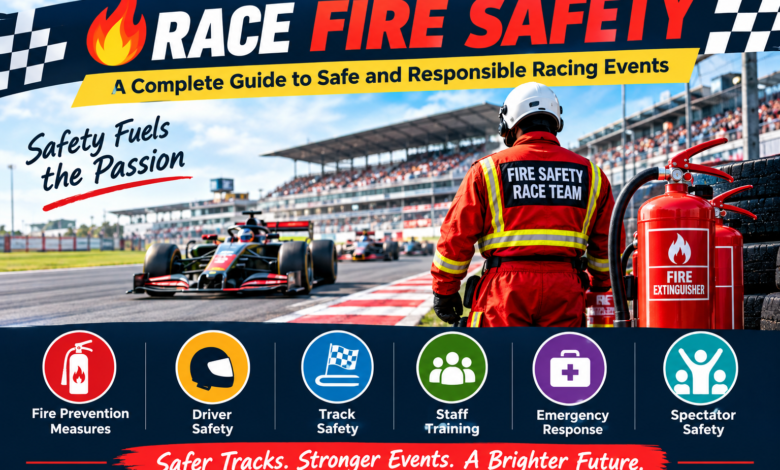
Race Fire Safety: A Complete Guide to Safe and Responsible Racing Events
**race fire safety ** is one of the most important parts of planning and managing a safe racing event. Whether it’s a large motorsport competition, a horse race, a cycling event, or a community running race, fire risks can appear in many different places. Vehicles, fuel, electrical equipment, generators, cooking stations, temporary structures, and large crowds can all create safety challenges.
A successful race isn’t only about competition, speed, or entertainment. It’s also about making sure drivers, riders, staff, volunteers, emergency teams, and spectators can enjoy the event in a safe environment. Good planning can reduce hazards before they become emergencies.


Fire safety should begin long before the gates open. Organizers need to understand the venue, identify possible hazards, prepare emergency procedures, train workers, inspect equipment, and make sure emergency services can reach the site quickly. When these steps are handled properly, everyone can respond more confidently if something goes wrong.
The good news is that many fire emergencies can be prevented through sensible preparation. A strong safety culture, clear communication, suitable equipment, and regular inspections can make a major difference. That’s why **race fire safety ** should be treated as a central part of every responsible racing event.
Understanding Race Fire Safety
**race fire safety ** means the complete system of precautions and emergency procedures used to prevent, detect, control, and respond to fires during a race or sporting event.
The exact safety requirements depend on the type of race. A motorsport event may involve large quantities of fuel and vehicles, while a running event may have greater concerns around temporary electrical equipment, food vendors, generators, and crowded areas.
Even though the hazards differ, the basic principles remain similar:
- Identify possible sources of fire.
- Reduce unnecessary risks.
- Keep emergency routes clear.
- Provide appropriate safety equipment.
- Train staff and volunteers.
- Establish reliable communication.
- Prepare evacuation procedures.
- Coordinate with emergency services.
- Inspect the venue before and during the event.
- Review safety performance afterward.
A well-designed plan should be practical. During an emergency, people don’t have time to search through a complicated manual. Instructions need to be simple, clear, and easy to follow.
Why Race Fire Safety Is So Important
Race venues can become extremely busy. Spectators may arrive at the same time, competitors may be moving between different areas, and workers may be handling equipment under pressure.
In motorsport, additional hazards can include fuel, lubricants, hot vehicle parts, damaged batteries, electrical systems, and mechanical failures. Even when an event is carefully managed, accidents can happen.
Fire can spread quickly if combustible materials are stored close to an ignition source. Smoke can also reduce visibility and make evacuation more difficult.
Strong **race fire safety ** planning helps organizers prepare for these possibilities rather than simply hoping they never occur.
A good plan protects more than property. It helps protect human life, supports emergency responders, reduces confusion, and can limit damage to expensive equipment and facilities.
Identifying Common Fire Hazards at Racing Events
The first step toward prevention is understanding where problems may begin. Organizers should inspect every part of the venue instead of focusing only on the race track.
Fuel and Flammable Materials
Motorsport events can involve petrol, diesel, oils, cleaning products, and other materials that may burn easily.
These materials should be handled and stored responsibly. Containers should be suitable for their purpose, kept closed when not in use, and located according to applicable safety requirements.
Unnecessary ignition sources should be kept away from areas where flammable materials are present.
Electrical Equipment
Temporary electrical systems are common at modern events. Lighting, timing systems, sound equipment, television production, computers, food stalls, and charging equipment may all require electricity.
Damaged cables, overloaded circuits, unsuitable connections, and poorly maintained equipment can increase fire risk.
Electrical installations should be properly designed, installed, inspected, and maintained by competent people.
Generators
Generators provide useful power when permanent electrical supplies aren’t available. However, they introduce their own hazards.
Generators can produce heat and may involve fuel. They should be installed and operated according to manufacturer instructions and relevant safety requirements.
They also need appropriate ventilation and should be positioned safely away from unsuitable combustible materials.
Cooking Areas
Food and drinks are often an important part of race events. Vendors may use cooking appliances, hot surfaces, gas systems, or electrical equipment.
Cooking areas should be managed carefully, and workers should know the appropriate emergency procedure for their equipment.
Temporary Structures
Race events frequently use tents, marquees, temporary offices, advertising displays, booths, and storage structures.
These structures can contain combustible materials and should never obstruct emergency exits, access roads, fire equipment, or evacuation routes.
Creating an Effective Race Fire Safety Plan
A written emergency plan provides a clear framework for action. However, the plan should be based on the actual venue rather than copied from another event.
Organizers should carry out an event-specific risk assessment and consider how people, vehicles, equipment, and temporary installations will interact.
Important areas to assess include:
| Area | Safety Considerations |
| Race track | Emergency access and response arrangements |
| Pit area | Vehicles, equipment, fuel, and personnel |
| Spectator areas | Evacuation routes and crowd movement |
| Food stalls | Cooking equipment and electrical systems |
| Generators | Placement, fuel, ventilation, and access |
| Temporary structures | Materials, exits, and emergency access |
| Parking | Vehicle spacing and emergency routes |
| Storage areas | Combustible materials and housekeeping |
| Electrical systems | Installation, protection, and maintenance |
| Emergency exits | Clear signs and unobstructed routes |
A risk assessment should also consider the expected number of people, the event schedule, weather conditions, venue layout, and the abilities of staff and emergency teams.
This organized approach is at the heart of effective **race fire safety **.
Fire Prevention Before the Event Begins
Prevention is usually the most effective form of fire safety. It’s far better to prevent a fire than to deal with one after it has started.
Before opening the venue, organizers should inspect relevant areas and remove unnecessary hazards.
Keep Areas Clean and Organized
Waste such as cardboard, packaging, paper, disposable materials, and other combustible items should not be allowed to accumulate.
Good housekeeping might sound boring, but it can make a real difference.
Control Ignition Sources
Smoking, open flames, hot machinery, cooking equipment, and electrical devices should be controlled according to the event’s risk assessment and applicable rules.
Maintain Safe Storage
Fuel, chemicals, cleaning materials, and other potentially hazardous substances should be stored appropriately.
They shouldn’t simply be placed wherever there happens to be space.
Keep Emergency Routes Clear
Emergency exits and access routes should remain free from vehicles, boxes, barriers, cables, promotional equipment, and other obstructions.
Emergency responders need enough space to reach an incident quickly.
Fire Extinguishers and Other Safety Equipment
Fire extinguishers can be useful when dealing with a small fire and when a person has been properly trained to use the equipment safely.
However, not every extinguisher is suitable for every type of fire. The correct equipment should be selected according to the hazards identified in the event’s risk assessment.
Extinguishers should be:
- Suitable for the expected fire risks
- Easy to locate
- Clearly marked
- Accessible
- Properly maintained
- Protected from damage
- Inspected according to applicable requirements
Other safety equipment may also be required depending on the venue and event.
The important point is that equipment should support a complete emergency plan. Simply placing extinguishers around a venue doesn’t create an effective fire-safety system.
If a fire is spreading or creating dangerous smoke, people shouldn’t put themselves at risk trying to control it. Raising the alarm, evacuating, and contacting emergency services should take priority.
Race Fire Safety in Motorsport
Motorsport presents special fire-safety challenges because vehicles may contain fuel, oil, batteries, electrical systems, and extremely hot components.
The pit lane, garages, paddock, and service areas need particularly careful planning.
Teams and officials should follow the rules established by the relevant racing organization, venue, and local authorities.
Important considerations can include:
- Safe handling of fuel and lubricants
- Suitable emergency equipment
- Clear movement routes
- Trained marshals
- Emergency communication
- Access for fire and medical teams
- Safe organization of garages
- Control of ignition sources
- Proper waste management
After a collision or mechanical incident, emergency teams may need to assess several hazards at once. That’s why communication between race control, marshals, medical personnel, and firefighters is so important.
The precise procedures will depend on the type of motorsport and the rules governing the event, but the goal remains the same: respond quickly without exposing people to unnecessary danger.
Protecting Spectators During a Race
Spectators can represent the largest group at a race. Many won’t know the venue well, which means organizers need to make safety information easy to understand.
Emergency exits should be clearly marked and kept accessible. Staff should know how to direct spectators toward safe areas.
Announcements should use straightforward language. In an emergency, complicated instructions can cause confusion.
Staff should also understand that crowds may not always react exactly as expected. Some people may move toward familiar entrances or attempt to watch what is happening.
Trained personnel can help direct people away from danger and toward designated assembly areas.
Special consideration should also be given to people who may need additional assistance during an evacuation.
Good crowd management is therefore an essential part of **race fire safety **.
Emergency Evacuation Procedures
Every major racing event should have a clear evacuation strategy appropriate to its size and layout.
The plan should identify:
- Primary evacuation routes
- Alternative routes
- Emergency exits
- Assembly areas
- Staff responsibilities
- Communication methods
- Emergency vehicle access
- Procedures for assisting vulnerable people
Routes should be checked before spectators enter the venue.
If one route becomes unsafe because of smoke, fire, or another emergency, staff should know which alternative route to use.
The public shouldn’t be expected to understand complicated emergency procedures. Clear signs, trained staff, and simple announcements can make evacuation more organized.
People should not return to an affected area until authorized by the appropriate emergency personnel.
Training Staff and Volunteers
Even the best equipment won’t help much if nobody knows what to do.
Staff and volunteers should receive training appropriate to their responsibilities. They should understand the venue, emergency exits, alarm procedures, communication systems, and their individual duties.
Training may include:
- Recognizing fire hazards
- Reporting unsafe conditions
- Raising the alarm
- Contacting emergency services
- Guiding spectators
- Supporting evacuation
- Locating emergency equipment
- Communicating with race officials
Training should also make clear when staff should avoid intervention.
A person without suitable training shouldn’t attempt to fight a dangerous fire. Safety comes first.
Short pre-event briefings can be very useful, particularly when volunteers are unfamiliar with the venue.
Communication During a Fire Emergency
Clear communication can prevent confusion from becoming a bigger problem.
Organizers should decide before the event how staff will communicate during an emergency. Depending on the event, this could involve radios, public-address systems, phones, alarms, or other approved methods.
Backup communication should also be considered.
Emergency messages should be:
- Short
- Accurate
- Calm
- Easy to understand
- Action-focused
For example, people may need to know which exit to use or where to move after leaving an area.
Staff should avoid spreading rumors or unconfirmed information. Instead, they should follow the established emergency plan and instructions from responsible authorities.
Good communication is one of the foundations of **race fire safety **.
Working With Emergency Services
Event organizers should consider emergency-service coordination well before race day.
Depending on local requirements, fire authorities and other emergency responders may need information about the venue, expected attendance, access routes, temporary structures, fuel storage, and event schedule.
Emergency vehicle routes should be protected throughout the event.
Vehicles, barriers, crowds, equipment, and temporary structures shouldn’t prevent emergency teams from reaching important areas.
Providing accurate site information can help responders understand the venue more quickly if an incident occurs.
This cooperation strengthens the overall safety strategy and demonstrates responsible event management.
Race Fire Safety for Different Types of Races
Fire risks aren’t identical across all racing events.
Running Races
Running events may involve temporary stages, electrical equipment, generators, food stalls, tents, and large crowds. Start and finish areas deserve particular attention because many people may gather in a limited space.
Cycling Races
Cycling events can cover long distances. Emergency planning therefore needs to consider multiple locations and reliable communication between event teams.
Horse Racing
Horse-racing venues may include large spectator buildings, temporary structures, food areas, electrical installations, and animal facilities. Safety planning needs to consider both people and animals.
Motorsport
Motorsport can involve greater risks associated with vehicles, fuel, hot components, batteries, and pit operations. Specialized procedures and trained response teams are particularly important.
Although the hazards differ, every event benefits from careful **race fire safety ** planning.
Race Fire Safety During Bad Weather
Weather can change the safety situation quickly.
Strong winds may affect temporary structures, while heat can increase certain fire risks. Rain may create electrical concerns or make evacuation routes more difficult to use.
Event organizers should monitor weather conditions and understand how they may affect the venue.
Temporary structures should be installed and secured according to applicable requirements. Electrical equipment should be protected appropriately from environmental conditions.
If weather creates an unacceptable safety risk, organizers should follow their emergency and event-management procedures.
Planning for changing conditions makes an event more resilient.
Inspecting the Venue Before Race Day
A final inspection can identify problems that may have developed during setup.
The inspection team should look at:
- Emergency exits
- Fire equipment
- Electrical systems
- Generators
- Fuel storage
- Food preparation areas
- Temporary structures
- Waste storage
- Safety signs
- Emergency access routes
- Spectator areas
Problems should be corrected before the event begins.
It’s also sensible to continue monitoring the venue once the race is underway. Conditions can change as crowds arrive, vendors operate equipment, and waste begins to accumulate.
Fire safety is an ongoing responsibility, not a box to tick once.
Common Race Fire Safety Mistakes
Even well-planned events can suffer from avoidable mistakes.
Blocked Emergency Exits
A box, barrier, vehicle, or piece of equipment can accidentally block an exit. Regular checks can prevent this.
Poor Equipment Maintenance
Fire equipment and electrical systems need appropriate inspection and maintenance.
Weak Communication
If staff don’t know who should raise the alarm or contact emergency services, response time may suffer.
Ignoring Temporary Equipment
Temporary cables, generators, cooking stations, tents, and displays can introduce risks that weren’t present at the permanent venue.
Lack of Training
People may panic or hesitate when they don’t know what they’re supposed to do.
Overlooking Crowd Behavior
A plan that looks good on paper may not work if it doesn’t consider how large crowds actually move.
Avoiding these mistakes can greatly improve **race fire safety **.
Using Technology to Improve Race Fire Safety
Technology can support modern event safety.
Depending on the venue, organizers may use communication systems, alarm equipment, surveillance technology, electronic signs, weather monitoring, and digital event-management tools.
These systems can help staff share information and identify problems.
However, technology shouldn’t replace human judgment. Equipment can fail, power can be interrupted, and communication networks can become unavailable.
For that reason, important systems should be tested, and backup procedures should be available.
The strongest safety plans combine technology with trained people and simple procedures.
Reviewing the Event After It Ends
The end of a race doesn’t have to mean the end of safety planning.
A post-event review can help organizers understand what worked and what needs improvement.
Useful questions include:
- Were exits kept clear?
- Did staff understand their roles?
- Were communication systems effective?
- Did emergency vehicles have sufficient access?
- Were spectators given clear information?
- Did any unexpected hazards appear?
- Was safety equipment easy to reach?
Even when nothing goes wrong, reviewing the event can reveal opportunities to improve.
Learning from each event creates a stronger safety culture over time.
Building a Positive Fire Safety Culture
Fire safety works best when everyone accepts responsibility.
Organizers should encourage workers and volunteers to report hazards instead of ignoring them. A blocked exit, damaged cable, leaking container, or unsafe storage area may seem like a small issue, but reporting it early can prevent a larger problem.
A positive safety culture can include:
- Regular safety briefings
- Clear responsibilities
- Practical training
- Routine inspections
- Easy hazard reporting
- Proper equipment maintenance
- Cooperation with emergency services
- Post-event reviews
Safety doesn’t have to take away from the excitement of racing. In fact, when people know that an event is responsibly managed, they can enjoy the competition with greater confidence.
Practical Race Fire Safety Checklist
Before opening the venue, organizers can review the following checklist:
- Emergency exits are clearly marked.
- Exit routes are unobstructed.
- Fire equipment is accessible and suitable.
- Electrical systems have been appropriately checked.
- Generators are safely positioned.
- Fuel and other hazardous materials are properly managed.
- Food vendors understand their safety responsibilities.
- Emergency access roads are clear.
- Staff understand their emergency roles.
- Communication systems have been tested.
- Assembly areas have been identified.
- Emergency services have the necessary event information.
- Temporary structures have been checked.
- Waste and combustible materials are controlled.
- Evacuation procedures have been communicated.
This checklist should complement, not replace, applicable laws, official regulations, professional advice, and an event-specific risk assessment.
Final Thoughts on Race Fire Safety
A race can be exciting, competitive, and memorable while still maintaining a strong focus on safety. The key is preparation. By identifying hazards, controlling ignition sources, maintaining equipment, training staff, protecting emergency routes, and coordinating with emergency services, organizers can reduce fire risks and respond more effectively when problems occur.
Every person at an event has a role. Organizers create the plan, staff carry out procedures, competitors follow safety rules, emergency teams respond to incidents, and spectators follow instructions.
There’s no magic trick that makes a large event completely risk-free. Instead, reliable safety comes from many sensible decisions made before, during, and after the race.
Ultimately, **race fire safety ** is about more than preventing flames. It’s about protecting people, supporting responsible event management, and creating an environment where everyone can enjoy racing with greater confidence. With careful planning, teamwork, and continuous improvement, **race fire safety ** can become a natural and essential part of every successful racing event.