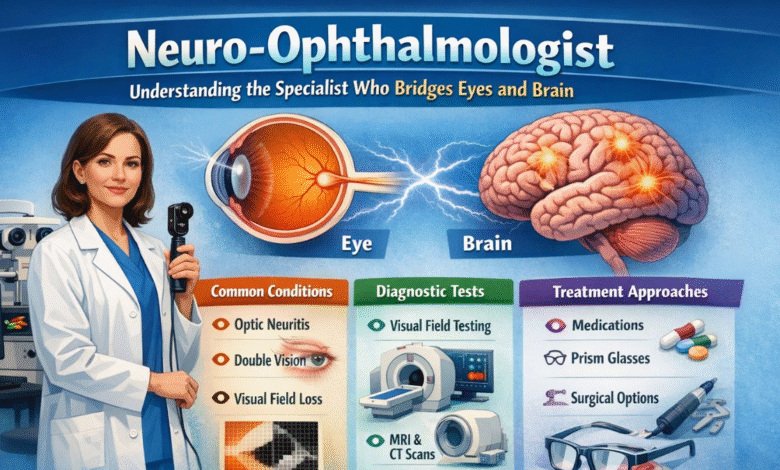
Neuro Ophthalmologist: Understanding the Specialist Who Bridges Eyes and Brain
Neuro Ophthalmologist: When it comes to eye care, many people think of ophthalmologists or optometrists. But there’s a special type of doctor who focuses on the complex connection between your eyes and brain a neuro ophthalmologist. This unique medical expert helps diagnose and treat vision problems caused by neurological conditions. If you’ve ever wondered who treats unexplained vision loss, double vision, or eye movement disorders, the answer is likely a neuro ophthalmologist.
In this article, we will explore everything about a neuro ophthalmologist what they do, conditions they treat, the training required, and why they play a critical role in modern medicine.


Who Is a Neuro Ophthalmologist?
A neuro ophthalmologist is a doctor who specializes in both the eyes and the nervous system. They bridge the gap between ophthalmology (eye care) and neurology (nervous system care).
- They focus on vision problems caused by brain disorders.
- They diagnose issues where eye symptoms are a clue to deeper neurological conditions.
- Their expertise helps prevent misdiagnosis of complex eye problems.
Think of a neuro ophthalmologist as a detective of the eye-brain connection. If your vision is acting up but the cause isn’t clear, this specialist may hold the answers.
Education and Training Required
Becoming a neuro ophthalmologist is no easy feat. It requires years of specialized training:
| Step | Description | Duration |
|---|---|---|
| Medical School | Complete a Doctor of Medicine (MD) or Doctor of Osteopathic Medicine (DO) | 4 years |
| Residency | Ophthalmology residency to learn general eye care | 3-4 years |
| Fellowship | Subspecialty fellowship in neuro-ophthalmology | 1-2 years |
| Board Certification | Optional board exams for ophthalmology and neuro-ophthalmology | Variable |
After this extensive training, the neuro ophthalmologist is fully equipped to tackle complex vision problems caused by neurological disorders.
Common Conditions Treated by a Neuro Ophthalmologist
A neuro ophthalmologist deals with vision problems linked to neurological conditions. Some of the most common issues include:
- Optic neuritis – inflammation of the optic nerve often linked to multiple sclerosis
- Double vision (diplopia) – caused by nerve or muscle problems controlling eye movement
- Visual field loss – areas of lost vision due to stroke or brain tumor
- Pupillary abnormalities – irregular pupil reactions indicating nerve damage
- Idiopathic intracranial hypertension – high pressure in the brain affecting vision
These specialists often work alongside neurologists, neurosurgeons, and other doctors to ensure a comprehensive diagnosis and treatment plan.
How a Neuro Ophthalmologist Diagnoses Eye-Brain Problems
Diagnosis is a key part of a neuro ophthalmologist’s work. They use a combination of medical history, physical examination, and advanced tests:
- Visual acuity tests – measures how clearly you see
- Visual field tests – identifies blind spots in your vision
- Optical coherence tomography (OCT) – scans the retina and optic nerve
- MRI and CT scans – reveal structural problems in the brain affecting vision
- Electrophysiological tests – measure electrical responses of the eye and nerves
By combining these tools, a neuro ophthalmologist can uncover hidden causes of vision loss that general eye doctors might miss.

Treatment Options Offered by Neuro Ophthalmologists
Once a diagnosis is made, the neuro ophthalmologist guides treatment. Their approaches often include:
- Medication – steroids or other drugs for inflammation or nerve issues
- Surgery referrals – when tumors, aneurysms, or other structural problems are detected
- Vision therapy – exercises to improve eye coordination and function
- Lifestyle adjustments – recommendations to reduce pressure or prevent further vision loss
The goal is not only to treat the eye problem but also to address the underlying neurological cause.
When to See a Neuro Ophthalmologist
You might need to see a neuro ophthalmologist if you notice:
- Sudden or unexplained vision loss
- Persistent double vision
- Changes in your peripheral vision
- Severe headaches with vision changes
- Eye movement abnormalities
Early evaluation by a neuro ophthalmologist can prevent serious complications and even permanent vision loss.
Difference Between Ophthalmologist, Neurologist, and Neuro Ophthalmologist
Many people get confused about which specialist to see. Here’s a quick breakdown:
| Specialist | Focus Area | Example Problem Treated |
|---|---|---|
| Ophthalmologist | General eye care | Cataracts, glaucoma |
| Neurologist | Nervous system disorders | Stroke, multiple sclerosis |
| Neuro Ophthalmologist | Eye problems caused by brain or nerve issues | Optic neuritis, double vision from nerve palsy |
A neuro ophthalmologist combines the expertise of both fields, providing a unique and essential perspective.
The Role of Technology in Neuro Ophthalmology
Modern technology has revolutionized the work of neuro ophthalmologists. Some key tools include:
- High-resolution imaging – for precise mapping of the optic nerve
- Computerized visual field testing – for early detection of blind spots
- Telemedicine – remote consultations for patients in underserved areas
- Artificial intelligence (AI) – assists in detecting subtle changes in eye structure
These technologies help neuro ophthalmologists provide faster, more accurate diagnoses and improve patient outcomes.
The Future of Neuro Ophthalmology
The field of neuro ophthalmology continues to grow as we understand more about the brain-eye connection. Future developments may include:
- Enhanced AI for early detection of neurological eye diseases
- Better surgical techniques for nerve-related vision problems
- More comprehensive treatment plans integrating neurology and ophthalmology
- Expanded telemedicine services for wider patient access
Patients can expect improved treatments, earlier diagnoses, and better preservation of vision as the field evolves.
Conclusion
A neuro ophthalmologist is a highly trained specialist who combines knowledge of the eyes and the brain. They diagnose and treat complex vision problems caused by neurological disorders. From double vision to optic neuritis, their expertise ensures that patients get accurate diagnoses and effective treatments.
If you notice sudden vision changes, unexplained vision loss, or eye movement problems, a neuro ophthalmologist might be the expert you need. They are not just eye doctors they are detectives of the eye-brain connection, using advanced technology, medical knowledge, and experience to protect one of our most vital senses: vision.
In short, a neuro ophthalmologist is a bridge between your eyes and your brain, ensuring that vision problems caused by neurological conditions are correctly diagnosed and treated.
You may also read
Lorenzo Sewell Net Worth: A Complete and Trustworthy Insight