
Spanish Desserts: A Delicious Guide to Spain’s Sweet Traditions
Spanish desserts are among the most loved sweet treats in the world. Rich in history, flavor, and cultural significance, spanish desserts offer something for everyone. From creamy custards and crispy pastries to chocolate-filled delights and festive sweets, Spain has created an impressive collection of desserts that continue to delight people across the globe.
Whether you’re planning a trip to Spain, exploring international cuisine, or simply looking for new recipes to try at home, learning about spanish desserts can open the door to a world of unforgettable flavors. These desserts reflect the country’s diverse regions, traditions, and culinary creativity.
In this complete guide, we’ll explore the history, ingredients, popular varieties, regional specialties, and cultural importance of spanish desserts. By the end, you’ll understand why these sweet creations hold such a special place in Spanish cuisine.
The Rich History of Spanish Desserts
The story of spanish desserts dates back hundreds of years. Spain’s location made it a crossroads for many civilizations, including the Romans, Moors, and Christians. Each culture contributed unique ingredients and cooking techniques that shaped the desserts enjoyed today.
The Moorish influence was especially important. During their rule, they introduced almonds, citrus fruits, honey, and various spices. Many traditional spanish desserts still rely heavily on these ingredients.
Monasteries and convents also played a major role in dessert development. Nuns often created sweet recipes using simple ingredients such as eggs, sugar, and milk. Many famous spanish desserts originated in religious communities and continue to be enjoyed during holidays and celebrations.
As trade expanded, ingredients like chocolate and vanilla arrived from the Americas. These additions transformed Spanish sweets and inspired countless new dessert recipes.
Why Spanish Desserts Are So Popular
Spanish desserts have gained international popularity for several reasons:
- They use simple, high-quality ingredients.
- Many recipes have centuries of history.
- They offer a balance of sweetness without being overwhelming.
- Regional diversity creates a wide variety of flavors.
- They are closely connected to celebrations and traditions.
Unlike some desserts that focus solely on sweetness, spanish desserts often emphasize texture, aroma, and natural flavors. This balanced approach makes them appealing to people of all ages.
Common Ingredients Found in Spanish Desserts
Many traditional spanish desserts share a few key ingredients that help create their distinctive flavors.
| Ingredient | Purpose |
|---|---|
| Almonds | Add richness and texture |
| Honey | Natural sweetness |
| Eggs | Create creamy and fluffy textures |
| Milk | Used in custards and puddings |
| Cinnamon | Adds warmth and aroma |
| Citrus Zest | Provides freshness |
| Sugar | Essential sweetener |
| Olive Oil | Used in certain pastries |
| Chocolate | Creates rich flavor |
| Flour | Forms the base of cakes and pastries |
These ingredients work together to create the unique character of spanish desserts.
Churros: Spain’s Famous Sweet Snack
When people think about spanish desserts, churros are often the first treat that comes to mind.
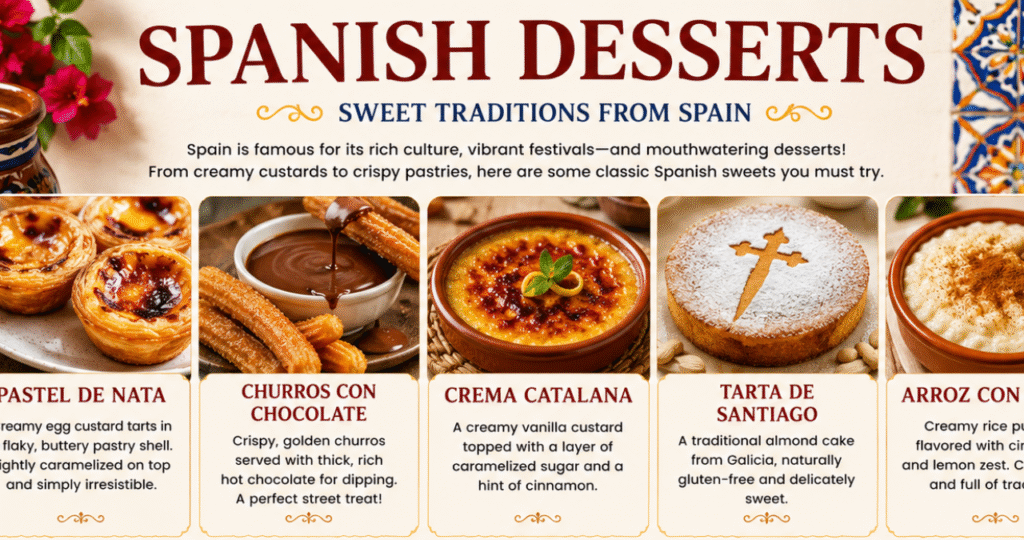
Churros are long, fried dough pastries with a crispy exterior and soft interior. They are commonly coated with sugar and served alongside thick hot chocolate.
Many Spaniards enjoy churros for breakfast or as an afternoon snack. Street vendors, cafés, and bakeries across Spain sell fresh churros daily.
The combination of crunchy dough and rich chocolate creates a comforting experience that has helped churros become popular worldwide.
Flan: The Creamy Classic Among Spanish Desserts
Flan is one of the most iconic spanish desserts. This silky custard features a smooth texture and a layer of caramel sauce on top.
Made from eggs, milk, sugar, and vanilla, flan is both simple and elegant. Its creamy consistency melts in the mouth, making it a favorite after meals.
Families often prepare flan for gatherings, holidays, and special occasions. Despite its simplicity, it remains one of the most beloved spanish desserts ever created.
Tarta de Santiago: The Famous Almond Cake
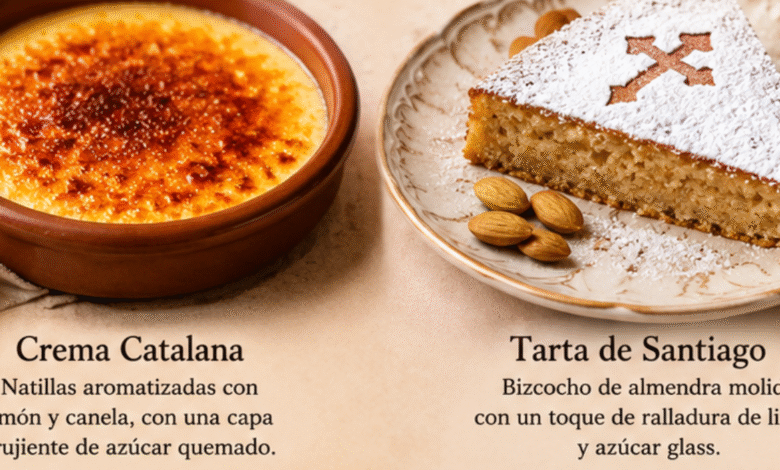
Originating from Galicia, Tarta de Santiago is a traditional almond cake known for its rich flavor and distinctive appearance.
The cake contains ground almonds, eggs, sugar, and lemon zest. It is usually decorated with the Cross of Saint James using powdered sugar.
This dessert is closely associated with the famous pilgrimage route known as the Camino de Santiago.
What makes this cake special is its moist texture and naturally nutty flavor. It demonstrates how spanish desserts often rely on simple ingredients rather than elaborate decorations.
Crema Catalana: Spain’s Answer to Crème Brûlée
Crema Catalana is one of the oldest custard-based spanish desserts.
This dessert features a creamy custard flavored with cinnamon and citrus peel. The top is covered with caramelized sugar, creating a crisp layer that cracks when tapped with a spoon.
Although often compared to French crème brûlée, Crema Catalana has its own unique identity and history.
Many people enjoy the contrast between the crunchy sugar topping and the smooth custard beneath.
Torrijas: Spain’s Traditional Comfort Dessert
Torrijas are especially popular during Holy Week and Easter celebrations.
Often described as Spain’s version of French toast, torrijas are made by soaking bread in milk, dipping it in egg, and frying it until golden brown.
The finished slices are coated with cinnamon, sugar, or honey.
These humble ingredients create one of the most comforting spanish desserts. The result is warm, sweet, and wonderfully satisfying.
Polvorones and Mantecados: Festive Spanish Desserts
During the Christmas season, Spanish households fill with the aroma of traditional sweets.
Polvorones are crumbly shortbread cookies made with flour, sugar, almonds, and butter or lard. Mantecados are similar but come in various flavors.
These festive treats have become symbols of Spanish holiday celebrations.
Families often share boxes of these cookies with friends and relatives, making them an important part of seasonal traditions.
Regional Diversity in Spanish Desserts
One fascinating aspect of spanish desserts is how they vary from region to region.
Andalusia
Andalusian desserts often reflect Moorish influence. Honey, almonds, and sesame seeds appear frequently in recipes.
Popular examples include:
- Pestiños
- Alfajores
- Roscos fritos
Catalonia
Catalonia is famous for:
- Crema Catalana
- Panellets
- Coca pastries
Galicia
Galicia contributes:
- Tarta de Santiago
- Filloas
- Sweet pastries
Valencia
Valencia is known for:
- Pumpkin fritters
- Orange-based desserts
- Sweet rice dishes
This regional variety ensures that spanish desserts remain diverse and exciting.
The Role of Chocolate in Spanish Desserts
Chocolate holds a special place in Spanish culinary history.
Spain was among the first European countries to encounter chocolate after exploration of the Americas. Over time, chocolate became deeply integrated into spanish desserts.
Popular chocolate-based treats include:
- Churros with hot chocolate
- Chocolate-filled pastries
- Chocolate cakes
- Chocolate custards
Spanish hot chocolate is often thicker and richer than versions found elsewhere, making it ideal for dipping pastries.
Seasonal and Holiday Spanish Desserts
Many spanish desserts are linked to specific celebrations.
Christmas
Popular sweets include:
- Polvorones
- Mantecados
- Marzipan treats
- Turrón
Easter
Traditional Easter desserts include:
- Torrijas
- Rosquillas
- Various sweet breads
Festivals
Regional festivals often feature unique desserts prepared only during certain times of the year.
These seasonal traditions help preserve Spain’s rich culinary heritage.
How Spanish Desserts Reflect Spanish Culture
Food tells a story, and spanish desserts are no exception.
These desserts reflect values such as:
- Family gatherings
- Hospitality
- Religious traditions
- Regional pride
- Celebration
Many recipes are passed down through generations. Grandparents teach children how to prepare family favorites, ensuring that traditions continue.
Because of this connection to family and history, spanish desserts hold emotional significance beyond their delicious taste.
Healthier Approaches to Enjoying Spanish Desserts
While desserts are meant to be enjoyed, there are ways to make them part of a balanced lifestyle.
Consider these tips:
- Enjoy moderate portions.
- Use natural sweeteners when possible.
- Pair desserts with fresh fruit.
- Share larger servings with family and friends.
- Focus on quality rather than quantity.
Many traditional spanish desserts already rely on wholesome ingredients such as almonds, eggs, and citrus fruits.
Making Spanish Desserts at Home
Preparing spanish desserts at home can be a rewarding experience.
Begin with simpler recipes such as:
- Flan
- Churros
- Torrijas
- Almond cake
As your confidence grows, you can explore more advanced recipes and regional specialties.
Home cooking allows you to experience authentic Spanish flavors while creating memorable moments with family and friends.
Tips for Choosing the Best Spanish Desserts
If you’re new to Spanish sweets, here are some recommendations:
For Chocolate Lovers
Try:
- Churros with chocolate
- Chocolate pastries
- Chocolate cakes
For Custard Fans
Choose:
- Flan
- Crema Catalana
For Nut Lovers
Enjoy:
- Tarta de Santiago
- Polvorones
- Marzipan treats
For Holiday Celebrations
Consider:
- Turrón
- Mantecados
- Torrijas
With so many options available, there’s a Spanish dessert for every taste preference.
The Global Influence of Spanish Desserts
Today, spanish desserts are enjoyed far beyond Spain’s borders.
Restaurants, bakeries, and cafés around the world serve classic Spanish sweets. Food enthusiasts frequently search for authentic recipes and cooking techniques.
Social media has also helped spread awareness of these delicious treats. Pictures of churros, flan, and almond cakes regularly attract attention from dessert lovers everywhere.
This international popularity highlights the lasting appeal of spanish desserts and their ability to connect people through food.
Conclusion
Spanish desserts represent centuries of culinary tradition, creativity, and cultural heritage. From crispy churros and creamy flan to festive polvorones and elegant Tarta de Santiago, spanish desserts offer an incredible variety of flavors and textures.
Their popularity continues to grow because they combine simple ingredients with rich history and unforgettable taste. Whether enjoyed during holidays, family gatherings, or everyday meals, spanish desserts remain a cherished part of Spain’s identity.
Exploring spanish desserts is more than discovering sweet treats—it’s a journey through Spain’s culture, history, and traditions. For anyone who appreciates exceptional sweets, spanish desserts provide a delicious experience that is truly worth savoring.
You may also read
Pastel de Nata Recipe: The Complete Guide to Making Portugal’s Famous Custard Tart