Pastel de Nata Recipe: The Complete Guide to Making Portugal’s Famous Custard Tart
Few desserts in the world are as beloved as the Portuguese custard tart. If you’ve ever tasted one, you already know why people search for the perfect pastel de nata recipe. With its flaky pastry, creamy custard filling, and caramelized top, this iconic treat offers a delightful balance of texture and flavor.
A traditional pastel de nata recipe may look complicated at first glance, but once you understand the process, it becomes an enjoyable baking adventure. Whether you’re a beginner or an experienced baker, this guide will help you create bakery-quality pastel de nata at home.

In this comprehensive article, you’ll learn about the history of pastel de nata, the ingredients required, step-by-step instructions, expert tips, common mistakes, variations, serving ideas, storage methods, and much more.
What Is Pastel de Nata?
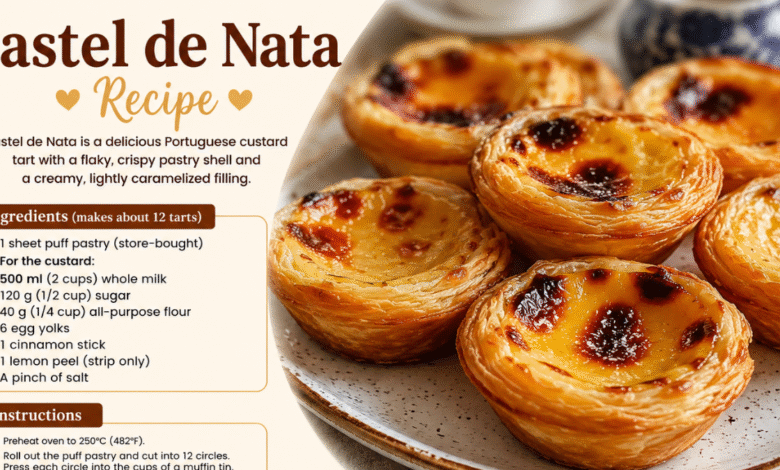
Pastel de nata is a traditional Portuguese egg custard tart. The dessert consists of a crispy puff pastry shell filled with rich egg custard that is baked until golden brown.
The name “pastel de nata” translates to “cream pastry” in English. These tarts are famous for their creamy centers and slightly charred tops, which give them a unique flavor and appearance.
Today, people around the world enjoy this delicious pastry in cafes, bakeries, and homes. The popularity of the pastel de nata recipe continues to grow because the dessert combines simple ingredients with extraordinary taste.
The Fascinating History Behind Pastel de Nata Recipe
The origins of pastel de nata date back several centuries in Portugal.
Monks at the Jerónimos Monastery in Lisbon created the pastry. During that time, egg whites were commonly used for starching clothes, leaving large amounts of egg yolks available. Rather than wasting them, monks used the yolks to make sweet pastries and desserts.
When the monastery closed in the nineteenth century, the recipe was sold to a nearby sugar refinery. That recipe eventually became the famous pastry known today.
One of the most famous places to enjoy these tarts remains the legendary bakery in Lisbon known as Pastéis de Belém. Their closely guarded recipe attracts visitors from all over the world.
The modern pastel de nata recipe has evolved slightly over time, but its core elements remain unchanged.
Why People Love This Pastel de Nata Recipe
There are many reasons why this dessert has become internationally famous.
Flaky Texture
The puff pastry creates multiple crispy layers that shatter beautifully with each bite.
Creamy Filling
The custard is rich, silky, and smooth.
Perfect Sweetness
Unlike many desserts, pastel de nata is sweet without being overwhelming.
Easy Ingredients
Most ingredients are already available in many kitchens.
Impressive Presentation
These tarts look professional and elegant despite being homemade.
The combination of these qualities makes any pastel de nata recipe worth learning.
Ingredients Needed for Pastel de Nata Recipe
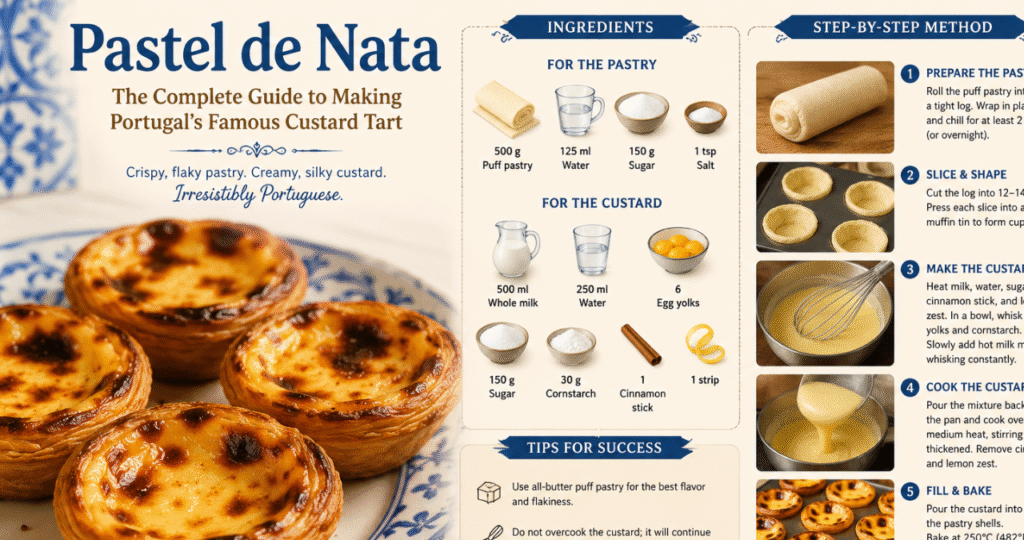
Below is a simple ingredient list for making approximately 12 tarts.
| Ingredient | Quantity |
|---|---|
| Puff pastry | 1 sheet |
| Whole milk | 1 cup |
| Granulated sugar | 1 cup |
| Water | ½ cup |
| Egg yolks | 6 |
| All-purpose flour | 2 tablespoons |
| Cinnamon stick | 1 |
| Vanilla extract | 1 teaspoon |
| Lemon peel | 1 strip |
Using fresh ingredients is one of the most important steps for a successful pastel de nata recipe.
Essential Equipment for Pastel de Nata Recipe
Before starting, gather the following tools:
- Muffin tin
- Saucepan
- Mixing bowl
- Whisk
- Measuring cups
- Rolling pin
- Fine strainer
- Cooling rack
Having everything ready makes the baking process smoother and more enjoyable.
How to Prepare the Pastry
The pastry shell is one of the most important parts of the pastel de nata recipe.
Step One
Thaw the puff pastry if frozen.
Step Two
Roll the pastry into a tight log shape.
Step Three
Wrap the log in plastic wrap and refrigerate for about thirty minutes.
Step Four
Cut the log into twelve equal pieces.
Step Five
Place each piece into a muffin tin cavity.
Step Six
Using your thumbs, press the dough upward along the sides until it forms a thin shell.
The thinner the pastry walls, the more authentic your tarts will be.
How to Make the Custard Filling
Now it’s time to prepare the rich custard.
Mix the Flour
Place flour into a bowl and slowly add a small amount of milk while whisking to prevent lumps.
Heat the Milk
Add remaining milk to a saucepan.
Include:
- Cinnamon stick
- Lemon peel
- Vanilla extract
Heat gently until warm.
Combine Mixtures
Slowly pour the warm milk into the flour mixture while whisking continuously.
Create Sugar Syrup
In another saucepan, combine sugar and water.
Heat until it reaches a syrup-like consistency.
Mix Everything Together
Gradually pour the sugar syrup into the milk mixture.
Remove the cinnamon stick and lemon peel.
Allow the mixture to cool slightly.
Add Egg Yolks
Whisk egg yolks separately.
Slowly add them to the cooled mixture.
Strain the custard for an extra smooth texture.
At this stage, your pastel de nata recipe filling should look silky and creamy.
Baking the Perfect Pastel de Nata Recipe
The baking process is where the magic happens.
Preheat the Oven
Set your oven to 500°F (260°C) or the highest temperature available.
Traditional Portuguese bakeries use extremely hot ovens.
Fill the Pastry Shells
Pour custard into each shell until about three-quarters full.
Bake
Place the tray on the top oven rack.
Bake for approximately:
- 12 to 15 minutes
The tops should develop dark caramelized spots.
Cool
Allow the tarts to cool for ten minutes before removing them from the pan.
A properly baked Pastel de Nata Recipe should have a crisp crust and slightly wobbly center.
Tips for Achieving Authentic Results
Small details can make a huge difference.
Use High Heat
High temperatures create the characteristic caramelized spots.
Don’t Overfill
Custard expands during baking.
Chill the Dough
Cold pastry produces better layers.
Strain the Custard
This ensures a silky texture.
Use Fresh Egg Yolks
Fresh yolks contribute richness and color.
Following these tips can elevate your pastel de nata recipe from good to exceptional.
Common Mistakes to Avoid
Even skilled bakers occasionally make mistakes.
Using a Low Oven Temperature
The tops won’t caramelize properly.
Thick Pastry Shells
This creates a heavy tart instead of a delicate one.
Overcooking the Custard
The filling can become rubbery.
Skipping the Straining Step
Lumps may appear in the custard.
Removing Tarts Too Early
Allow them to set slightly before handling.
Avoiding these issues helps ensure success with your pastel de nata recipe.
Delicious Variations of Pastel de Nata Recipe
Once you’ve mastered the traditional version, try some creative twists.
Chocolate Pastel de Nata
Add melted chocolate to the custard.
Coffee Flavor
Mix a small amount of espresso into the filling.
Orange Custard
Replace lemon peel with orange zest.
Almond Version
Add almond extract for a nutty aroma.
Mini Party Tarts
Create smaller versions for gatherings and celebrations.
These variations bring exciting new flavors to a classic pastel de nata recipe.
How to Serve Pastel de Nata
Presentation matters.
Many Portuguese people enjoy these pastries warm with coffee.
Popular serving options include:
- Espresso
- Cappuccino
- Tea
- Hot chocolate
- Fresh fruit
Traditionally, some people sprinkle:
- Cinnamon
- Powdered sugar
on top before serving.
These simple additions enhance any pastel de nata recipe.
Nutritional Overview
Below is an approximate nutritional breakdown per tart.
| Nutrient | Amount |
|---|---|
| Calories | 220 |
| Carbohydrates | 24g |
| Protein | 4g |
| Fat | 12g |
| Sugar | 13g |
| Fiber | 1g |
Values may vary depending on ingredient brands and serving sizes.
How to Store Pastel de Nata
Proper storage helps maintain freshness.
Room Temperature
Store for up to one day in an airtight container.
Refrigerator
Store for three to four days.
Freezer
Freeze for up to one month.
When reheating:
- Use an oven instead of a microwave.
- Bake at a moderate temperature for a few minutes.
This helps restore crispness to your pastel de nata recipe.
Why Homemade Pastel de Nata Is Better
While bakery versions are wonderful, homemade tarts offer unique advantages.
Fresher Ingredients
You control every ingredient.
Custom Sweetness
Adjust sweetness to your preference.
Family Activity
Making tarts together can become a cherished tradition.
Cost Savings
Homemade batches often cost less than purchasing individual pastries.
Personal Satisfaction
Nothing compares to enjoying a dessert you’ve made yourself.
For many people, mastering a pastel de nata recipe becomes a rewarding culinary achievement.
Frequently Asked Questions About Pastel de Nata Recipe
Can I use store-bought puff pastry?
Yes. Most home bakers use high-quality store-bought puff pastry successfully.
Why are black spots important?
The dark spots create a slightly caramelized flavor that defines authentic pastel de nata.
Can I make the custard ahead of time?
Yes. Prepare it a day in advance and refrigerate until needed.
Is pastel de nata served hot or cold?
It can be enjoyed both ways, though many prefer it warm.
Can I freeze baked tarts?
Absolutely. Freeze them in an airtight container and reheat before serving.
What makes pastel de nata different from regular custard tarts?
The high-temperature baking process creates a unique caramelized surface and flaky pastry texture.
Final Thoughts on the Best Pastel de Nata Recipe
Learning a traditional pastel de nata recipe is a wonderful way to experience Portuguese baking culture. These famous custard tarts combine buttery pastry, creamy filling, and beautifully caramelized tops into a dessert that never fails to impress.
Whether you’re baking for family, friends, or simply treating yourself, this pastel de nata recipe offers an authentic and rewarding experience. With quality ingredients, careful preparation, and a hot oven, you can create bakery-style Portuguese custard tarts right in your own kitchen.
The next time you’re looking for a dessert that is elegant, delicious, and surprisingly achievable, give this pastel de nata recipe a try. Once you taste that crispy pastry and creamy custard combination, you’ll understand why the pastel de nata recipe remains one of the most treasured desserts in the world.
You may also read
Shchi Soup Near Me: A Complete Guide to Russia’s Classic Comfort Food