
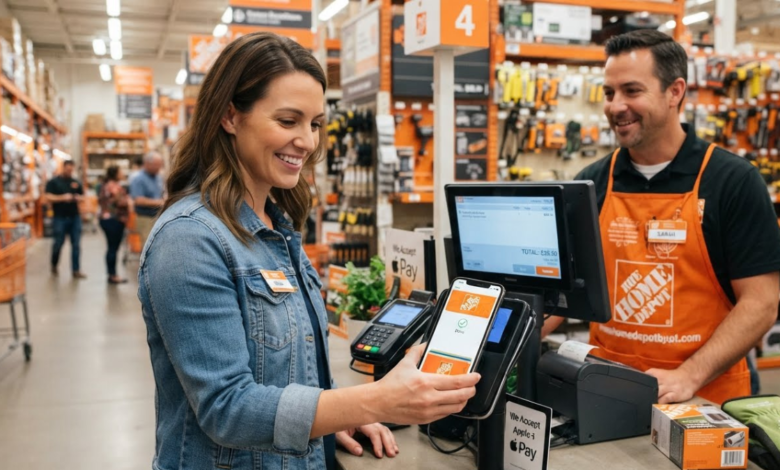
Does Home Depot Take Apple Pay? Yes, Here’s How to Use It!
Does Home Depot Take Apple Pay across its retail locations. For years, home improvement enthusiasts and weekend warriors had to carry their wallets to checkout terminals, but things have completely changed for the better. The corporate leadership at Home Depot recognized the shifting winds of modern commerce and finally rolled out contactless payment systems, allowing you to use your iPhone or Apple Watch at cash registers nationwide.
This major transition represents a massive victory for consumer convenience, especially considering that Home Depot was one of the largest and most famous holdouts of mobile wallet systems in the retail space. Boy, it sure felt like an eternity for tech-savvy shoppers who love leaving their heavy, leather billfolds at home! Now, instead of fumbling with chip cards or hunting for loose change in the middle of a massive hardware run, a single tap gets you on your way. Let us take a deep, comprehensive dive into how this payment system functions, the history behind the change, alternative payment choices, and tricks to ensure your next checkout experience is as smooth as freshly sanded pine.


The Big Shift: Does Home Depot Take Apple Pay Now?
For a very long time, if a customer walked into a local store and asked a cashier, “Does Home Depot take Apple Pay?”, the answer would be a resounding and disappointing “No”. It was an odd situation, considering that their checkout terminals already possessed the necessary Near Field Communication (NFC) hardware. However, those digital readers were intentionally turned off or restricted.
Thankfully, the retail giant shifted its strategy and officially activated Apple Pay capabilities. This rollout brought great joy to DIYers who prefer the security and speed of mobile transactions. Whether you are grabbing a quick box of drywall screws or checking out with an expensive new lawnmower, the upgraded registers are fully prepared to read your digital wallet. This decision aligns the hardware brand with major competitors like Lowe’s, ensuring that modern builders do not take their business elsewhere just because of a payment hassle.
Understanding the Technology Behind Tap-to-Pay
To appreciate why this update is such a game-changer, it helps to understand what happens when you press your phone against a payment register. The magic behind this convenience is called Near Field Communication (NFC). This form of short-range wireless communication allows two digital devices—like your smartphone and a retail payment terminal—to securely talk to each other when they are placed within a few inches of one another.
When you use Apple Pay, your real credit or debit card number is never actually transmitted or shared with the retail store. Instead, a specialized, unique digital string of numbers known as a “token” is generated for that specific purchase. This process is called tokenization. Because your actual banking information remains hidden and heavily encrypted, even if a clever hacker somehow intercepted the radio waves during checkout, they would only see a useless string of random numbers that cannot be reused. Wow, talk about a secure fortress for your hard-earned money!
How to Use Your Apple Devices at Checkout
Using your favorite iOS device at a self-checkout lane or a traditional register is incredibly straightforward. It saves valuable seconds and eliminates the worry of dropping your physical bank cards between the floorboards. Here is a simple, easy-to-follow guide to getting it done right:
- Double-Click to Launch: When the cashier finishes scanning your cart full of supplies, double-click the side button on your iPhone to bring up your default payment option.
- Verify Your Identity: Glance at your screen to let Face ID scan your facial features, or place your thumb onto the home button for Touch ID authentication.
- The Sweet Tap: Hold the top edge of your iPhone close to the digital screen of the payment terminal.
- Watch for Success: Keep your phone steady for a quick moment until you see a checkmark and hear a pleasant chime signaling the transaction went through.
- Using Your Apple Watch: If you prefer keeping your hands free, double-click the flat side button on your Apple Watch, turn your wrist over, and hold the watch face near the card reader.
Accepted Payment Options at Home Depot
While knowing that the home improvement store supports your digital phone wallet brings peace of mind, it is always wise to keep a backup plan in mind. After all, a dead phone battery could leave you stranded at the register! Fortunately, the retail giant accepts a vast library of classic and contemporary transactional methods.
| Payment Type | Accepted In-Store? | Accepted Online? | Best Used For |
|---|---|---|---|
| Apple Pay | Yes, across nationwide locations | Yes, via Safari browser checkout | Maximum security and speed |
| Credit Cards | Visa, Mastercard, AMEX, Discover | All major credit card networks | Earning specific bank cash-back rewards |
| Debit Cards | Yes, with standard PIN entry | Yes, processed through bank networks | Direct draws from your checking account |
| Home Depot Credit Card | Yes, through store-branded plastic | Yes, tied directly to your profile | Long-term financing on major renovations |
| PayPal | Yes, via select integrations | Yes, direct login during digital checkout | Splitting payments or using digital balances |
| Cash / Paper Checks | Yes, traditional tender accepted | No, unavailable for online orders | Quick in-store visits for low-cost hardware |
| Gift Cards | Yes, both plastic and electronic versions | Yes, entered manually at digital checkout | Using holiday gifts or corporate rewards |
The Historical Roadblocks to Mobile Wallets
You might wonder why it took such a massive, multi-billion-dollar enterprise so long to adopt a payment method that has been popular for over a decade. The history is filled with corporate strategy shifts and contractual disagreements. Back when mobile wallets first burst onto the scene around 2014, Home Depot actually allowed contactless transactions for a brief moment. However, due to system safety upgrades and exclusive corporate partnerships with rival payment networks like PayPal, they chose to deactivate the NFC features.
Furthermore, many traditional big-box stores worried about the fees associated with processing encrypted mobile wallet numbers. There were also concerns about processing item returns, since an encrypted token makes it trickier for a store register to instantly identify the original physical credit card profile. For years, store associates had to politely inform disappointed builders that they needed to swipe or insert their physical cards instead. Thankfully, customer demand finally won the day, causing corporate leaders to upgrade their computer terminals to embrace the future.
What to Keep in Mind During Returns
While checking out is an absolute breeze, dealing with product returns can occasionally throw a small wrench into the gears. Because Apple Pay heavily disguises your true credit card information to protect you from fraud, the retail customer service desk cannot always look up your receipt simply by swiping a standard piece of plastic.
To make your life much easier, always make sure to keep a digital copy of your receipt sent straight to your email inbox, or scan your personal Home Depot Pro or consumer loyalty app profile at the register before you pay. If you need to return an unused can of paint or an extra set of plumbing pipes, opening your Apple Wallet app and selecting the specific card you used will show a “Device Account Number.” This number helps the store associate trace the transaction back to their main system, ensuring you get your money refunded without any annoying corporate headaches.
Troubleshooting Failed Contactless Payments
Every now and then, technology likes to act up. If you find yourself standing at a self-checkout station and your phone tap fails to register, do not panic! There are a few quick and clever ways to get things back on track:
The Future of Smart Retail Shopping
The decision by major companies to adapt to modern mobile lifestyles highlights an optimistic outlook for the future of building and remodeling. Shopping for tools should not feel like an outdated chore. By allowing consumers to tap and walk away, retail destinations are cutting down checkout wait times, minimizing long lines on busy Saturday mornings, and decreasing physical contact with high-touch public screens.
As smart home items and mobile phones continue to blend together, we can likely expect even greater digital integration. Imagine a world where your phone automatically knows your building blueprints, maps out exactly which aisle holds your specific lumber dimensions, and allows you to pay instantly without ever waiting in a physical checkout line! This step forward proves that even legacy brands can adapt to modern technological trends to serve their customer base better.
Final Thoughts on Retail Payment Upgrades
Ultimately, if you are planning a massive weekend project and find yourself asking does home depot take apple pay, you can confidently pack up your gear and leave your bulky wallet sitting safely on your kitchen counter. The giant retailer’s nationwide rollout of tap-to-pay services brings a marvelous level of modern convenience to contractors, homeowners, and casual crafters alike. It eliminates unnecessary friction, guards your financial data behind ironclad modern encryption protocols, and helps you speed through lines so you can get back to what truly matters—building your dreams.
So, go ahead and load up your cart with lumber, power tools, and gardening supplies without a single worry. The next time you step up to the register, a quick, elegant flick of your wrist is all it takes to finalize your transaction. It is safe to say that the modern retail shopping experience has truly entered a golden age of simplicity, giving us the perfect excuse to confidently ask does home depot take apple pay every single time we head out to conquer our home renovation goals!
You may also read
Morocco News: Understanding the Stories, Trends, and Developments Shaping Modern Morocco