Santa Fe Weather: A Complete Guide to Seasons, Temperatures, Rainfall, Snow, and Climate
santa fe weather is one of the most interesting parts of visiting or living in Santa Fe, New Mexico. Located at a high elevation in the southwestern United States, Santa Fe has a dry climate, plenty of sunshine, noticeable seasonal changes, and cooler nights than many other places in the region.
The city’s elevation has a major effect on its climate. Summer afternoons can be warm, yet mornings and evenings are often much cooler. Winter can bring cold temperatures and snow, while spring and autumn are known for comfortable days and crisp nights. During the summer monsoon season, afternoon thunderstorms can also bring sudden rain, lightning, and changes in temperature.


As a result, santa fe weather isn’t simply about checking whether the day will be hot or cold. Elevation, season, sunshine, rainfall, wind, and changing mountain conditions all matter.
Whether you’re planning a vacation, moving to the area, attending an event, exploring historic streets, or simply curious about New Mexico’s climate, understanding the local weather patterns can help you plan more comfortably.
What Is Santa Fe Weather Like?
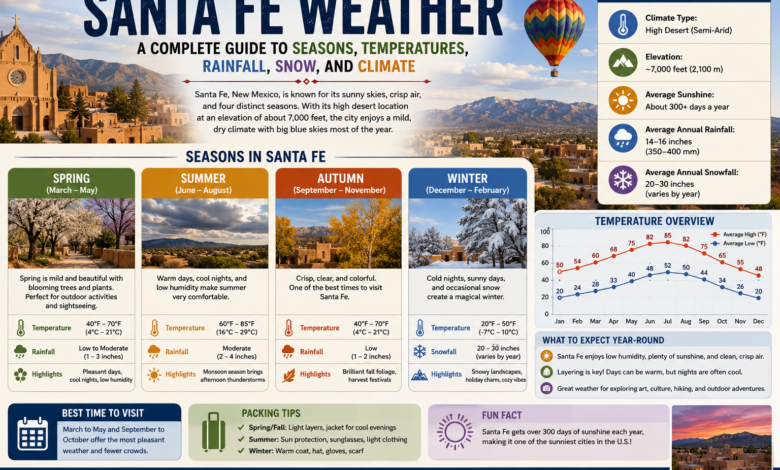
santa fe weather is generally dry, sunny, and seasonal. Santa Fe sits at roughly 7,000 feet above sea level, which contributes to its relatively cool nights and noticeable temperature changes between day and night.
The city receives abundant sunshine through much of the year. However, dry conditions don’t mean that rain never occurs. Summer is influenced by the North American monsoon, which can bring afternoon showers and thunderstorms. The National Weather Service tracks monsoon activity across New Mexico and includes Santa Fe among locations affected by these seasonal patterns.
Winter brings a different experience. Snow is possible, and cold mornings can occur even when afternoons become more comfortable. Historical National Weather Service climate records for Santa Fe show substantial day-to-day variation in winter temperatures.
Overall, the climate can be summarized as:
- Dry for much of the year
- Sunny and bright
- Warm during many summer afternoons
- Cool during summer nights
- Cold during winter
- Snowy at times
- Wetter during the summer monsoon season
- Highly influenced by elevation
So, if you like four distinct seasons without the constant humidity found in some other parts of the United States, santa fe weather can be appealing.
Santa Fe Weather Right Now and the Coming Days
Current conditions can change quickly, especially during the summer thunderstorm season. As of August 27, 2026, Santa Fe is experiencing mostly clear conditions overnight, with warm weather expected through the coming days and some chances of afternoon thunderstorms or showers. The forecast shows a gradual cooling trend toward the beginning of September.
The important takeaway is that summer weather in Santa Fe can be warm without remaining consistently hot throughout the entire day. Afternoon storms may also develop quickly, so checking the latest forecast before outdoor plans is a smart habit.
For exact conditions on the day you’re traveling, always check a current forecast rather than relying only on long-term climate information. Climate tells you what is typical; a forecast tells you what is expected now.
Santa Fe Weather in Spring
Spring is one of the most changeable seasons in Santa Fe.
March can still feel like winter at times, particularly in the morning. However, sunny afternoons may become increasingly comfortable as the season progresses. Historical National Weather Service records show that March can experience considerable differences between daytime highs and overnight lows.
By April and May, temperatures generally become more pleasant. Trees and plants begin responding to warmer conditions, and outdoor sightseeing becomes increasingly enjoyable.
Spring is also a good season for exploring the city on foot because temperatures are often more comfortable than during the hottest parts of summer.
However, visitors shouldn’t assume every spring day will be warm. Cold fronts can still pass through, and weather can change quickly.
What to Expect in Spring
Spring typically offers:
- Cool mornings
- Increasingly mild afternoons
- Plenty of sunshine
- Occasional windy periods
- Some rain or snow early in the season
- Comfortable conditions later in spring
- Large day-to-night temperature changes
A layered approach to clothing works well during this season.
Santa Fe Weather in Summer
Summer is one of the most popular seasons for outdoor activities in Santa Fe. Days can become quite warm, but the city’s elevation helps distinguish its climate from lower desert locations.
The National Weather Service’s recent Santa Fe climate observations demonstrate that summer afternoons can reach the upper 80s and sometimes higher. For example, August 2026 observations recorded several days with highs in the 90s, while nighttime temperatures were considerably lower.
One of the most important features of santa fe weather during summer is the North American monsoon.
During the monsoon season, moisture moves into the region and can produce afternoon clouds, showers, and thunderstorms. These storms aren’t guaranteed every day, but they can develop rapidly.
That means a sunny morning can turn into a stormy afternoon. It’s wise to keep an eye on the forecast if you’re planning hiking, sightseeing, photography, or other outdoor activities.
Summer Weather Characteristics
Summer commonly brings:
- Warm to hot afternoons
- Cooler nights
- Strong sunshine
- Low humidity during many periods
- Afternoon thunderstorms
- Short periods of heavy rain
- Lightning during storms
The combination of sunshine and elevation can make the weather feel pleasant, but visitors should still take heat and sun exposure seriously.
Santa Fe Weather in Autumn
Autumn is often considered one of the most comfortable times of year in Santa Fe.
September can still feel summery, especially early in the month, while October brings increasingly cool mornings and evenings. November begins the transition toward winter.
The changing season also brings beautiful scenery, particularly in areas around the mountains and forests.
Autumn is a good time for walking through historic areas, visiting cultural attractions, enjoying outdoor events, and exploring nearby landscapes.
The air can feel crisp, especially after sunset.
What to Expect in Autumn
Autumn generally brings:
- Warm or mild afternoons
- Cool evenings
- Increasingly cold mornings
- Plenty of sunshine
- Less monsoon activity as the season progresses
- Occasional early winter weather
By late autumn, visitors should be prepared for much colder nights than they might expect from daytime temperatures.
Santa Fe Weather in Winter
Winter brings some of the coldest conditions of the year.
Daytime temperatures can sometimes be comfortable under sunny skies, but overnight temperatures may fall below freezing. Snow is possible, and nearby mountain areas can receive considerably more snow than the city itself.
Historical National Weather Service records show winter days with temperatures ranging from relatively mild afternoons to very cold overnight lows.
Winter sunshine can make the city feel brighter than visitors might expect. Still, don’t let the clear skies fool you—cold air can remain intense, particularly in the morning and after sunset.
Snowfall can also change travel conditions temporarily.
Winter Weather Characteristics
Winter in Santa Fe can include:
- Freezing mornings
- Chilly afternoons
- Snowfall
- Cold nights
- Sunny periods
- Strong temperature differences between day and night
- Winter storms followed by clear weather
If you’re visiting during winter, warm layers, a proper coat, gloves, and suitable footwear are sensible choices.
Santa Fe Weather and Rainfall
Santa Fe is relatively dry compared with many parts of the United States. However, rainfall isn’t evenly distributed throughout the year.
Summer can bring a significant portion of the region’s precipitation because of monsoon thunderstorms.
These storms can produce intense but relatively short periods of rain. In some cases, rainfall may be concentrated within a small area while another nearby location receives much less.
This is one reason santa fe weather can sometimes feel unpredictable during summer afternoons.
The National Weather Service monitors monsoon statistics across New Mexico because of the importance of these seasonal storms.
Rain can be beneficial for the landscape, but heavy storms can also create temporary hazards such as slick roads, reduced visibility, and localized flooding.
For visitors, the best approach is simple: enjoy the changing weather, but don’t ignore storm warnings.
Santa Fe Weather and Snowfall
Snow is an important part of Santa Fe’s winter climate.
Because the city is located at a high elevation, it can experience snow when lower-elevation communities remain relatively dry or warmer.
Snow doesn’t necessarily remain on the ground for long after every storm. Sunny conditions can encourage melting, particularly when daytime temperatures rise above freezing.
However, larger winter storms can create more persistent snow and affect roads and travel.
Nearby mountain areas generally offer stronger winter conditions and can be much colder than central Santa Fe.
For anyone planning a winter trip, it’s useful to distinguish between weather in Santa Fe itself and conditions in the surrounding mountains.
Santa Fe Weather and Temperature Changes
One of the most important things to understand about santa fe weather is the difference between daytime and nighttime temperatures.
A sunny afternoon may feel warm, while the evening becomes surprisingly cool.
This happens partly because Santa Fe’s high elevation and dry atmosphere allow temperatures to change significantly after sunset.
For travelers, this means packing only for the afternoon can be a mistake.
A person who leaves a hotel in a short-sleeved shirt during a warm afternoon may wish they had a jacket later that evening.
Layering is therefore one of the easiest ways to stay comfortable.
Why Temperature Changes So Quickly
Several factors contribute to temperature differences:
- High elevation
- Dry air
- Strong sunshine
- Clear nighttime skies
- Seasonal weather systems
- Mountain geography
Understanding this pattern makes santa fe weather much easier to prepare for.
Santa Fe Weather and Sunshine
Sunshine is one of Santa Fe’s defining climate features.
Clear or partly clear skies are common, and bright sunlight can make winter afternoons feel more comfortable than the thermometer suggests.
However, strong sunlight can also increase exposure to ultraviolet radiation, particularly at high elevations.
Visitors should consider:
- Sunglasses
- Sun protection
- A hat
- Drinking enough water
- Taking breaks during long outdoor activities
Even on cooler days, the sun can feel strong.
This is particularly important for people spending extended periods outdoors.
Santa Fe Weather and Wind
Wind can also affect how santa fe weather feels.
A mild afternoon can feel considerably cooler when a strong breeze develops. Wind can also increase the drying effect of the already dry climate.
Spring can be especially breezy at times, although windy conditions can occur during other seasons as well.
When planning outdoor activities, check both temperature and wind conditions rather than looking at temperature alone.
A temperature that looks comfortable on paper may feel different when combined with strong wind.
Santa Fe Weather and Thunderstorms
Summer thunderstorms deserve special attention.
During monsoon season, storms can develop in the afternoon and evening. Some may be brief, while others can bring heavier rainfall, strong winds, lightning, or localized flooding.
The National Weather Service’s New Mexico monsoon information shows that Santa Fe Airport has experienced significant summer thunderstorm activity and temperature extremes over its historical record.
If you’re outdoors and hear thunder, it’s best to move toward a safe shelter rather than continuing an exposed activity.
Weather can change quickly in mountainous regions, so checking the latest forecast before hiking or exploring is a sensible precaution.
Santa Fe Weather and Outdoor Activities
Santa Fe’s climate makes outdoor activities enjoyable during much of the year.
Depending on the season, visitors can enjoy:
- Walking tours
- Hiking
- Scenic drives
- Photography
- Cycling
- Nature viewing
- Cultural festivals
- Exploring historic districts
- Visiting outdoor markets
- Mountain excursions
Spring and autumn can offer comfortable conditions for many activities.
Summer mornings can also be pleasant before afternoon heat or storms develop.
Winter provides a completely different experience, especially when snow covers the surrounding landscape.
The trick is matching the activity to the season and checking the forecast before leaving.
Santa Fe Weather for Travelers
Travelers should think about weather when planning every part of a Santa Fe visit.
A sightseeing itinerary that works perfectly on a mild autumn day may need adjustment during a winter storm or summer thunderstorm.
A few simple habits can make a trip more comfortable:
- Check the forecast each morning.
- Carry an extra layer.
- Drink water regularly.
- Protect yourself from strong sunshine.
- Keep rain protection available during monsoon season.
- Check road conditions during winter.
- Allow flexibility for changing mountain weather.
- Pay attention to official weather alerts.
Being prepared doesn’t mean worrying about every cloud. Quite the opposite—it lets you enjoy your trip with greater confidence.
Santa Fe Weather by Season at a Glance
| Season | General Conditions | Typical Feel | Main Considerations |
| Spring | Mild to warm, changeable | Fresh and sometimes windy | Layers and changing conditions |
| Summer | Warm to hot, monsoon storms | Sunny with afternoon changes | Sun, heat, thunderstorms |
| Autumn | Mild to cool | Crisp and comfortable | Cool evenings |
| Winter | Cold, occasional snow | Bright but chilly | Warm clothing and winter travel conditions |
These are broad climate patterns rather than guaranteed conditions. Weather can vary significantly from one year to another.
Best Time to Visit Santa Fe Based on Weather
The best time to visit depends on your interests.
If you want comfortable sightseeing weather, spring and autumn are strong choices.
If you enjoy warm weather and don’t mind the possibility of afternoon thunderstorms, summer can be rewarding.
If you like winter scenery and cold-weather activities, winter offers a completely different side of the city.
Spring
Good for sightseeing, walking, art, culture, and outdoor exploration.
Summer
Good for festivals, early-day outdoor activities, and enjoying warm weather.
Autumn
Excellent for comfortable temperatures, scenery, and exploring the city.
Winter
Best for travelers who enjoy cold weather, snow possibilities, and a quieter seasonal atmosphere.
There isn’t one perfect month for everyone. Your ideal time depends on what you want to do.
What to Pack for Santa Fe Weather
Packing correctly can make a noticeable difference.
Because temperatures can change quickly, layers are particularly useful.
For Warm Months
Consider packing:
- Lightweight shirts
- Comfortable walking clothes
- A light jacket
- Sunglasses
- A hat
- Sun protection
- Water bottle
- Light rain protection
For Cooler Months
Consider:
- Warm jacket
- Sweater or fleece
- Long pants
- Gloves
- Warm socks
- Comfortable closed shoes
For Winter
You may also want:
- Heavier coat
- Warm layers
- Gloves
- Hat
- Suitable footwear
- Clothing that can handle snow or wet conditions
The goal isn’t to pack your entire closet. Just bring flexible layers that can adapt to Santa Fe’s changing temperatures.
Santa Fe Weather and High Elevation
Elevation is perhaps the most important factor separating Santa Fe from many other southwestern destinations.
At around 7,000 feet above sea level, Santa Fe is significantly higher than many major cities.
High elevation can affect temperature, weather patterns, and how visitors feel during physical activity.
People who aren’t accustomed to higher elevations may want to take outdoor activities gradually, especially during their first day.
Staying hydrated and allowing time to adjust can make outdoor experiences more comfortable.
The elevation also contributes to cool nights and the city’s distinctive climate.
In other words, when discussing santa fe weather, altitude can’t be left out.
Santa Fe Weather and Climate Data
Official climate observations are useful for understanding long-term patterns, while daily forecasts are better for short-term planning.
The National Weather Service publishes local climatological data for Santa Fe, including daily maximum and minimum temperatures, precipitation, snowfall, and wind information.
These records demonstrate why averages should never be treated as guarantees.
For example, recent monthly observations show substantial differences between individual summer days, with some August days reaching the upper 90s while nights remained much cooler.
That variation is a normal part of the local climate.
Common Questions About Santa Fe Weather
Is Santa Fe hot in summer?
Santa Fe can become quite warm during summer afternoons, but its high elevation contributes to cooler nights. Summer thunderstorms can also temporarily change temperatures and conditions.
Does it snow in Santa Fe?
Yes. Snow occurs in Santa Fe during winter, although amounts and frequency vary from year to year. Nearby mountain areas can receive more snow.
What is the coldest season in Santa Fe?
Winter is the coldest season. Overnight temperatures can fall below freezing, and snow is possible.
Does Santa Fe get monsoon storms?
Yes. Summer is influenced by the North American monsoon, which can produce afternoon showers and thunderstorms.
Is Santa Fe weather dry?
Generally, yes. Santa Fe has a relatively dry climate, although summer monsoon storms bring periods of increased moisture and rainfall.
Is Santa Fe weather good for outdoor activities?
Yes, provided activities are planned around seasonal conditions. Spring and autumn can be especially comfortable, while summer mornings and many winter days can also be enjoyable.
Why does Santa Fe get cold at night?
Its high elevation, dry atmosphere, and often clear skies allow temperatures to fall significantly after sunset.
Should I pack a jacket for Santa Fe in summer?
A light jacket can be useful because evenings and mornings may be much cooler than afternoons, and changing weather can occur during monsoon season.
Final Thoughts on Santa Fe Weather
santa fe weather is distinctive because it combines high elevation, abundant sunshine, dry conditions, seasonal changes, cool nights, winter snow, and summer monsoon storms. The result is a climate with plenty of variety rather than one that feels the same every day.
Spring offers changing but increasingly comfortable conditions. Summer brings warm afternoons, cooler nights, and the possibility of thunderstorms. Autumn provides crisp air and pleasant sightseeing weather, while winter brings cold temperatures and occasional snow.
The key to enjoying the city is preparation. Dress in layers, stay aware of the forecast, protect yourself from strong sunshine, and give changing mountain weather the respect it deserves.
Whether you’re planning a cultural getaway, an outdoor adventure, a winter visit, or a relaxing city trip, understanding santa fe weather can help you make better plans and enjoy everything this remarkable New Mexico destination has to offer.