
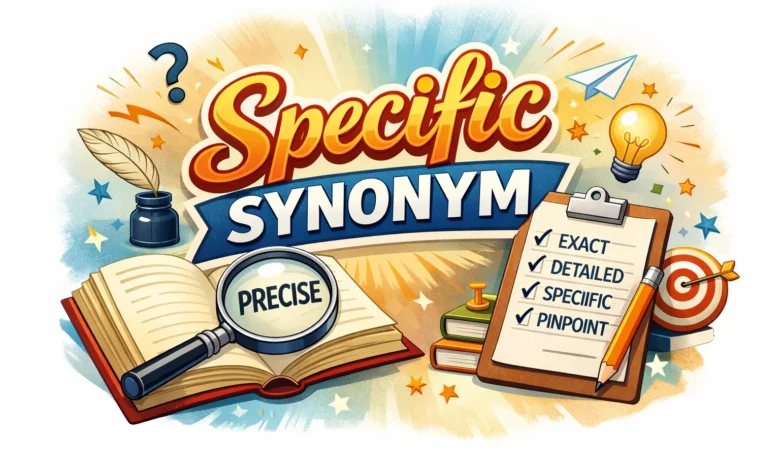
Specific Synonym: A Complete and Easy Guide to Understanding and Using It
When you hear the phrase specific synonym, it may sound simple, but it plays a powerful role in writing and speaking. A specific synonym is a word that has a similar meaning to another word but gives more exact, clear, and detailed information. In everyday life, using the right words helps us express ideas better and avoid confusion.
In this article, we will explore everything about specific synonym in a clear and friendly way. You’ll learn what it means, why it matters, and how to use it like an expert. By the end, you’ll feel more confident choosing the perfect words.

What Is a Specific Synonym?
A specific synonym is a word that replaces another word but gives a more precise meaning.
Let’s break it down simply:
- A synonym = a word that means the same or almost the same as another word
- A specific synonym = a synonym that gives more detail or accuracy
Example
- General word: good
- Specific synonym: excellent, fantastic, outstanding
Instead of saying “This is a good book,” you can say:
- “This is an excellent book.”
- “This is a fascinating book.”
See the difference? The second sentence gives a clearer idea.
Why Specific Synonym Is Important in Writing
Using a specific synonym makes your writing stronger and more interesting. It helps readers understand your message better.
Key Benefits
- Clarity – Your message becomes easy to understand
- Precision – You say exactly what you mean
- Engagement – Readers stay interested
- Professionalism – Your writing sounds polished
Without specific synonyms, writing can feel dull or confusing. With them, your words come alive.
Difference Between General Words and Specific Synonym
Sometimes we use simple words, but they don’t always explain things clearly. That’s where a specific synonym helps.
Comparison Table
| General Word | Specific Synonym | Meaning Difference |
|---|---|---|
| Big | विशाल / Huge / Massive | Shows exact size |
| Small | Tiny / Miniature | Gives clearer scale |
| Happy | Joyful / Delighted | Stronger emotion |
| Sad | Miserable / Heartbroken | Deeper feeling |
| Fast | Rapid / Swift | More precise speed |
This table shows how a specific synonym adds more meaning to a sentence.
Examples of Specific Synonym in Daily Life
Let’s look at how we use specific synonym in everyday conversations.
At School
- Instead of: “The test was hard”
- Say: “The test was challenging”
At Home
- Instead of: “The food is good”
- Say: “The food is delicious”
With Friends
- Instead of: “He is nice”
- Say: “He is kind” or friendly
These small changes make a big difference.
How to Choose the Right Specific Synonym
Choosing the correct specific synonym is important. Not all synonyms fit every situation.
Tips to Follow
- Understand the meaning – Know what the word really means
- Check the context – Make sure it fits the sentence
- Avoid overuse – Don’t force difficult words
- Use a dictionary or thesaurus – These tools help a lot
Example
The word cold can have different specific synonyms:
- Weather: chilly, freezing
- Behavior: unfriendly, distant
So, always think about the situation.
Common Mistakes When Using Specific Synonym
Even though using a specific synonym is helpful, mistakes can happen.
Mistakes to Avoid
- Using the wrong tone
- Saying “gigantic problem” when you mean a small issue
- Confusing similar words
- Angry vs annoyed (not the same level)
- Overcomplicating sentences
- Using difficult words when simple ones work better
- Ignoring context
- A synonym may not fit every sentence
Being careful helps you avoid these errors.
Specific Synonym for Common Words
Let’s explore some popular words and their specific synonym options.
For “Good”
- Excellent
- Amazing
- Wonderful
- Superb
For “Bad”
- Terrible
- Awful
- Poor
- Horrible
For “Big”
- Enormous
- Massive
- Huge
For “Small”
- Tiny
- Little
- Petite
Using a specific synonym like this improves your vocabulary quickly.
Role of Specific Synonym in Academic Writing
In school or professional writing, a specific synonym is very important. It shows your knowledge and skills.
Why It Matters
- Makes essays more clear
- Avoids repetition
- Shows strong vocabulary
- Helps in exams and assignments
Example in Essay
Instead of repeating:
- “The movie was good. The story was good. The acting was good.”
Use:
- “The movie was excellent. The story was engaging. The acting was impressive.”
Now it sounds much better!
How to Practice Using Specific Synonym
Practice is the key to mastering specific synonym usage.
Easy Practice Ideas
- Read books and articles
- Write daily sentences
- Use a thesaurus
- Play word games
- Learn one new word each day
Fun Exercise
Take a simple sentence:
- “The day was nice.”
Rewrite it:
- “The day was pleasant.”
- “The day was beautiful.”
This builds your skill step by step.
Specific Synonym in Speaking Skills
It’s not just about writing. A specific synonym also improves speaking.
Benefits in Speaking
- You sound more confident
- You explain ideas clearly
- People understand you better
Example
- “I am very happy”
Say:
- “I am thrilled”
- “I am delighted”
This makes your speech more expressive.
Tools to Find Specific Synonym
Finding the right specific synonym is easier with tools.
Helpful Tools
- Dictionary
- Thesaurus
- Online apps
- Vocabulary books
These tools give meanings, examples, and correct usage.
When Not to Use a Specific Synonym
Sometimes, simple words are better. Using a specific synonym is not always needed.
Avoid When
- Writing for beginners
- Talking casually
- When clarity is more important than style
Balance is important. Don’t overdo it.
Final Thoughts on Specific Synonym
A specific synonym is a simple yet powerful tool in language. It helps you speak and write with clarity, confidence, and creativity. By choosing the right words, you can express your ideas more clearly and make a strong impression.
Remember:
- Use specific words for better meaning
- Practice regularly
- Keep learning new vocabulary
In the end, mastering specific synonym will make your communication more effective and enjoyable. Keep practicing, and soon you’ll notice a big improvement in your language skills.