
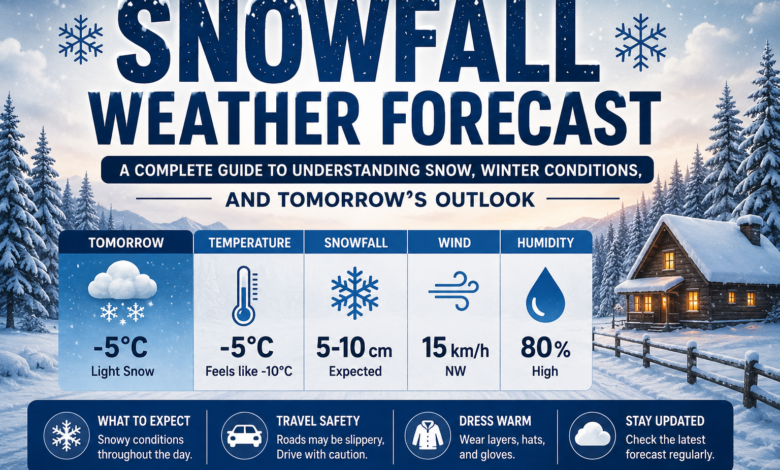
Snowfall Weather Forecast: A Complete Guide to Understanding Snow, Winter Conditions, and Tomorrow’s Outlook
A snowfall weather forecast is an important source of information during the winter season. It helps people understand when snow may begin, how long it could last, how much snow may fall, and what conditions may develop throughout the day. Whether you are planning to travel, go to school, work outdoors, enjoy winter activities, or simply prepare your home, checking a reliable snowfall weather forecast can help you make smarter decisions.
Snow can turn an ordinary landscape into a beautiful winter scene. However, changing winter conditions can also affect roads, transportation, visibility, and daily routines. That’s why understanding a forecast is about more than seeing a snowflake symbol on a weather app. Temperature, wind, humidity, cloud cover, and the movement of weather systems all play a role in determining whether snow will fall and how conditions may change.


This detailed guide explains the meaning of a snowfall forecast, how meteorologists predict snow, what different snowfall terms mean, why forecasts sometimes change, and how to prepare for winter weather. By the end, you will have a clearer understanding of how to read a snowfall weather forecast and use it confidently.
What Is a Snowfall Weather Forecast?
A snowfall weather forecast is a scientific prediction about expected snow and winter weather conditions in a particular location over a certain period. It may include the chance of snow, expected snowfall amounts, temperatures, wind conditions, visibility, and the likely timing of precipitation.
Forecasts can cover several different periods. Some give an overview of the next few hours, while others describe conditions for tomorrow, the coming days, or a longer period. For daily planning, many people find the hourly and next-day forecasts especially helpful.
A snowfall forecast is created using weather observations, satellite information, radar, atmospheric measurements, and computer forecasting models. Meteorologists study these sources to understand what is happening in the atmosphere and what may happen next.
Of course, weather isn’t something that can be controlled or predicted with perfect certainty. Even the most advanced forecast is still an informed prediction. A storm may shift direction, temperatures may change slightly, or snow may arrive earlier or later than expected. Therefore, it is wise to check updated information, especially before important travel or outdoor activities.
Why Checking a Snowfall Weather Forecast Matters
Winter weather can change quickly. A calm, cloudy morning may later bring snow, colder temperatures, or stronger winds. Because of this, checking the forecast before starting your day can be very useful.
For travelers, a snowfall forecast may help them prepare for slower journeys and changing road conditions. For families, it can help with school and outdoor plans. For workers, especially those who spend time outside, weather information can support better preparation.
A reliable forecast can help you plan for:
- Expected snowfall
- Changes in temperature
- Possible icy conditions
- Wind and stronger gusts
- Reduced visibility
- Travel delays
- Outdoor activities
- School or work plans
- Changing conditions during the day
- Official weather alerts
Well, here’s the simple truth: being informed is usually better than being surprised. You don’t need to become a weather expert overnight, but understanding the main details can make winter days easier to manage.
How Meteorologists Predict Snowfall
Predicting snow requires careful study of the atmosphere. Snow usually forms when moisture is available and atmospheric temperatures are suitable for ice crystals to develop and fall toward the ground.
Meteorologists gather information from many sources. Weather stations measure conditions near the ground, while weather balloons collect information higher in the atmosphere. Satellites observe large weather systems from above, and radar can help track precipitation.
Computer models then use mathematical calculations to estimate how weather systems may move and develop. These models consider huge amounts of information, including temperature, air pressure, moisture, and wind.
Meteorologists don’t simply press a button and accept one computer result. They compare different sources of information and use scientific knowledge to interpret the forecast. This process is especially important when temperatures are close to the point where precipitation could fall as rain, snow, or a mixture of winter conditions.
That is one reason a snowfall weather forecast may change as new observations become available. The atmosphere is always moving, and updated information can provide a clearer picture.
Temperature and Its Role in Snow Forecasting
Temperature is one of the most important details in a snowfall forecast. However, the temperature shown on your weather app doesn’t tell the entire story.
Snow forms higher in the atmosphere, where temperatures may be very different from those near the ground. A layer of warmer air can cause falling snowflakes to melt or partially melt before reaching the surface.
If temperatures near the ground are cold enough, snow may reach the surface and accumulate. If the air is warmer, precipitation may fall as rain or another form of wintry precipitation.
This means a small temperature difference can sometimes create a big change in the forecast.
When checking winter weather, look at:
- Current temperature
- Expected high temperature
- Expected low temperature
- Hourly temperature changes
- Conditions overnight
- Whether temperatures are expected to rise or fall
For snow lovers, this can be particularly interesting. A forecast showing temperatures close to the freezing point may lead to changing conditions, while colder temperatures can make snow more likely to remain on the ground.
Understanding Snowfall Amount Predictions
One of the first things people want to know is how much snow may fall. A snowfall weather forecast may provide an expected range or estimated accumulation.
Snowfall amounts can be difficult to predict precisely. The exact location of a storm, the intensity of precipitation, temperature changes, and local geography can all affect totals.
For example, one area may receive a light coating while another nearby area receives much more snow. Elevation can also make a major difference. Higher areas may experience colder conditions and greater snowfall than lower locations.
Forecasts may use descriptions such as:
- Light snow
- Occasional snow
- Snow showers
- Steady snow
- Heavy snow
- Accumulating snow
It is helpful to remember that expected snowfall amounts are estimates. If a forecast provides a range, that range reflects uncertainty and possible variation.
Rather than focusing only on one exact number, consider the overall message. Is the forecast calling for a light event, a moderate period of snow, or potentially significant winter conditions? That broader understanding is often more useful for planning.
The Difference Between Snow Showers and Steady Snow
Weather descriptions can sometimes sound similar even though they describe different patterns. Snow showers, for example, are often shorter periods of snowfall that can begin and end more suddenly.
Steady snow usually suggests precipitation that continues for a longer period. Depending on the intensity, it may lead to greater accumulation.
However, weather doesn’t always follow a perfectly neat schedule. A forecast may describe snow showers, yet one area could experience a brief heavier period. Likewise, steady snow may weaken earlier than expected.
When checking your local forecast, look at both the weather description and the hourly timeline. The combination can give you a clearer idea of how conditions may develop.
Here’s a useful approach:
- Check when snow is expected to begin.
- Look for changes in intensity.
- Review the expected end time.
- Check the forecast temperature.
- Monitor updates if travel is important.
This gives you more practical information than simply seeing the word “snow” on a daily forecast.
Snowfall Weather Forecast and Wind Conditions
Wind can have a major effect on winter weather. Even when the temperature remains the same, stronger winds can make outdoor conditions feel much colder.
Wind may also blow falling or existing snow, which can reduce visibility. In areas with open land, drifting snow may develop when loose snow is moved by strong winds.
A forecast may show sustained wind speeds along with stronger gusts. A gust is a brief increase in wind speed, and these stronger bursts can make conditions feel more uncomfortable.
When reviewing winter weather, consider:
- Average wind speed
- Maximum gusts
- Wind direction
- Expected changes during the day
- Official wind-related alerts
Planning ahead can make a big difference. A short outdoor activity in calm weather may feel completely different when cold temperatures and strong winds arrive together.
Visibility and Snowy Weather Conditions
Visibility is another important part of a winter forecast. Falling snow can make it harder to see distant objects, roads, buildings, and other surroundings.
The heavier the snowfall, the more visibility may be affected. Wind can make the situation more challenging by blowing snow through the air.
Reduced visibility can affect:
- Driving
- Walking near traffic
- Outdoor work
- Aviation
- Travel schedules
- Winter sports
If the forecast suggests poor visibility, allow extra time for your plans and pay attention to official local guidance. Conditions can vary greatly over short distances, so an updated local report can be especially helpful.
How to Read an Hourly Snowfall Weather Forecast
A daily forecast gives a broad summary, but an hourly snowfall weather forecast can be much more useful when you need to know when conditions may change.
For example, the forecast may show cloudy conditions in the morning, snow during the afternoon, and clearer skies later in the evening. Without checking the hourly details, you might miss the period when snow is most likely.
An hourly forecast can include:
- Temperature
- Weather conditions
- Snow probability
- Expected precipitation
- Wind speed
- Humidity
- Cloud cover
- Visibility information
If you have a specific trip or outdoor plan, focus on the hours when you expect to be outside. That’s a practical way to use weather information without becoming overwhelmed by every detail.
Still, don’t forget that forecasts can change. Checking again closer to your planned activity can provide a more updated picture.
Snowfall Weather Forecast for Travel Planning
Travel and winter weather are closely connected. Snow can affect roads, airports, rail services, and local transportation.
Before traveling during a snowy period, check the weather for your departure point, your destination, and important areas along the route. Conditions may vary significantly between locations.
A useful winter travel checklist includes:
- Local forecast at departure
- Forecast at the destination
- Expected snowfall timing
- Temperature changes
- Wind conditions
- Visibility
- Official weather alerts
- Transportation updates
- Current local guidance
Don’t assume that the weather at home will be the same as the weather several miles away. Winter systems can create very different conditions across a region.
If significant snow is expected, give yourself extra time and remain flexible. A small adjustment to your schedule can sometimes make travel much easier.
Snowfall Weather Forecast for Outdoor Activities
Snow can create wonderful opportunities for outdoor activities. Many people enjoy walking in fresh snow, taking photographs, playing winter sports, or simply enjoying a peaceful snowy landscape.
Before heading outside, however, check more than just whether snow is expected. Temperature, wind, visibility, and the timing of snowfall can all affect comfort.
For outdoor plans, review:
- Expected temperature
- Wind conditions
- Snow timing
- Snow intensity
- Visibility
- Weather alerts
- Sunset time
- Changes expected later
If conditions are mild and safe, a snowy day can be a memorable experience. Ah, there’s something special about watching snow fall quietly from a warm and safe place or stepping outside to see a fresh winter scene.
The important thing is preparation. Appropriate clothing and awareness of changing conditions can help people enjoy winter more comfortably.
Local Geography and Snowfall Differences
Snowfall isn’t the same everywhere. Local geography can strongly influence how much snow falls and how long it remains on the ground.
Mountain regions, for example, often experience different conditions from nearby valleys. Higher elevations may remain colder and receive more snow.
Large bodies of water can also influence weather by adding moisture to the air or affecting local temperatures. Urban areas may experience conditions that differ from surrounding rural locations.
Here is a simple table showing some factors that can influence a local snowfall forecast:
| Weather or Geographic Factor | Possible Effect on Snowfall |
| Lower temperature | May support snow reaching the ground |
| Rising temperature | May change snow to rain or mixed precipitation |
| Higher elevation | Often produces colder conditions |
| Moist air | Can support cloud and precipitation development |
| Strong wind | May reduce comfort and visibility |
| Storm track | Influences where heavier snow falls |
| Nearby water | Can affect local moisture and temperatures |
| Local terrain | May change wind and precipitation patterns |
Because of these differences, always check the forecast for your exact location whenever possible.
Why a Snowfall Weather Forecast Can Change
Forecast changes are normal. A snowstorm’s exact path can shift, temperatures may change, and precipitation may develop differently from earlier predictions.
Imagine a forecast where the expected temperature is very close to freezing. Even a small change in temperature can influence whether precipitation falls mainly as snow or rain.
Similarly, a storm moving slightly farther north or south may change snowfall amounts in different areas.
Meteorologists update forecasts as new information arrives. This is not necessarily a sign that the earlier forecast was poor. In many cases, updated data simply provides a clearer understanding of an evolving weather system.
For that reason, don’t check the forecast once and forget about it. If snow may affect an important plan, review the latest information again before leaving.
Common Snowfall Forecast Terms You Should Know
Weather services often use specific words to describe expected conditions. Understanding these terms can make a forecast easier to read.
Light snow usually describes lower-intensity snowfall that may produce smaller accumulations.
Snow showers generally refers to periods of snow that can begin and end more quickly.
Accumulation means snow collecting on surfaces over time.
Overcast describes a sky that is mostly or completely covered by clouds.
Wind chill refers to how cold conditions may feel due to the effect of wind.
Visibility describes how far a person can see clearly under current conditions.
Winter weather advisory or warning refers to official information about potentially hazardous conditions, depending on the weather service and location.
Different countries and weather agencies may use different terms, so always read the explanation provided by your local official weather organization.
How to Prepare for a Snowy Day
Preparation doesn’t need to be complicated. If the snowfall weather forecast suggests changing conditions, a few simple steps can help.
Before the day begins, check the latest forecast and any official alerts. Consider how the weather may affect your plans and whether you need extra time.
You might prepare by:
- Checking the forecast again before leaving
- Choosing clothing suitable for cold conditions
- Planning extra travel time
- Monitoring official alerts
- Keeping communication devices charged
- Letting others know about important travel plans
- Having a flexible schedule when possible
- Staying informed as conditions change
The best approach is calm preparation. There’s no need to panic because snow is in the forecast, but ignoring significant weather information isn’t a good idea either.
Using Reliable Sources for Snowfall Weather Forecasts
Accurate information is important when weather may affect travel or safety. Official meteorological agencies and established weather services can provide forecasts, warnings, maps, and updates.
When choosing a source, look for:
- Clearly identified locations
- Recent update times
- Hourly and daily forecasts
- Temperature information
- Snowfall predictions
- Wind information
- Official alerts
- Clear explanations
If you compare several forecasts, you may notice slight differences. That’s normal because weather services can use different models and forecasting methods.
For serious conditions, official local alerts should receive special attention. They are designed to help communities understand possible risks and respond appropriately.
Common Mistakes When Reading Snow Forecasts
People sometimes misunderstand winter forecasts because they focus on only one detail.
For example, seeing a snow icon doesn’t explain how much snow may fall, when it will begin, or whether temperatures may rise later.
Common mistakes include:
- Looking only at the daily weather icon
- Ignoring hourly changes
- Checking the wrong location
- Assuming a forecast cannot change
- Focusing only on snowfall totals
- Forgetting to check wind
- Ignoring visibility conditions
- Missing official weather alerts
- Using outdated forecast information
A better approach is to look at the complete picture. Temperature, timing, wind, snow intensity, and local warnings all matter.
Snowfall Weather Forecast and Seasonal Changes
Snowfall patterns often change as the seasons move forward. Early winter may bring different conditions from the middle or end of the season.
Temperature patterns, available moisture, and large-scale atmospheric conditions can all influence whether a location receives snow.
Some areas experience frequent snow during winter, while others may see snow only occasionally. In warmer climates, even a small temperature change can determine whether precipitation falls as rain or snow.
Seasonal forecasting can provide broad information about expected trends, but daily and short-term forecasts are generally more useful for immediate planning.
If you want to know what tomorrow may bring, a local updated forecast remains the best place to start.
The Importance of Checking Forecast Updates
A forecast is most useful when it is current. Conditions may look different a few hours before a storm than they did a day earlier.
Checking updated information can help you understand:
- Whether snow is still expected
- Whether snowfall timing has changed
- Whether expected amounts have changed
- Whether temperatures are rising or falling
- Whether winds are becoming stronger
- Whether official alerts have been issued or updated
This is especially important before long trips or major outdoor events.
A quick update check can provide peace of mind and help you adjust your plans if needed. After all, winter weather doesn’t always follow the first prediction exactly.
Frequently Asked Questions About Snowfall Weather Forecast
What is a snowfall weather forecast?
A snowfall weather forecast is a prediction of expected snow and related weather conditions for a specific place and period. It may include snowfall chances, expected accumulation, temperatures, wind, visibility, and weather alerts.
How accurate is a snowfall weather forecast?
Forecasts can be very useful, especially for short periods, but they are not perfect. Accuracy depends on the weather pattern, location, available data, and how conditions develop. Forecasts may be updated when new information becomes available.
Why does a snowfall forecast sometimes change?
Snow forecasts can change because temperatures, storm tracks, moisture, and precipitation patterns may develop differently than earlier expected. Updated observations also give meteorologists new information.
Does a higher chance of snow mean heavy snowfall?
Not necessarily. The chance of snow and the expected amount are different pieces of information. A high probability may indicate that snow is likely, while the amount could still be light.
Why can snow fall in one area but not another nearby?
Local temperatures, elevation, terrain, wind, and the exact path of a weather system can create differences between nearby locations. This is why checking a specific local forecast is important.
Should I check the hourly snowfall forecast?
Yes. An hourly forecast can be helpful if you need to know when snow may begin, become heavier, weaken, or end. It is especially useful for travel and outdoor planning.
What should I do if the snowfall forecast shows severe conditions?
Follow information and guidance from official local authorities and meteorological services. Monitor updates, adjust plans when necessary, and avoid taking unnecessary risks.
Final Thoughts on Snowfall Weather Forecast
A snowfall weather forecast is much more than a symbol of a cloud and falling snowflakes. It provides valuable information about expected temperatures, snow timing, possible accumulation, wind, visibility, and changing winter conditions.
By understanding how forecasts work, you can make better decisions about travel, clothing, outdoor activities, and daily plans. Remember to check your exact location, review hourly changes when timing matters, and pay close attention to official alerts during significant winter weather.
Forecasts may change, and that’s completely normal. New data helps meteorologists improve their understanding of developing conditions. Staying informed, flexible, and prepared is the smartest way to approach winter weather.
Whether you’re hoping to enjoy a peaceful snowy morning, planning a winter journey, or preparing for changing conditions, checking a reliable snowfall weather forecast can help you face the day with confidence, knowledge, and an optimistic outlook.