
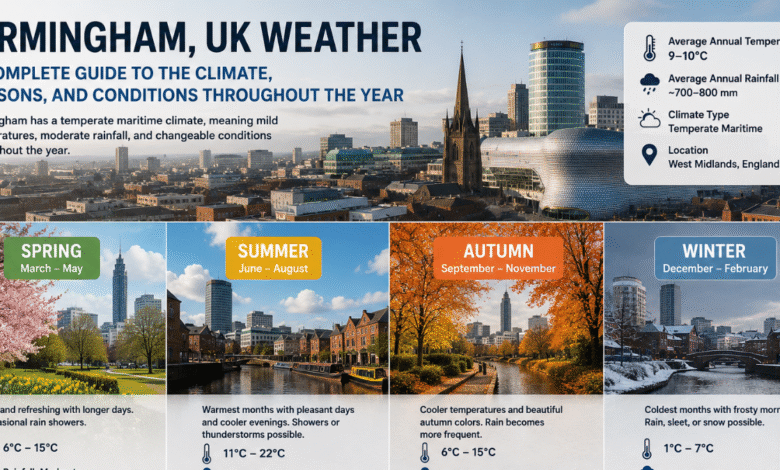
Birmingham UK Weather: A Complete Guide to the Climate, Seasons, and Conditions Throughout the Year
The birmingham uk weather is one of the most discussed topics among travelers, students, workers, and residents who plan to visit or live in Birmingham. Located in the heart of England, Birmingham experiences a temperate maritime climate, which means the city enjoys relatively mild temperatures throughout the year. While extreme weather conditions are uncommon, Birmingham does experience regular rainfall, seasonal changes, and varying daylight hours.
Understanding birmingham uk weather can help people prepare for daily life, vacations, business trips, and outdoor activities. Whether you’re planning a summer holiday, a winter visit, or considering moving to the city, knowing what to expect from the climate is incredibly useful.


This comprehensive guide explores Birmingham’s weather patterns, seasonal changes, monthly conditions, and practical tips for enjoying the city in every season.
Quick Overview of Birmingham’s Climate
Before diving deeper, let’s look at a simple overview of Birmingham’s climate.
| Climate Factor | Details |
|---|---|
| Climate Type | Temperate Maritime |
| Average Summer Temperature | 18°C to 24°C |
| Average Winter Temperature | 1°C to 8°C |
| Annual Rainfall | Around 700 mm |
| Snowfall | Occasional |
| Hottest Months | July and August |
| Coldest Months | January and February |
| Best Time to Visit | May to September |
| Humidity Level | Moderate |
| Sunshine Hours | Approximately 1,400 hours annually |
The birmingham uk weather remains relatively comfortable compared to many regions around the world, making it suitable for year-round activities.
Understanding Birmingham’s Geographic Influence on Weather
Birmingham is situated in the West Midlands region of England. Unlike coastal cities, it lies inland, which influences local weather patterns. The city’s elevation and central location contribute to slightly cooler temperatures compared to southern England.
The surrounding countryside and rolling landscapes also affect wind movement and rainfall distribution. Because Birmingham is not directly exposed to ocean storms, severe weather events are less frequent than in coastal regions.
These geographic factors help shape the distinct characteristics of birmingham uk weather that residents experience throughout the year.
Spring Season in Birmingham
Spring arrives gradually in Birmingham, bringing longer days and milder temperatures. This season usually extends from March through May.
Temperature During Spring
Average temperatures include:
- March: 5°C to 11°C
- April: 7°C to 14°C
- May: 10°C to 18°C
As spring progresses, flowers begin blooming across parks and gardens, transforming the city into a colorful landscape.
Rainfall in Spring
Rain showers remain common during spring. However, these showers are often brief and followed by sunshine. Carrying a lightweight waterproof jacket is always a smart idea.
Why Spring Is Popular
Many visitors enjoy spring because:
- Parks become vibrant with flowers.
- Temperatures are comfortable.
- Tourist attractions are less crowded.
- Outdoor festivals begin to appear.
For many people, spring offers some of the most pleasant birmingham uk weather conditions of the year.
Summer Season in Birmingham
Summer runs from June through August and is generally considered the warmest period of the year.
Typical Summer Temperatures
Average temperatures usually range between:
- June: 13°C to 21°C
- July: 15°C to 24°C
- August: 14°C to 23°C
While heatwaves occasionally occur, Birmingham rarely experiences extreme temperatures.
Sunshine and Daylight
One of the best parts of summer is the extended daylight. During June, daylight can last over 16 hours.
This extra sunshine allows residents and tourists to:
- Explore city attractions.
- Enjoy outdoor dining.
- Attend music festivals.
- Visit local parks.
Rain During Summer
Although summer is warmer, rain remains possible. A sunny morning can quickly turn into an afternoon shower.
Even so, summer typically provides the most favorable birmingham uk weather for outdoor adventures.
Autumn Season in Birmingham
Autumn stretches from September through November and brings beautiful seasonal colors.
Temperature Changes
Average temperatures include:
- September: 12°C to 20°C
- October: 9°C to 15°C
- November: 5°C to 10°C
The gradual cooling creates ideal conditions for sightseeing and nature walks.
Autumn Scenery
Many parks become stunning during autumn. Golden, orange, and red leaves create picturesque views throughout the city.
Popular autumn activities include:
- Walking trails.
- Photography.
- Visiting local markets.
- Exploring historic sites.
Rainfall Trends
Rainfall becomes more frequent as autumn progresses. November often sees wetter conditions compared to early autumn months.
Still, many residents appreciate the crisp and refreshing nature of birmingham uk weather during autumn.
Winter Season in Birmingham
Winter lasts from December through February and represents the coldest period of the year.
Winter Temperatures
Typical temperatures range from:
- December: 2°C to 8°C
- January: 1°C to 7°C
- February: 1°C to 8°C
Sub-zero temperatures occasionally occur overnight.
Snowfall Possibilities
Snow does happen in Birmingham, although heavy snowstorms are relatively uncommon. Most snowfall events are light and temporary.
Winter Atmosphere
The city becomes especially festive during winter thanks to:
- Christmas markets.
- Seasonal decorations.
- Holiday events.
- Cozy cafés and restaurants.
Many visitors find the winter charm of birmingham uk weather surprisingly enjoyable despite cooler temperatures.
Monthly Breakdown of Weather Conditions
Each month brings unique weather characteristics.
January
- Coldest month.
- Occasional frost.
- Short daylight hours.
February
- Slightly milder.
- Early signs of spring.
March
- Temperatures begin rising.
- More sunshine.
April
- Variable weather.
- Frequent rain showers.
May
- Pleasant temperatures.
- Longer daylight hours.
June
- Warm and comfortable.
- Ideal for outdoor activities.
July
- Warmest month.
- Peak tourist season.
August
- Continued warmth.
- Occasional thunderstorms.
September
- Mild and pleasant.
- Autumn colors begin emerging.
October
- Cooler evenings.
- Increased rainfall.
November
- Noticeably colder.
- Shorter days.
December
- Festive atmosphere.
- Cold and occasionally frosty.
This monthly variation demonstrates the diversity of birmingham uk weather throughout the year.
Rainfall Patterns in Birmingham
Rain is a regular feature of life in Birmingham. However, the city does not experience excessive rainfall compared to many global destinations.
Rainfall Facts
- Rain can occur in every month.
- Showers are often light to moderate.
- Extended periods of heavy rain are uncommon.
- Waterproof clothing is useful year-round.
How Residents Adapt
Locals generally continue daily activities despite rain. It is common to see people carrying umbrellas and waterproof jackets throughout the year.
Fortunately, rainfall rarely disrupts normal life under the typical birmingham uk weather pattern.
Sunshine and Daylight Hours
Sunshine plays a major role in shaping seasonal experiences.
Summer Daylight
Summer offers:
- Early sunrises.
- Late sunsets.
- Up to 16 hours of daylight.
Winter Daylight
Winter days are much shorter:
- Sunrise occurs later.
- Sunset arrives earlier.
- Around 8 hours of daylight.
These seasonal changes significantly influence daily routines and outdoor activities.
The changing daylight patterns are an important aspect of birmingham uk weather.
How Climate Change Is Affecting Birmingham
Climate experts have observed gradual shifts in weather patterns across the United Kingdom.
Some noticeable trends include:
- Warmer average temperatures.
- More frequent heatwaves.
- Changes in rainfall distribution.
- Increased weather variability.
While Birmingham still maintains its traditional climate characteristics, future conditions may continue evolving.
City planners and environmental organizations are already working to improve sustainability and climate resilience.
Understanding these developments helps people better appreciate the future of birmingham uk weather.
What to Wear Throughout the Year
Packing appropriately makes any visit more comfortable.
Spring Clothing
- Light jackets.
- Waterproof shoes.
- Layered clothing.
Summer Clothing
- T-shirts.
- Light trousers.
- Sunglasses.
- Light rain jacket.
Autumn Clothing
- Sweaters.
- Waterproof coats.
- Comfortable walking shoes.
Winter Clothing
- Warm coats.
- Gloves.
- Scarves.
- Waterproof boots.
Because conditions can change quickly, layers remain the best strategy for adapting to Birmingham’s climate.
Outdoor Activities Based on the Weather
Different seasons create opportunities for various activities.
Spring Activities
- Botanical gardens.
- Walking tours.
- Outdoor photography.
Summer Activities
- Festivals.
- Park picnics.
- Canal cruises.
Autumn Activities
- Nature walks.
- Scenic drives.
- Farmers markets.
Winter Activities
- Christmas markets.
- Shopping districts.
- Indoor museums.
No matter the season, the diversity of birmingham uk weather allows residents and visitors to enjoy numerous recreational options.
Benefits of Birmingham’s Moderate Climate
Compared to regions with extreme heat or severe winters, Birmingham offers several advantages.
Key Benefits
- Rarely experiences extreme temperatures.
- Four distinct seasons.
- Comfortable summer conditions.
- Manageable winters.
- Suitable for year-round travel.
These qualities contribute to Birmingham’s reputation as an attractive place to live, work, and visit.
The balanced nature of birmingham uk weather supports both urban life and outdoor recreation throughout the year.
Travel Tips for Visitors
If you’re visiting Birmingham, a few simple preparations can improve your experience.
Helpful Tips
- Check forecasts before traveling.
- Carry a compact umbrella.
- Wear layers.
- Bring waterproof footwear.
- Prepare for changing conditions.
Following these suggestions ensures greater comfort regardless of the season.
Visitors quickly learn that flexibility is the secret to enjoying birmingham uk weather.
Frequently Asked Questions
Does Birmingham get a lot of rain?
Birmingham receives moderate rainfall throughout the year, but rainfall is generally manageable and rarely extreme.
What is the hottest month in Birmingham?
July is typically the warmest month, followed closely by August.
Does Birmingham experience snow?
Yes, Birmingham occasionally receives snow during winter, although heavy snowfall is uncommon.
What is the best time to visit Birmingham?
Many travelers prefer May through September due to warmer temperatures and longer daylight hours.
Is Birmingham colder than London?
Generally, Birmingham can be slightly cooler than London because of its inland location and elevation.
Conclusion
The birmingham uk weather offers a balanced and comfortable climate that appeals to residents and visitors alike. With mild summers, cool winters, colorful autumns, and refreshing springs, Birmingham experiences all four seasons without frequent extremes. Rainfall is a regular feature, yet it rarely prevents people from enjoying daily life or exploring the city’s attractions.
Whether you’re planning a holiday, relocating for work, or simply learning about England’s climate, understanding birmingham uk weather helps you prepare for every season with confidence. By embracing its changing conditions and unique seasonal charm, you’ll discover that Birmingham remains an enjoyable destination throughout the entire year. The versatility and reliability of birmingham uk weather continue to make the city one of the most welcoming places in the United Kingdom.
You may also read
updatessphere.co.uk: A Complete Guide to the Modern Information Platform