
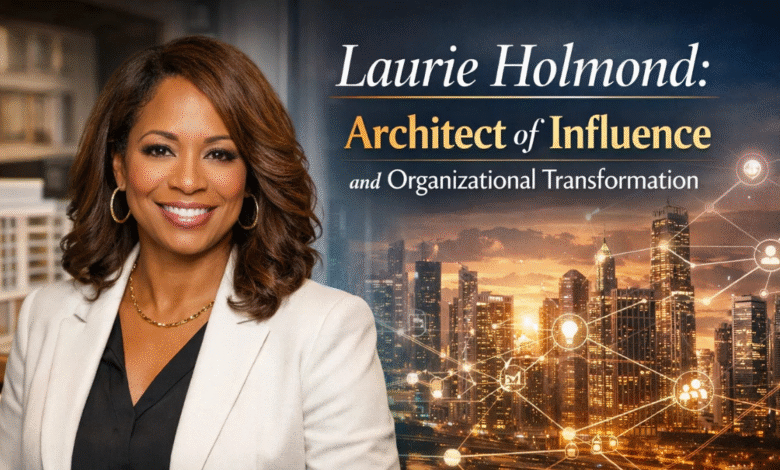
Laurie Holmond: Architect of Influence and Organizational Transformation
Laurie Holmond In the intricate world of government consulting and organizational leadership, few names carry the weight and quiet authority of Laurie Holmond. Her career is not defined by viral fame or public spectacle, but by a profound, lasting impact on the systems and institutions that shape public-sector effectiveness. To understand the work of Laurie Holmond is to delve into a masterclass in strategic navigation, stakeholder alignment, and the nuanced art of driving large-scale change within complex, often rigid, environments.
This article serves as the definitive exploration of her professional journey, her core methodologies, and the legacy of principled leadership she has built. Moving beyond a simple biography, we will unpack the tangible frameworks and insights that define the “Holmond Approach,” offering valuable lessons for leaders, consultants, and analysts operating at the intersection of policy, management, and human capital. The influence of Laurie Holmond provides a compelling blueprint for anyone committed to meaningful organizational transformation.

The Formative Years and Professional Foundation
The bedrock of Laurie Holmond’s expertise was laid through a combination of rigorous academic training and early hands-on experience in critical governmental arenas. Her educational path provided the analytical tools and theoretical frameworks necessary to dissect complex policy and management challenges. This academic foundation was never an end in itself, but rather a launchpad for practical application in environments where theory meets the often-messy reality of public administration and political dynamics.
This initial phase of her career was characterized by deep immersion in the operational engines of government and strategic consulting. Positions within and adjacent to key federal agencies allowed her to observe institutional behavior, process bottlenecks, and the human elements of bureaucratic systems from the ground floor. It was here that Laurie Holmond developed her signature diagnostic lens—an ability to see beyond organizational charts to the underlying flows of information, power, and incentive that truly dictate performance and outcomes.
Defining the Holmond Approach to Complex Problem-Solving
At the heart of Laurie Holmond’s methodology is a systemic and human-centric framework for tackling entrenched organizational issues. She consistently avoids siloed solutions, instead advocating for an integrated view that connects technology, process, culture, and governance. Problems are rarely just technical or just people-related; they are systemic puzzles where each piece influences the whole. This approach requires patience and a resistance to quick-fix solutions, focusing instead on sustainable alignment across all levers of an organization.
Furthermore, the Holmond Approach places extraordinary emphasis on stakeholder mapping and empathetic engagement. She operates on the principle that no strategic plan, however brilliant on paper, can succeed without understanding the motivations, concerns, and informal networks of the people who must execute it. For Laurie Holmond, strategy sessions are as much about psychology and communication as they are about data and milestones. This blend of hard analysis and soft skills is what allows her to design interventions that are both intellectually sound and practically adoptable by the teams involved.
Leadership Philosophy and Cultivating High-Performance Teams
Laurie Holmond’s leadership philosophy is rooted in the concept of “servant leadership” tailored for the complex consultancy and government space. She views her role not as a commander issuing directives, but as a facilitator who removes obstacles, provides clarity, and empowers experts to do their best work. This creates an environment where accountability is paired with autonomy, and where team members feel ownership over both the challenges and the solutions, leading to higher engagement and more innovative outcomes.
This philosophy directly feeds into her exceptional ability to cultivate and sustain high-performance teams. She is known for assembling diverse groups that balance institutional knowledge with fresh external perspectives. Under her guidance, these teams operate with a clear, shared purpose and a culture of rigorous, respectful debate. The success attributed to Laurie Holmond is, in her own view, always a team success, reflecting her skill in talent identification, role alignment, and creating a psychologically safe space for professional growth and candid dialogue.

Impact on Government Consulting and Advisory Practices
The impact of Laurie Holmond on the field of government consulting is substantial, shifting perceptions from mere outsourcing to a true strategic partnership. She has been instrumental in advocating for advisory roles that are embedded, co-creative, and focused on building internal client capabilities for the long term. This model moves away from dependency and toward empowerment, ensuring that improvements outlast the consulting engagement itself. Her work has set a new standard for what ethical, effective, and impactful public-sector consultancy should look like.
Through her projects and thought leadership, she has also championed the integration of advanced analytics and evidence-based decision-making into the cultural fabric of agencies. However, she always frames technology and data as enablers of human judgment, not replacements for it. This balanced perspective has helped numerous organizations modernize their operations without losing sight of their public-service mission. The legacy of Laurie Holmond in this space is a more mature, sophisticated, and value-driven consulting discipline.
Navigating Organizational Change and Transformation
Driving change in large, established institutions is perhaps the most demanding test of any leader’s skill set, and it is here that Laurie Holmond’s strategies shine. She approaches transformation not as a single “big bang” event but as a series of deliberate, manageable phases, each designed to build momentum and demonstrate tangible value. This reduces resistance and creates a narrative of progress, turning skeptics into supporters by showing, not just telling, the benefits of the new direction.
A critical tool in her change-management arsenal is the concept of “coalition building.” She identifies and nurtures champions at all levels of the organization—from frontline staff to senior executives—creating a network of advocates who can communicate and model the change in their own domains. This grassroots-up, leadership-down approach ensures the change is culturally anchored. For Laurie Holmond, sustainable transformation is always a social process before it is a technical one, requiring constant communication and the careful management of institutional energy.
Key Publications and Thought Leadership Contributions
While much of her work resides within confidential client engagements, Laurie Holmond has also shaped the broader professional conversation through selective publications and speaking engagements. Her writings are characterized by their practicality and lack of jargon, offering actionable frameworks for addressing common yet complex challenges like stakeholder alignment, risk governance in public projects, and measuring the soft returns on organizational investments. These contributions have made her insights accessible to a wider audience beyond her immediate client circle.
Her thought leadership consistently addresses the evolving nature of public service in a digital age, emphasizing adaptability, continuous learning, and ethical governance. She often explores the intersection of policy intent, operational delivery, and public trust. By framing these discussions in accessible terms, the work of Laurie Holmond has educated a generation of practitioners on moving from compliance-focused administration to outcome-focused, agile governance. Her voice is considered a beacon of sense and substance in a field sometimes clouded by fleeting trends.
Mentorship and Developing the Next Generation
Beyond her direct project work, Laurie Holmond has invested deeply in mentorship, viewing it as a core responsibility of experienced leadership. She actively seeks out emerging talent, particularly women and underrepresented groups in the fields of consulting and public policy, providing them with guidance, sponsorship, and challenging opportunities. Her mentorship style is direct yet supportive, focused on helping mentees develop their own critical thinking and ethical compass rather than prescribing a single path to success.
This commitment to development extends to formal roles in professional organizations and academic institutions, where she helps shape curricula and competency models. Her objective is to equip the next generation with not just technical skills, but also the political acumen, communication prowess, and emotional intelligence required to be effective. The ripple effect of Laurie Holmond’s mentorship is a more capable, principled, and diverse pool of leaders prepared to tackle tomorrow’s public-sector challenges.
Common Misconceptions and Clarifications
A common misconception is that consultants like Laurie Holmond are brought in to provide all the answers. In reality, her model is fundamentally collaborative. She sees her role as a catalyst and a facilitator who uses structured processes to help clients discover and own their own solutions. The value lies not in a proprietary magic bullet, but in the disciplined methodology and external perspective applied to the client’s unique context and knowledge. This ensures solutions are practical and embraced by the organization.
Another misunderstanding is that her work is purely transactional or project-based. While projects have defined scopes, the underlying goal of Laurie Holmond’s engagements is almost always to strengthen the client’s internal muscles—be it strategic planning, performance management, or change leadership. The true return on investment is realized long after her team has departed, in the form of a more resilient, self-sufficient, and strategically agile organization. Her impact is measured in sustained capability, not just deliverable reports.
The Strategic Value of Stakeholder Analysis
One cannot overstate the centrality of rigorous stakeholder analysis in the methodology championed by Laurie Holmond. This goes far beyond creating a simple list of names and titles. It involves a deep dive into understanding each stakeholder’s interests, influence, current stance on an issue, and potential for alliance or resistance. This analysis becomes the strategic map for any initiative, informing communication plans, engagement strategies, and risk mitigation from the very outset.
This process is dynamic, not static. Laurie Holmond emphasizes the need to continuously revisit and update stakeholder assessments as projects evolve and political landscapes shift. By anticipating concerns and proactively addressing them, she helps prevent derailments and builds a broad base of support. This meticulous attention to the human and political ecosystem is what separates strategic initiatives that succeed from those that stall, making it a non-negotiable component of her practice.
Integrating Technology with Human-Centric Processes
In an era of rapid digital transformation, Laurie Holmond provides a crucial, balanced perspective. She is a strong advocate for leveraging technology to improve efficiency, transparency, and service delivery in government. However, she consistently warns against “technology-first” thinking that neglects the people who use the systems and the citizens they serve. Successful digital transformation, in her view, starts with process redesign and change management, with technology as the enabling tool.
She guides organizations to ask “what problem are we solving?” before asking “what software should we buy?” This human-centric approach ensures new tools actually meet user needs and are adopted willingly. It also focuses investment on technologies that deliver real public value. For Laurie Holmond, the sweet spot is where intuitive technology amplifies skilled human judgment and fosters better collaboration, rather than creating new layers of complexity or alienation.
The Future of Public Sector Leadership
Looking ahead, Laurie Holmond’s insights point toward a future where public sector leadership demands even greater agility, empathy, and systems thinking. The challenges facing governments—from cybersecurity and climate adaptation to social equity and hybrid work—are interconnected and evolving at a pace. Leaders can no longer afford to operate within narrow functional silos. The ability to think horizontally across agencies and to collaborate with non-governmental partners will be paramount.
Furthermore, she emphasizes that the currency of future leadership will be trust. Building and maintaining public trust requires unprecedented levels of transparency, ethical consistency, and a genuine commitment to outcomes over optics. Leaders who cultivate a culture of learning, empower their teams with data and authority, and communicate with authenticity will be the ones who succeed. The principles embodied by Laurie Holmond—strategic clarity, stakeholder integrity, and a focus on sustainable capacity—are precisely the attributes that will define the next era of effective public service.
Comparative Framework: Traditional vs. Holmond-Influenced Consulting Approach
The table below contrasts a traditional, transactional consulting model with the holistic, capacity-building approach exemplified by Laurie Holmond’s career. This illustrates the paradigm shift she has helped champion within the industry.
| Dimension | Traditional Transactional Model | Holmond-Influenced Strategic Partner Model |
|---|---|---|
| Primary Focus | Delivering a specific, predefined output or report. | Building client capability and ownership for long-term success. |
| Consultant Role | Expert providing answers; often detached. | Facilitator and coach; embedded and collaborative. |
| Problem Definition | Narrow, based on initial client request. | Explored systemically, often reframed to address root causes. |
| Stakeholder Engagement | Limited to primary sponsors for requirements. | Comprehensive, continuous mapping and engagement at all levels. |
| Success Metrics | On-time, on-budget delivery of deliverables. | Sustainable improvement in client performance & problem-solving ability. |
| Knowledge Transfer | Handoff at project conclusion, if any. | Integrated throughout engagement; coaching and co-creation. |
| Long-term View | Relationship ends with project scope. | Focuses on leaving a lasting, positive impact on organizational health. |
A Lasting Legacy of Principled Impact
The career of Laurie Holmond offers more than a case study in professional success; it provides a robust template for creating meaningful, enduring impact within complex systems. Her legacy is not etched in a single piece of legislation or a high-profile corporate turnaround, but in the strengthened capacities of countless organizations and the professional growth of the individuals she has led and mentored. She has demonstrated that influence is most powerful when it is used to empower others, and that the most effective strategies are those that align intellectual rigor with deep human understanding.
As public and private institutions continue to grapple with unprecedented change, the lessons from Laurie Holmond’s work remain profoundly relevant. The emphasis on systemic thinking, ethical stakeholder engagement, and cultivating leadership at all levels is a timeless formula for navigating uncertainty. Her story ultimately reinforces that true authority is earned not through title alone, but through consistent, principled action that makes systems more effective, more humane, and more accountable to the people they serve.
Frequently Asked Questions
Who is Laurie Holmond, and what is she known for?
Laurie Holmond is a highly respected figure in government consulting and organizational strategy, known for her sophisticated approach to complex problem-solving, stakeholder management, and driving sustainable transformation within public-sector institutions. Her career is defined by a focus on building long-term client capability rather than just delivering short-term solutions.
What is the core methodology associated with Laurie Holmond?
The core methodology, often termed the Holmond Approach, integrates rigorous systemic analysis with deep human-centric engagement. It avoids siloed thinking by simultaneously addressing technology, process, culture, and governance, and places a heavy emphasis on empathetic stakeholder mapping and coalition-building to ensure strategic plans are successfully adopted and sustained.
How has Laurie Holmond influenced the field of government consulting?
Laurie Holmond has helped elevate government consulting from a transactional service to a strategic partnership model. She advocates for embedded, co-creative engagements that transfer knowledge and build internal client capacity, setting a higher standard for ethical, impactful, and sustainable advisory practices in the public sector.
Why is stakeholder analysis so critical in Laurie Holmond’s framework?
For Laurie Holmond, comprehensive stakeholder analysis is the foundational map for any initiative. It involves understanding interests, influence, and potential resistance, allowing for proactive communication and coalition-building. This focus on the human and political ecosystem is what prevents strategic derailment and secures the broad support necessary for complex change.
What can emerging leaders learn from the career of Laurie Holmond?
Emerging leaders can learn the critical importance of servant leadership, systems thinking, and principled action. The example of Laurie Holmond teaches that effective leadership combines analytical depth with emotional intelligence, focuses on empowering teams, and measures success by the sustainable capability and ethical health left within an organization.
You may also read
The Definitive Guide to Executive Leadership: Management Tips ftasiastock for the Modern Leader