
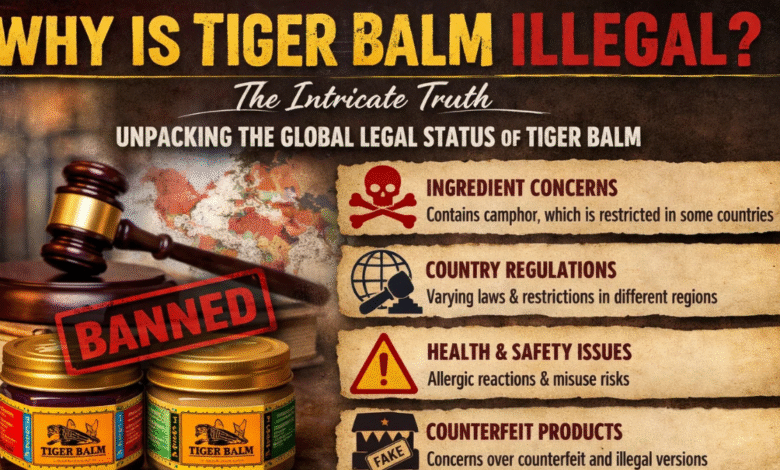
Why is Tiger Balm illegal The question “why is Tiger Balm illegal?” echoes across online forums and travel blogs, often shrouded in confusion and myth. Many are left wondering how a ubiquitous, century-old topical ointment found in medicine cabinets worldwide could be subject to bans. The reality is far more nuanced than a simple “yes” or “no.” Tiger Balm is not globally illegal, but its journey across international borders is a fascinating case study in how different nations regulate herbal medicines, classify ingredients, and protect consumers.

This article will serve as your definitive guide, dissecting the complex tapestry of global pharmaceutical regulations, ingredient controversies, and cultural perceptions that have led to Tiger Balm’s restricted status in certain jurisdictions. We will move beyond the headlines to provide a comprehensive, authoritative look at the legal, historical, and scientific reasons behind these regulations, empowering you with clarity on a topic often clouded by misinformation.
Understanding Tiger Balm’s Core Formulation
To grasp the regulatory challenges, one must first understand what Tiger Balm is. At its heart, it is a topical analgesic—a pain-relieving ointment—with a formula rooted in traditional Chinese medicine. The classic red Tiger Balm and its stronger white variant are composed of a blend of herbal extracts and essential oils suspended in a petroleum or wax base. The primary active ingredients that deliver its characteristic warming, cooling, or soothing sensations are camphor, menthol, and cajuput or clove oil. These substances work as counter-irritants, creating a mild sensation on the skin that can distract the brain from deeper muscular or joint pain.
However, it is precisely these “active” ingredients that sit at the center of regulatory scrutiny. Camphor, for instance, can be toxic if ingested in significant quantities, leading to concerns about child safety. Menthol, while generally safe, is highly regulated in terms of concentration for over-the-counter products. The classification of these ingredients—whether they are considered drugs, cosmetic components, or natural health products—varies dramatically from country to country. This foundational ambiguity is the first step in unraveling the complex answer to why Tiger Balm faces legal hurdles, as regulators strive to categorize a product that straddles multiple traditional domains.
Global Regulatory Frameworks and Classification Wars
The world lacks a unified system for classifying topical analgesics like Tiger Balm. In the United States, the Food and Drug Administration (FDA) regulates it as an over-the-counter (OTC) external analgesic drug. This means its active ingredients, their concentrations, and its labeling are subject to strict monographs. A formula that deviates from these accepted standards cannot be legally marketed as a drug. In the European Union, regulations can differ between member states, but products are typically assessed as either cosmetics or medicines based on their presented claims and composition, governed by the European Medicines Agency (EMA) guidelines.
Conversely, in nations like Canada and Australia, Tiger Balm often falls under the “Natural Health Product” or “Complementary Medicine” umbrella, which has its own distinct set of rules for evidence, labeling, and Good Manufacturing Practices. These divergent frameworks mean a product legally sold in Singapore or Hong Kong may not meet the specific chemical, labeling, or manufacturing standards required in Norway or the United States. The core issue is not that the product is inherently dangerous, but that its formulation may not align perfectly with a particular country’s legal definitions for a legally marketable pain relief product, which is a key reason why Tiger Balm is illegal to sell in certain regulated markets without specific approval.
The Ingredient-Specific Controversies
Delving deeper, specific ingredients within Tiger Balm have individually sparked regulatory concern. Camphor is a major point of contention. While topical use in small percentages is widely accepted, its toxicity profile when ingested or improperly used has led to strict controls. Some regulatory bodies have set very low thresholds for camphor content in products not explicitly registered as medicines. If a Tiger Balm variant exceeds this threshold, it can be deemed non-compliant. Similarly, menthol concentrations are capped to prevent skin irritation or adverse reactions, especially in products marketed for broad consumer use.
Another historical component, methyl salicylate (found in some older or regional formulations), is a salicylate related to aspirin. Topical application over large body areas can lead to systemic absorption, posing risks for individuals with certain health conditions or those on blood-thinning medications. Regulatory agencies in countries with stringent pharmaceutical oversight often require rigorous warning labels, child-safe packaging, and specific dosage instructions for products containing methyl salicylate. A failure to meet these precise requirements for each bioactive ingredient can result in a product being barred from shelves, contributing significantly to the narrative that Tiger Balm is illegal.
Case Studies: Nations with Restrictions and Bans
Examining specific countries provides concrete examples. Japan has famously strict regulations on ingredients like camphor in non-prescription products. For years, standard Tiger Balm from abroad could not be sold legally in Japan because its camphor content exceeded the limits set for quasi-drugs. The company eventually created a specific, compliant formula for the Japanese market. Similarly, Norway’s medicinal products agency has historically taken a cautious stance, requiring full medicinal approval for products making therapeutic claims with certain ingredient lists, making general sale difficult.
In the United States, the situation is one of conditional legality. Tiger Balm is legal and widely available, but only because the specific formulations sold there comply with FDA OTC monographs for external analgesics. Any version not matching those exact specifications—perhaps a variant purchased abroad with a different concentration or an additional herbal extract—would technically be an unapproved drug and subject to seizure by customs. This nuanced reality is often flattened in online discussions into a broad statement that “Tiger Balm is illegal,” when the truth is about specific, non-compliant formulations in specific legal jurisdictions.
The Role of Marketing Claims and Labeling
A product’s legal status is often determined not just by what’s in it, but by what it claims to do. Regulatory bodies closely scrutinize product labeling and advertising. If Tiger Balm is marketed as a “muscle pain reliever” or “arthritis treatment,” it is making a drug claim. This triggers a requirement for proof of efficacy and safety as a drug. If it is marketed as a “soothing balm” or “aromatic rub,” it might be considered a cosmetic, which has a lower regulatory burden but also restricts what medical benefits can be implied.
The discrepancy between traditional use and modern regulatory language is a significant hurdle. The traditional knowledge and anecdotal evidence supporting Tiger Balm’s use for headaches, congestion, and insect bites are immense, but they may not constitute the type of clinical trial evidence required by agencies like the FDA or EMA for official drug approval. Consequently, a product may be safe and effective by traditional standards but lack the specific data packet required for legal drug registration in a Western pharmaceutical model, leading to its exclusion from those markets. This clash of evidentiary standards is central to understanding the regulatory challenges.
Cultural Perceptions and Traditional Medicine
The story of Tiger Balm’s legality cannot be divorced from the broader context of how different cultures integrate traditional medicine. In much of Asia, products like Tiger Balm are an unquestioned part of daily life and self-care, sold in pharmacies, supermarkets, and convenience stores. They exist within a well-understood paradigm of traditional remedies. In many Western countries, the regulatory landscape is built almost exclusively around the paradigm of evidence-based, synthetic pharmaceuticals. Herbal and traditional products occupy an awkward, often mistrusted, middle ground.
This cultural divide leads to a regulatory mismatch. A German or Canadian regulator may view a jar of Tiger Balm primarily through the lens of its biochemical ingredients and their potential risks. A consumer in Malaysia or Thailand views the same jar as a trusted, holistic remedy with a century of heritage. Neither perspective is wrong, but they lead to vastly different regulatory outcomes. The question of why Tiger Balm is illegal in some contexts is, therefore, partly a question of how a society legitimizes knowledge—whether through clinical trials or through tradition and lived experience.
Pharmaceutical Industry Dynamics and Competition
It would be naive to ignore the commercial landscape in which these regulations exist. The global market for pain relief is dominated by massive pharmaceutical corporations producing OTC drugs like ibuprofen creams, lidocaine patches, and oral analgesics. These products have undergone the costly and lengthy process of formal drug approval. Some industry analysts suggest that stringent regulations, while designed for safety, also create high barriers to entry for traditional products that could be seen as competitive.
The cost of conducting the double-blind, placebo-controlled trials required for full drug registration for a product like Tiger Balm is prohibitively high, especially for a formula that cannot be patented in its traditional form. This creates an economic disincentive for the companies behind such products to pursue full medicinal status in every market. Instead, they may reformulate for cosmetic status, target markets with softer regulations, or simply accept that their product will remain in a legal gray area in certain regions. This economic reality underpins many of the accessibility issues.

Consumer Safety and Reported Adverse Events
Regulatory actions are invariably justified by the principle of consumer safety. There have been documented cases of adverse events linked to Tiger Balm or similar products. These typically involve misuse: ingestion by children leading to camphor poisoning, application to broken skin causing severe irritation, or over-application of methyl salicylate leading to salicylate toxicity. For regulators, their mandate is to prevent these events through controls on concentration, packaging, and labeling.
From their perspective, a ban or restriction is not an arbitrary act against a cultural icon, but a protective measure based on a risk-benefit analysis. In a jurisdiction where the product is not formally approved, there is no guaranteed control over its quality, consistency, or labeling accuracy. The regulatory stance is that without their oversight, the risk of a harmful event, however small, outweighs the benefit of access. This safety-first philosophy, while sometimes frustrating to consumers, is the bedrock of agencies like the FDA and is a direct answer to the query of why Tiger Balm is illegal for import in some countries without prior review.
The Impact of Customs and Personal Importation
For travelers and expatriates, the practical reality often hits at the customs desk. Many countries allow personal importation of small quantities of non-approved medicines for personal use, but this is a gray area. If a customs official identifies a Tiger Balm jar in luggage and their country’s regulations list it as a prohibited or unapproved therapeutic good, they have the authority to confiscate it. This personal experience of having a familiar product taken away fuels much of the online discourse and confusion about its overall legality.
The rules are notoriously opaque and inconsistently enforced. One traveler may bring in a jar without issue for years, while another has it seized. This unpredictability contributes to the mythos. It’s crucial to understand that customs enforcement is the downstream action of the regulatory frameworks discussed earlier. The seizure isn’t because Tiger Balm is a universally banned substance like cocaine; it’s because the specific product does not have a marketing authorization in that country, making its importation for any purpose a violation of medicinal goods laws.
Legal Alternatives and Reformulated Versions
In response to these challenges, the manufacturers of Tiger Balm and similar products have not been passive. They have developed market-specific formulations. As mentioned, Tiger Balm Japan has a modified formula. In the EU, you will find Tiger Balm products registered as cosmetics, with careful wording on their packaging. There are also countless “tiger balm-like” products created by other companies that use different ingredient blends to comply with local rules while attempting to mimic the effects.
This leads to a fragmented global product line. The “authentic” experience sought by a user from Southeast Asia may differ slightly from the legally compliant jar purchased in the United Kingdom. Consumers looking for legal alternatives should research products classified as “topical analgesics” or “muscle rubs” in their local pharmacy. These will contain approved levels of menthol, camphor, or other analgesics like capsaicin, and are fully legal because they were designed from the outset to meet that region’s specific regulatory standards.
The Future of Traditional Medicine Regulation
The global regulatory environment is not static. There is a growing movement, supported by the World Health Organization, towards integrating traditional medicines into national healthcare systems in a safe, respectful, and evidence-based manner. This could lead to new regulatory pathways that acknowledge traditional evidence alongside clinical data. Some countries are developing “Traditional Use Registrations” that allow products with a long history of safe use to be marketed with simplified evidence requirements.
For products like Tiger Balm, this evolving landscape could mean smoother international access in the future. However, it will likely require increased standardization, rigorous quality control to prevent adulteration, and more transparent labeling about potential risks. The goal is a middle path that respects cultural heritage without compromising on modern safety standards. Navigating this path will be key to resolving the lingering questions about why Tiger Balm is illegal in some regions and difficult to access in others.
Table: Tiger Balm’s Regulatory Status Across Select Jurisdictions
| Country/Region | Primary Regulatory Classification | Key Restriction/Note | General Consumer Accessibility |
|---|---|---|---|
| United States | OTC Drug (External Analgesic) | Must comply with FDA monograph for camphor/menthol/methyl salicylate. | Widely available in pharmacies, supermarkets, and online. |
| European Union | Varies by member state; often as a Cosmetic or Herbal Medicinal Product. | Claims must match classification. Some variants may be medicine-only. | Generally available, but specific product range may vary per country. |
| Japan | Quasi-Drug | Strict caps on camphor concentration. Requires market-specific formula. | Available via specific Japan-formula products. |
| Canada | Natural Health Product (NHP) | Requires NHP license, which dictates formulation and labeling. | Widely available with approved NHP number on label. |
| Australia | Complementary Medicine (Listed or Registered) | Must be listed on the Australian Register of Therapeutic Goods (ARTG). | Available in pharmacies, often in a specific aisle for topical analgesics. |
| Norway | Prescription Medicine or Banned | Historically stringent; may require full medicinal approval for sale. | Very limited; personal importation may be restricted. |
| Southeast Asia (e.g., Singapore, Malaysia) | Traditional Medicine/OTC Product | Regulated under traditional medicine frameworks with local standards. | Ubiquitously available in all retail outlets. |
Dispelling Common Myths and Misconceptions
A pervasive myth is that Tiger Balm contains illegal narcotics or controlled substances. This is false. Its active ingredients are not opium-derived or psychoactive. The restrictions are solely related to pharmaceutical, safety, and import/export regulations for specific chemicals like camphor. Another common misconception is that a blanket, global ban exists. As we’ve seen, it is legally sold in the vast majority of countries, often with slight formula adjustments. The illegality is a conditional status in a minority of nations with unique regulatory stances.
Furthermore, many believe that if it’s “natural,” it must be universally legal and safe. Regulators challenge this notion, pointing out that natural ingredients can be potent, cause allergic reactions, interact with medications, or be toxic in incorrect doses. The legal scrutiny is, in part, a reaction to this assumption of inherent safety. Understanding these distinctions is crucial for moving past sensational headlines and grasping the nuanced, administrative realities that dictate a product’s legal standing on the world stage.
Expert Insights on Regulatory Philosophy
To bring an authoritative perspective, consider the viewpoint of a regulatory affairs specialist. Dr. Anya Sharma, a consultant in global medicinal product compliance, offers this insight: “Regulators are not in the business of banning safe products out of hand. Their role is to manage risk in a population. When a product like Tiger Balm, with a complex traditional background, enters a highly codified regulatory system, the burden is on the sponsor to prove it fits into an existing category—drug, cosmetic, supplement. If the application is incomplete or the formula doesn’t match a monograph, it remains unapproved. This is less about ‘banning’ and more about a failure to meet a specific, legal definition for market entry.”
This expert quote underscores that the process is procedural, not necessarily punitive. The narrative of “illegality” often stems from a lack of successful navigation of these complex procedures in certain markets, rather than a fundamental verdict on the product’s safety or utility. It’s a critical distinction that reframes the entire discussion from one of prohibition to one of administrative compliance and regulatory classification.
Practical Advice for Consumers and Travelers
For consumers, navigating this landscape requires a proactive approach. First, when purchasing abroad, check the ingredient list against the regulations of your home country if you plan to bring it back. Second, understand that purchasing from unofficial online international sellers carries a risk: you may receive a formulation not legal in your country, and it could be seized by customs. Third, if you rely on Tiger Balm, seek out the officially distributed version in your country, as it is guaranteed to be the compliant, legal formula.
When traveling, research the destination’s customs rules regarding medicinal products. It is often safer to carry a small amount for personal use in its original packaging and to declare it if asked. For those in countries where it is restricted, explore locally approved topical analgesics as alternatives. The goal is to find a safe, legal, and effective product, which may or may not be the exact Tiger Balm jar you remember from elsewhere.
Conclusion: A Narrative of Nuance, Not Prohibition
The journey to understand why Tiger Balm is illegal in some contexts reveals a story not of danger, but of divergence. It is a narrative about the clash between traditional wellness and modern regulatory science, about differing cultural attitudes towards medicine, and about the intricate, often frustrating, world of international trade law. Tiger Balm itself is not an illicit substance; it is a victim of circumstance, caught between competing global systems that struggle to categorize its unique nature.
Its widespread availability proves its general acceptance and safety when used as directed. The restrictions in places like Japan or Norway are specific legal responses to specific regulatory frameworks, not a universal condemnation. As the world moves towards more integrated health models, the hope is for smarter regulations that protect consumers without erasing valuable traditional knowledge. Until then, the question of its legality will remain a geographically specific one, answerable only by referencing a map and a detailed legal code, not a simple global yes or no.
Frequently Asked Questions
Is Tiger Balm actually illegal?
No, Tiger Balm is not globally illegal. It is legally sold as an over-the-counter product in most countries, including the United States, Canada, the United Kingdom, and across Asia. The perception that it is illegal stems from its restricted or unapproved status in a handful of specific countries with unique pharmaceutical regulations, which leads people to ask why Tiger Balm is illegal in those particular places.
Can I take Tiger Balm on a plane?
Yes, you can generally take Tiger Balm in your carry-on or checked luggage when flying, as it is not considered a dangerous or flammable substance in the quantities typically carried for personal use. However, you must comply with liquid restrictions if carrying the liquid version in carry-on baggage (containers under 100ml). The more significant issue arises upon arrival if your destination country prohibits its importation.
In which countries is Tiger Balm banned?
It is difficult to state a definitive “banned” list as regulations change, but historically, Japan (for non-compliant formulas) and Norway have had very restrictive stances. In these and similar countries, the standard formulation may not be approved for sale because it doesn’t meet local standards for medicinal or quasi-drug products, which is the core reason why Tiger Balm is illegal for commercial distribution there without modification.
What is the illegal ingredient in Tiger Balm?
There is no “illegal” ingredient in the criminal sense. The regulatory issues center on specific, legal limits for common ingredients like camphor and menthol. If a Tiger Balm variant contains a concentration of camphor that exceeds a country’s allowable limit for over-the-counter products, that specific formulation becomes non-compliant with that country’s drug laws, rendering it illegal to sell.
Why is camphor regulated?
Camphor is regulated because it can be toxic if ingested or misused. In large amounts, it can cause seizures, nausea, and liver damage. Regulatory agencies set safe concentration limits for topical application to ensure consumer safety, especially regarding accidental ingestion by children. It is this prudent regulation of camphor that is often at the heart of the discussion about why Tiger Balm is illegal to import in its standard form into certain regulated markets.
You may also read
The Strategic Mind of Peter Dager: A Legacy of Leadership in Esports and Beyond