
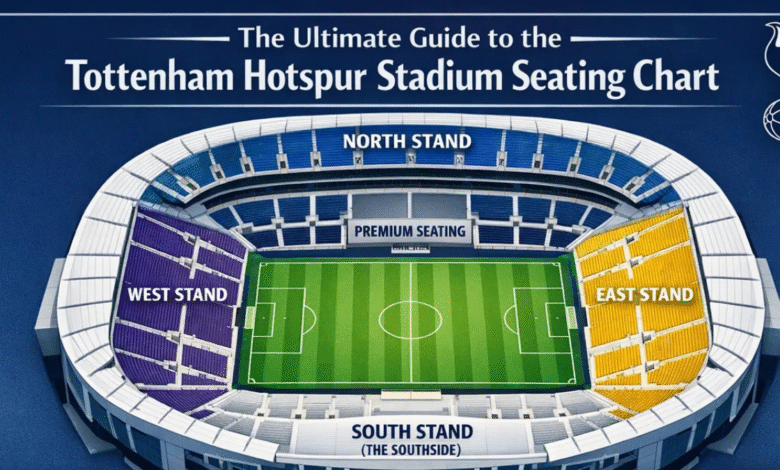
The Ultimate Guide to the Tottenham Hotspur Stadium Seating Chart
Tottenham Hotspur Stadium Seating Chart: Choosing your seat at the Tottenham Hotspur Stadium is more than just picking a ticket; it’s about curating your entire matchday or event experience. This architectural marvel isn’t just a football ground it’s a multi-purpose entertainment venue designed with fan immersion at its core. Understanding the intricate Tottenham Hotspur Stadium seating chart is the first critical step to ensuring you’re in the perfect spot, whether you’re there for the roar of a last-minute Premier League winner, the spectacle of an NFL game, or the thrill of a world-class concert.


This comprehensive guide will serve as your definitive playbook, breaking down every stand, section, and secret, transforming you from a casual ticket-buyer into an informed stadium connoisseur. We’ll navigate the nuances of sightlines, atmosphere, pricing, and accessibility, ensuring your next visit is nothing short of extraordinary.
Understanding the Stadium Layout and Stand Nomenclature
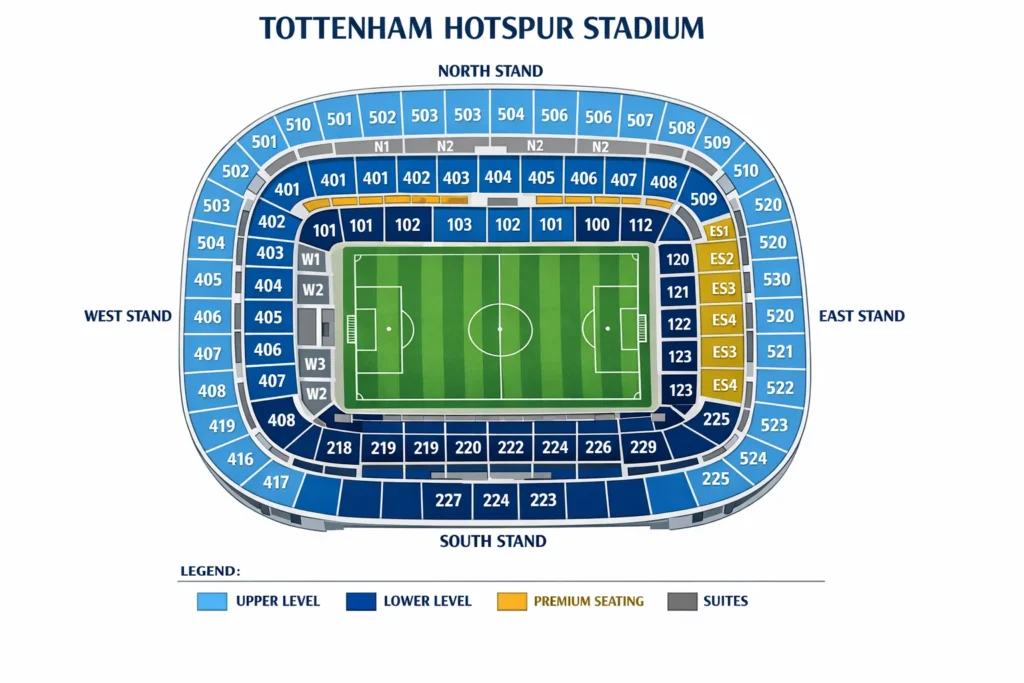
The first step to mastering the Tottenham Hotspur Stadium seating chart is decoding its layout and the names of its four main stands. Unlike older, asymmetrical grounds, this stadium boasts a symmetrical, bowl-like design, offering consistently excellent views from every angle. However, each stand has its own distinct personality and purpose. The North and South Stands run the length of the pitch, while the East and West Stands sit behind the goals. This logical, compass-point naming convention simplifies navigation but belies the unique features hidden within each quadrant.
Familiarity with this nomenclature is crucial when purchasing tickets or planning your route. The stadium’s address is Lilywhite House, 782 High Road, but your personal experience is dictated by whether you enter via the West Atrium or the South Stand podium. Each entrance feeds into specific concourses designed to manage the flow of over 62,000 fans efficiently. By internalizing the basic layout—North, South, East, West—you build a mental map that makes the subsequent details about views, amenities, and atmosphere far easier to place and understand.
A Deep Dive into the South Stand: The Single-Tier Kop
The South Stand is the undeniable heartbeat of the stadium’s atmosphere and a true engineering marvel. It is the UK’s largest single-tier stand, housing a staggering 17,500 fans in one continuous, steeply raked bowl. This design is intentional, creating a wall of sound and colour that is both intimidating for opponents and electrifying for the home support. On the Tottenham Hotspur Stadium seating chart, this stand is the focal point for the most vocal fans, with the goal situated directly in front of it for one half of the match. The sense of unity and collective energy here is unmatched, as there are no corporate boxes or tiers to break the sightlines or dilute the noise.
When selecting seats here, consider your preference for proximity versus perspective. Rows towards the front, like those in the 100-series blocks (e.g., Block 251), place you incredibly close to the pitch, letting you feel the pace and physicality of the game. Rows higher up in the 500-series blocks offer a more elevated, panoramic view of the entire tactical setup. Regardless of row, you are part of a singular, massive choir. It’s worth noting that due to its popularity and unique atmosphere, tickets in the South Stand are among the first to sell out for major matches, so early planning is essential.
The North Stand: Family Focus and The Shelf Side
Directly opposite the South Stand, the North Stand offers a different but equally vital vibe. It is a two-tiered structure that is traditionally known as the “Shelf Side,” a nod to the historic Shelf terrace at the old White Hart Lane. This stand often houses the family enclosure and is designed with a more mixed demographic in mind. The lower tier, particularly the central blocks close to the pitch, is a fantastic area for younger fans and families to experience the game in a vibrant but slightly less intense environment than the South Stand. The upper tier provides some of the most balanced, central views in the entire stadium.
Analyzing the Tottenham Hotspur Stadium seating chart for the North Stand reveals excellent sightlines for appreciating the full width of the pitch. You are positioned behind the goal as Tottenham attacks in the second half, which can lead to unforgettable moments celebrating a crucial goal right in front of you. The concourses here are spacious and well-equipped, with amenities tailored for families. While the atmosphere can be lively, it generally lacks the sustained, deafening roar of the single-tier South Stand, making it a preferred choice for those prioritizing a clear view of play and a slightly more relaxed, though still passionate, experience.
The East and West Stands: Premium Views and Main Facilities
The East and West Stands, running along the sides of the pitch, are where you’ll find the majority of the stadium’s premium offerings and main facilities. These are large, two-tiered structures that provide what many consider the “classic” football viewing experience: a lateral, sideline view of the action. The West Stand is particularly significant as it houses the players’ tunnel, the dugouts, and the media facilities. Seats in the lower tier of the West Stand, especially near the halfway line, offer unparalleled proximity to managers and substitutes, allowing you to become part of the tactical drama unfolding on the touchline.
The upper tiers of both the East and West Stands deliver arguably the best pure analytical views in the stadium. From these elevated positions, such as in Block 551 or Block 449, you can see every player’s movement, the shape of both teams, and the development of plays with a crystal-clear perspective. These areas also contain the bulk of the stadium’s hospitality suites, including the prestigious Tunnel Club and the Glass Loges. When consulting the Tottenham Hotspur Stadium seating chart for these stands, note that the higher you go, the more comprehensive the view, but the greater the sense of separation from the pitch-level intensity.
Premium and Hospitality Seating Options
Tottenham Hotspur Stadium redefines the premium sports experience, offering a tiered ecosystem of hospitality options that cater to every level of corporate or luxury entertainment. These are not merely seats with a better view; they are all-inclusive experiences with dedicated entrances, lounges, gourmet catering, and often pitch-side or tunnel access. The most exclusive is the Tunnel Club, where guests dine behind glass alongside the players’ tunnel, watching stars prepare mere feet away. The H Club and the Glass Loges offer five-star dining and networking spaces with stunning pitch vistas.
For those seeking a premium experience without the formality of a private suite, the Goal Line Bar and the Market Place venues within the South Stand provide a fantastic hybrid. Here, you get access to vibrant, themed bars and food halls with a wide selection of artisanal food and drink, all included in your ticket. When you look at a detailed Tottenham Hotspur Stadium seating chart, these premium areas are integrated seamlessly into the main stands. This means a hospitality guest still feels connected to the roar of the crowd, just with significantly enhanced comfort and exclusivity. It’s a masterclass in blending corporate hospitality with an authentic stadium atmosphere.
Navigating Ticket Categories and Price Tiers
The club employs a dynamic pricing model, meaning ticket costs fluctuate based on the opponent, competition, and demand. However, the stadium is consistently zoned into clear price categories directly correlated to the Tottenham Hotspur Stadium seating chart. Category A fixtures (e.g., against top-six rivals, cup finals) command the highest prices across all sections. The most expensive non-hospitality seats are typically in the central blocks of the lower West and East Stands (e.g., Blocks 134, 135, 254, 255), given their halfway line views and proximity to the dugouts.
Conversely, the most affordable tickets are usually found in the upper corners of the stadium—where the North, South, East, and West stands meet. Areas like the upper tiers of Blocks 501 or 452 offer a bird’s-eye view at a more accessible price point. The South Stand, while atmospheric, often has mid-range pricing for its lower and central sections, reflecting its immense popularity. It’s a strategic balance between view quality, atmosphere, and cost. Understanding this zoning helps fans make informed budgetary decisions, whether they’re chasing the best possible view or simply seeking the most cost-effective way to be inside the ground.
Sightlines and Obstructions: What You Really See
One of the stadium’s greatest achievements is its near-universal excellence in sightlines. The steep rake of the stands, especially in the upper tiers and the single-tier South Stand, ensures that even the supporter seated behind another is looking over their head, not at it. The use of modern, slimline seating and minimal supporting pillars means obstructive views are virtually non-existent, a stark contrast to older-generation stadiums. When you purchase a ticket using the Tottenham Hotspur Stadium seating chart, you can be confident that your view of the pitch will be clear and uninterrupted.
However, a minor consideration exists for fans in the very front rows of the lower tiers. While offering incredible proximity, these seats can sometimes have a slightly compromised perspective on action at the far end of the pitch due to the low viewing angle. Furthermore, the stadium’s giant video screens are suspended in the four corners. For seats directly adjacent to these screens, there might be a very slight peripheral visual obstruction, but nothing that impacts the core view of the playing surface. The club’s 3D virtual seat viewer tool is an invaluable resource to check the exact sightline from any block and row before you buy.
Accessibility and Amenities for All Fans
Tottenham Hotspur Stadium sets a global benchmark for accessibility and inclusive design. The Tottenham Hotspur Stadium seating chart includes over 250 positions for wheelchair users, each with a dedicated personal assistant seat. These are not relegated to the corners; they are integrated at various heights around the stadium, including premium mid-tier levels, ensuring excellent views and easy access to amenities. The stadium also features audio-descriptive commentary, sensory rooms for fans with autism, and accessible changing places facilities.
Beyond accessibility, the general fan amenities are revolutionary. Each concourse is themed, like the microbrewery in the South Stand or the gin bar in the West. The stadium boasts the longest bar in the UK at the Goal Line Bar. Crucially, the wide, open-plan concourses with high ceilings prevent the claustrophobic crowding common in older grounds. A state-of-the-art cashless payment system speeds up service, while an app can deliver food and drink directly to your seat. These amenities are evenly distributed, meaning no matter where your seat is on the Tottenham Hotspur Stadium seating chart, you’re never far from high-quality food, drink, or restroom facilities.
The Stadium for Non-Football Events: NFL and Concerts
The genius of the Tottenham Hotspur Stadium seating chart is its adaptability. The entire lower pitch is a retractable system, which can slide away to reveal a synthetic NFL field beneath. For American Football games, the seating configuration changes. The stands behind the end zones (the North and South) become the primary fan zones, with the East and West stands offering sideline views. The atmosphere transforms completely, showcasing the stadium’s dual-purpose design. Sightlines are reconfigured to suit the elongated shape of an NFL field, with temporary seating sometimes added pitch-side for a unique, immersive experience.
For major concerts, the stadium becomes a vast music arena. A stage is typically erected in front of the South Stand, turning the North Stand into the primary viewing gallery. The pitch becomes a standing or seated arena floor, accommodating tens of thousands of fans. In this mode, the acoustics engineered into the stadium’s roof and the steep stands create a surprisingly intimate sonic experience for a venue of its size. Understanding how the Tottenham Hotspur Stadium seating chart morphs for these events is key—a great seat for football might be behind the stage for a concert, so always check the event-specific configuration before purchasing tickets.
Comparative Analysis: Key Stadium Sections
To help visualize the trade-offs between the main spectator areas, the following table provides a structured comparison of the core experiences based on the Tottenham Hotspur Stadium seating chart. This breakdown should guide you based on your personal priorities for atmosphere, view, and budget.
| Stand / Area | Primary Atmosphere | Best For | Typical View Characteristic | Price Tier (Relative) |
|---|---|---|---|---|
| South Stand (Lower) | Intense, Loud, Immersive | Die-hard fans, creating atmosphere | Very close, low-angle, behind goal | Mid to High |
| South Stand (Upper) | Loud, Unifying, Panoramic | Fans wanting atmosphere with a broader view | Elevated, panoramic, behind goal | Mid-Range |
| North Stand (Lower) | Family-Friendly, Lively | Families, younger fans | Close, behind goal | Low to Mid |
| North Stand (Upper) | Balanced, Traditional | Clear tactical view with family vibe | High, central, behind goal | Low to Mid |
| East/West (Lower Central) | Tactical, Proximity to Benches | Analyzing play, seeing stars up close | Sideline, eye-level, midfield | Highest (Non-Hosp) |
| East/West (Upper Central) | Analytical, Panoramic | Pure football purists, comprehensive view | Very high, sideline, “TV view” | High |
| Corner Sections | Variable, Often Milder | Budget-conscious fans, social groups | Angled, combination view | Lowest |
Practical Tips for Using the Seating Chart
To effectively use the official Tottenham Hotspur Stadium seating chart, start with the club’s interactive online map. This tool allows you to click on specific blocks, see a photo of the view, and understand the exact row and seat numbers. Always cross-reference the block number on your ticket with this map to plan your entrance route—it will save significant time on matchday. Remember that odd-numbered blocks are generally in the West and North Stands, while even numbers are in the East and South, though always verify. This simple check prevents you from walking halfway around the stadium to reach your seat.
Another pro tip is to consider the sun and weather. For early afternoon kick-offs, the West Stand will bear the brunt of the setting sun, which can be an issue in summer months. The vast, overhanging roof does an excellent job of protecting almost all seats from rain, but the very front rows in the lower tiers are the most exposed. If you’re attending a concert, remember that the stage setup can dramatically alter the sound propagation; central positions in the stand opposite the stage usually offer the best audio-visual balance. As one seasoned season ticket holder aptly noted, “The beauty of the seating chart is there are no bad seats, only different experiences. Your choice defines your matchday story.”
Transportation Links and Gate Access
Your experience with the Tottenham Hotspur Stadium seating chart begins long before you take your seat; it starts with choosing the right transport and entrance. The stadium is served by four main railway stations: White Hart Lane (Northumberland Park Line), Northumberland Park, Tottenham Hale (Victoria Line and National Rail), and Seven Sisters (Victoria Line). Your seat location should dictate your arrival station. For example, fans with tickets in the North Stand will find White Hart Lane station most convenient, while those in the South Stand may prefer Tottenham Hale for a slightly easier walk to the southern entrances.
Each stand has multiple dedicated entry gates, clearly signposted with block number ranges. Your ticket will specify a gate (e.g., Gate 8 for the West Stand). Using the correct gate is not a suggestion—it’s essential for smooth security processing and to avoid unnecessary congestion. The stadium’s outer perimeter is vast, and entering at the wrong point could mean a 15-20 minute walk to your seat. Planning this route in advance, using your knowledge of the Tottenham Hotspur Stadium seating chart and the associated gate, is a hallmark of a savvy visitor and ensures a relaxed, pre-event buildup instead of a stressful last-minute sprint.
Conclusion
Mastering the Tottenham Hotspur Stadium seating chart is the key to unlocking the perfect live experience at one of the world’s most advanced venues. It’s a document that maps out more than just physical locations; it charts a spectrum of experiences, from the communal roar of the single-tier Kop to the analytical quiet of an upper-tier sideline seat, from the family-friendly buzz of the North Stand to the unparalleled luxury of a hospitality suite. By understanding the nuances of each stand, the relationship between price and perspective, and the stadium’s transformative nature for different events, you move from being a passive attendee to an active architect of your own unforgettable day.
Whether your priority is atmospheric immersion, tactical clarity, family comfort, or corporate entertainment, the answers are all embedded within the geometry of the seating plan. Use this guide as your compass, consult the interactive tools provided by the club, and consider what kind of memory you want to create. Your ideal seat is waiting. The next step is to find it on the Tottenham Hotspur Stadium seating chart, secure your ticket, and prepare to be part of the spectacle.
Frequently Asked Questions (FAQ)
What is the best seat for atmosphere at Tottenham Hotspur Stadium?
For the most intense and electrifying atmosphere, aim for the central sections of the South Stand, particularly in the lower to middle tiers (Blocks 254-256). This is the heart of the home support, a single-tier stand designed to create a wall of noise. Consulting the Tottenham Hotspur Stadium seating chart for these blocks will place you right in the middle of the action, especially when Tottenham attacks that goal in the first half.
Are there any obstructed view seats I should avoid?
Thanks to its modern design, there are virtually no traditionally obstructed views from pillars or supports. However, the very front rows (Rows 1-5) in the lower tiers can have a slightly compromised long-distance view due to the low angle. Additionally, seats directly beside the large corner video screens might have a minor peripheral obstruction. Always use the club’s official 3D seat viewer, which is linked to the Tottenham Hotspur Stadium seating chart, to check your exact sightline before purchasing.
How does the seating differ for an NFL game?
For NFL games, the stadium configuration changes dramatically. The retractable pitch slides away to reveal a dedicated artificial surface. The seating focus shifts, with the North and South Stands becoming the primary end-zone fan areas. The Tottenham Hotspur Stadium seating chart for an NFL event will show a different layout, sometimes with temporary seats added on the pitch itself. It’s crucial to view the event-specific map when buying tickets for non-football events.
Where are the family-friendly seating areas?
The most dedicated family area is typically located in the lower tier of the North Stand, specifically in central blocks like 115-118. This area, often called the Family Enclosure, provides a vibrant but less intense atmosphere suitable for younger fans. The Tottenham Hotspur Stadium seating chart will often denote these sections during the ticket purchase process. The wider North Stand, in general, is considered more family-oriented than the intense South Stand.
What is the easiest way to choose my seat for a concert?
For concerts, the stage is almost always set up in front of the South Stand. Therefore, the best overall views and sound are from the central sections of the opposite North Stand. The pitch becomes a standing floor or seated area. When buying concert tickets, promoters will provide a dedicated Tottenham Hotspur Stadium seating chart for that specific event. Prioritize seats that are central and facing the stage directly, rather than off to the sides in the East or West stands.
You may also read
Bob Vila Net Worth: The Financial Blueprint of America’s Home Improvement Legend