
Structured Settlement: A Complete and Easy Guide to Understanding Structured Settlement
A structured settlement is a financial agreement that pays money to a person over time instead of giving one large lump sum. Many people receive a structured settlement after a lawsuit, especially in personal injury cases. Instead of getting all the money at once, they receive steady payments over months or years.

At first glance, a structured settlement might sound complicated. But don’t worry it’s actually a simple and smart way to manage large amounts of money. In this detailed guide, we’ll explore everything you need to know about a structured settlement, how it works, its benefits, possible risks, and how to decide if it’s right for you.
Let’s dive in.
What Is a Structured Settlement?
A structured settlement is a financial arrangement where a person agrees to receive compensation through regular payments over time instead of one big payment.
These payments can be:
- Monthly
- Quarterly
- Annually
- Or even customized to fit special needs
A structured settlement is most common in:
- Personal injury cases
- Medical malpractice claims
- Workers’ compensation cases
- Wrongful death lawsuits
In simple words, it’s like setting up a payment plan for compensation money.
How a Structured Settlement Works
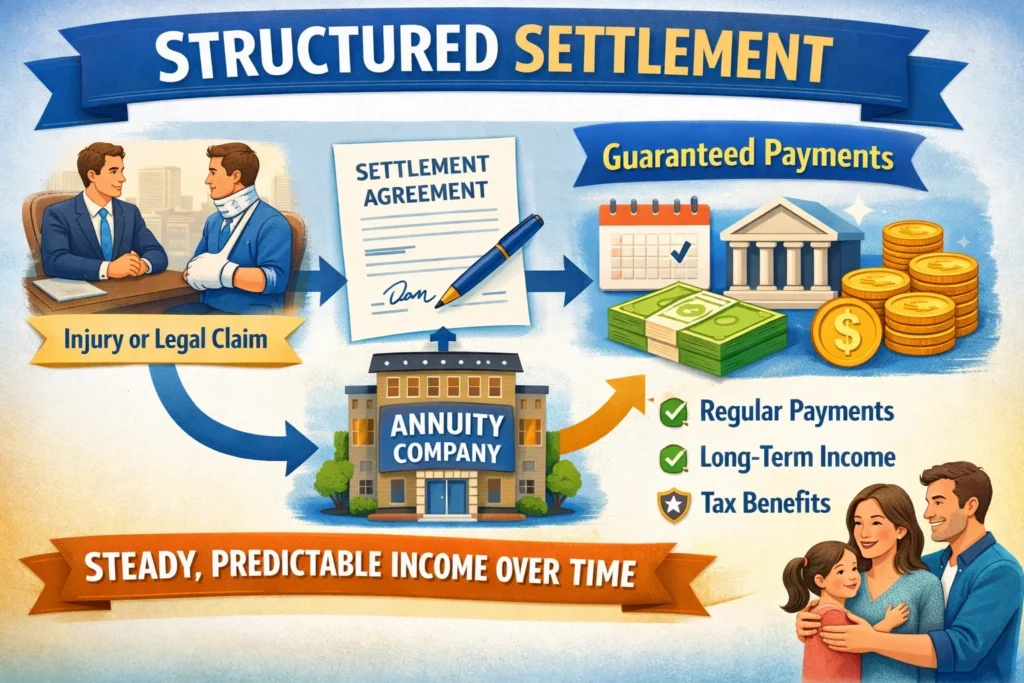
When someone wins or settles a lawsuit, they are often awarded money. Instead of paying everything at once, the paying party (usually an insurance company) purchases an annuity from a life insurance company. This annuity then makes scheduled payments to the injured person.
Here’s how the process usually works:
- The lawsuit is settled.
- Both sides agree to a structured settlement plan.
- An insurance company funds the payments.
- The injured person receives scheduled payments over time.
The money is carefully arranged to meet long-term needs. For example, someone might receive smaller monthly payments and larger payments at certain times, like for college tuition or medical expenses.
Why People Choose a Structured Settlement
Many people choose a structured settlement because it provides financial security. Let’s face it receiving a large lump sum can be tempting. However, without careful planning, that money can disappear quickly.
Here are the main reasons people prefer structured settlements:
Financial Stability
Regular payments provide a steady income stream. It’s like receiving a paycheck.
Tax Advantages
In most personal injury cases, payments from a structured settlement are tax-free under U.S. federal law. That’s a big deal.
Protection From Overspending
A lump sum can be spent too fast. Structured payments help prevent financial mistakes.
Customized Payment Plans
Payments can be arranged to match future expenses, such as:
- Medical care
- Education
- Housing
- Retirement
Types of Structured Settlement Payment Plans
Not all structured settlement plans are the same. They can be customized based on personal needs.
Fixed Period Payments
Payments are made for a specific number of years.
Lifetime Payments
Payments continue for the rest of the recipient’s life.
Deferred Payments
Payments start at a future date.
Lump Sum and Installment Combination
Part of the money is paid upfront, and the rest is paid over time.
Here’s a simple table to understand the types:
| Type of Structured Settlement | How It Works | Best For |
|---|---|---|
| Fixed Period | Payments for a set time | Short-term needs |
| Lifetime | Pays until death | Long-term care |
| Deferred | Starts later | Retirement planning |
| Combination | Part upfront, part later | Immediate and future needs |
The Legal Side of Structured Settlement
A structured settlement is not just a handshake deal. It is a legally binding agreement.
The agreement includes:
- Payment schedule
- Payment amount
- Duration
- Funding company details
Once agreed, it cannot be changed easily. Courts often review and approve structured settlements, especially when minors are involved.
If someone wants to sell their structured settlement payments later, they usually need court approval. This protects individuals from unfair deals.
Tax Benefits of a Structured Settlement
One of the biggest advantages of a structured settlement is the tax benefit.
Under U.S. tax law:
- Personal injury structured settlement payments are generally tax-free.
- Interest earned inside the annuity is also tax-free.
- No capital gains tax applies.
However, this tax advantage usually applies only to personal injury settlements. Other types of cases may be taxed differently.
It’s always wise to consult a tax professional before making a decision.
Structured Settlement vs Lump Sum Payment
This is the big question: Which one is better?
Let’s compare.
Lump Sum Payment
Pros:
- Immediate access to full amount
- Flexibility to invest
- Can pay large expenses right away
Cons:
- Risk of overspending
- Possible tax issues
- Investment risk
Structured Settlement
Pros:
- Steady income
- Tax-free payments (in many cases)
- Financial discipline
Cons:
- Less flexibility
- Cannot easily change payment terms
- Limited access to large cash amounts
Honestly, there’s no one-size-fits-all answer. It depends on personal goals and financial habits.
Selling a Structured Settlement
Sometimes, people decide they need cash immediately. In such cases, they may sell their structured settlement payments to a company in exchange for a lump sum.
But hold on it’s not always a great deal.
Companies that buy structured settlements:
- Offer less than the total value.
- Charge fees.
- Require court approval.
Before selling, consider:
- Is it absolutely necessary?
- Are there other options?
- Have you consulted a financial advisor?
Many people regret selling because they lose long-term financial security.
Risks and Challenges of Structured Settlement
While a structured settlement offers many benefits, it’s not perfect.
Here are some potential challenges:
Limited Flexibility
Once the agreement is signed, changes are difficult.
Inflation Risk
Payments may lose value over time if inflation rises.
Financial Emergencies
If you suddenly need a large amount of cash, you may not have quick access.
However, careful planning can reduce these risks.
Who Should Consider a Structured Settlement?
A structured settlement may be ideal for:
- Injury victims needing long-term care
- Families with minors
- Individuals who prefer steady income
- People who are not experienced in investing
It may not be ideal for:
- Experienced investors
- Those with urgent large expenses
- Individuals comfortable managing large sums
The Role of Insurance Companies in Structured Settlement
Insurance companies play a central role in funding structured settlements.
They:
- Purchase annuities
- Guarantee payments
- Manage long-term distribution
Choosing a financially strong insurance company is critical. A stable company ensures payments continue as promised.
Real-Life Example of a Structured Settlement
Imagine Sarah, who receives $1 million from a personal injury lawsuit.
She has two options:
Lump Sum
She takes $1 million upfront.
Structured Settlement
She receives:
- $4,000 per month for 20 years
- $50,000 every five years
- Extra funds for medical expenses
Over time, her structured settlement may provide more financial stability than a single payment.
This example shows how structured settlement plans can be customized.
How to Set Up a Structured Settlement
Setting up a structured settlement involves several steps:
- Negotiate the settlement
- Work with a settlement planner
- Design payment schedule
- Choose funding company
- Finalize agreement
It’s wise to work with:
- Financial advisors
- Tax professionals
- Attorneys
Professional guidance ensures the structured settlement truly fits your needs.
Frequently Asked Questions About Structured Settlement
Is a structured settlement safe?
Yes, if funded by a reputable insurance company.
Can payments be inherited?
Often, yes. Some plans allow payments to continue to beneficiaries.
Can I change my payment plan later?
Usually not, unless you sell payments with court approval.
Are structured settlements only for injury cases?
They are most common in injury cases but may apply to other legal settlements.
Key Benefits of Structured Settlement
Let’s summarize the main advantages:
- Financial security
- Predictable income
- Tax-free payments (in many cases)
- Protection from poor spending decisions
- Custom payment options
When designed properly, a structured settlement can feel like a safety net.
Important Things to Remember About Structured Settlement
Before choosing a structured settlement, remember:
- It’s long-term.
- It’s legally binding.
- It requires careful planning.
- It can’t be easily reversed.
Take your time. Ask questions. Seek professional advice.
Final Thoughts on Structured Settlement
A structured settlement is more than just a payment plan. It is a powerful financial tool that can provide stability, security, and peace of mind. For many people, especially injury victims, a structured settlement protects their future and ensures long-term financial health.
Of course, every situation is different. While some may prefer a lump sum, others benefit greatly from steady payments. The key is understanding your needs and making an informed decision.
In the end, a well-planned structured settlement can turn a difficult life event into a stable financial foundation. And honestly, when handled wisely, a structured settlement can be one of the smartest financial decisions a person ever makes.
You may also read
Tulip Victoria Khaury: A Graceful Life Rooted in Legacy and Love