
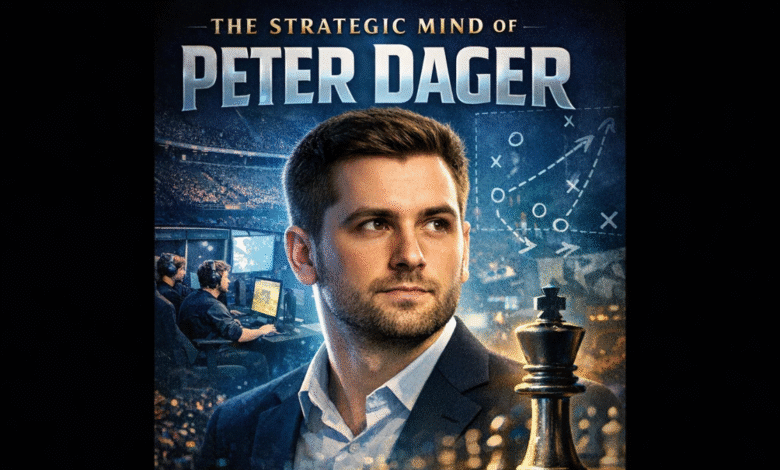
The Strategic Mind of Peter Dager: A Legacy of Leadership in Esports and Beyond
Peter Dager is a name that resonates with profound complexity and significant influence in the modern world of competitive gaming and entrepreneurship. To know the story of Peter Dager is to follow a compelling narrative that moves from the server rooms of professional Dota 2 to the boardrooms of startup ventures. This journey is not merely about a single individual’s career but serves as a masterclass in adaptation, strategic thinking, and the nuanced art of leadership in high-pressure, rapidly evolving digital landscapes.
More than just a retired player known by his in-game alias “ppd,” his evolution into a CEO and investor provides a unique blueprint for turning in-game expertise into real-world business success. This article will explore the multifaceted legacy of Peter Dager, examining the principles that propelled him to the pinnacle of esports and the visionary mindset that continues to drive his ventures today, offering invaluable lessons for professionals across industries.


The Foundation: From Peter Dager to “ppd,” The In-Game Architect
Long before he was a CEO, Peter Dager meticulously built his reputation as one of the sharpest strategic minds in Dota 2. His transition from a skilled player to the iconic captain and drafter for Evil Geniuses was not an accident; it was a deliberate application of analytical rigor and psychological insight. Peter Dager approached the game not as a series of reactive skirmishes but as a complex, turn-based strategy game played in real-time, where draft selection and resource allocation decided victories long before the final clash. This foundation in high-stakes decision-making, team psychology, and dynamic strategy under immense public scrutiny became the core curriculum for his future business endeavors.
His leadership style as “ppd” was famously direct, data-informed, and unflinchingly focused on outcomes, a demeanor that sometimes courted controversy but consistently delivered results. He cultivated an environment where excellence was demanded, and emotional play was secondary to calculated execution. This period was crucial for Peter Dager, as it refined his ability to manage elite talent, analyze complex systems for marginal advantages, and perform under the blinding spotlight of international competition. The discipline and structured thinking honed in the gaming house became the bedrock upon which he would later build his corporate philosophy, proving that the skills of a world-champion captain are highly transferable to organizational leadership.
Captaining to Championships: The EG Dynasty and Strategic Mastery
The apex of Peter Dager‘s playing career is indelibly marked by his leadership of Evil Geniuses to victory at The International 2015, esports’ most prestigious and lucrative tournament. This win was a testament to a specific, repeatable formula of success. It was not a fluke or a hot streak, but the culmination of a methodical process developed by Peter Dager. He mastered the “draft,” the pre-game phase where teams select their heroes, treating it like a chess opening that could dictate the flow of the entire match. His ability to outthink opponents in this cerebral arena, to bait and counter, gave his teams a significant psychological and tactical edge before the game even began.
Furthermore, his in-game shot-calling was a study in calm, authoritative control amidst chaos. He understood macro-level strategy—controlling the map, timing power spikes, and securing key objectives—with a clarity that few could match. This era established Peter Dager not just as a winner, but as a thinker whose contributions to the meta-game were as impactful as his tournament results. He demonstrated that in knowledge-based competitions, a superior strategic framework operated by a cohesive unit could overcome raw mechanical skill. This principle of framework-over-force is a cornerstone of successful management in any field, from software development to financial trading.
The Pivot: Transitioning from Player to Business Visionary
The decision for Peter Dager to step away from active play was a strategic maneuver in itself, a recognition that his greatest impact could shift from executing strategy to building institutions. This transition is a critical case study for athletes and professionals facing career evolution. He didn’t simply retire; he repatriated his capital—both financial and intellectual—into new ventures. His deep, firsthand understanding of the esports ecosystem, its pain points, revenue streams, and audience dynamics, gave him a unique market insight that outside investors or traditional business graduates simply could not possess.
He leveraged this insider knowledge to identify opportunities and gaps in the market. Peter Dager moved from manipulating game states to analyzing business models, from managing five players to guiding entire organizations. This shift required expanding his skill set into areas like fundraising, corporate governance, and long-term strategic planning, but it was built upon the same core competencies: risk assessment, team assembly, and competitive analysis. His journey underscores that domain expertise, when combined with entrepreneurial intent, can be the most powerful catalyst for innovation within that same domain.
Building Beyond the Game: The NRG Esports Chapter
Peter Dager’s tenure as CEO of NRG Esports stands as his first major proof-of-concept for applying his esports philosophy to full-scale organizational management. At NRG, he was tasked with building a brand and a business, not just a winning team. His approach reflected the lessons learned from his EG days: assemble strong, complementary talent, foster a culture of accountability, and compete across multiple fronts. Under his leadership, NRG expanded into new game titles, cultivated major brand partnerships, and worked to create a sustainable operation in an industry often criticized for its financial volatility.
This period also revealed the challenges of scaling a passion-driven industry. While his competitive instincts were an asset, the day-to-day realities of running a business involved navigating different kinds of conflict, managing investor expectations, and building a brand identity that resonated beyond hardcore fans. The NRG chapter was instrumental for Peter Dager in translating his player-centric, win-at-all-costs mindset into a more holistic, business-centric framework. It was a necessary evolution, proving that while the principles of competition are constant, the tools and tactics of business leadership exist on a broader, more complex canvas.

Venture Capital and Investing: Applying the Draft Philosophy to Startups
Perhaps the most fascinating evolution of Peter Dager’s strategic mind is his move into venture capital and startup investing. Here, the analogies to his Dota 2 drafting prowess become strikingly clear. In venture, as in a draft, an investor must assess a vast field of options (startups), identify synergistic combinations (founder-market fit, team composition), anticipate the meta (market trends), and allocate limited resources (capital) to build a winning portfolio. Peter Dager applies the same analytical rigor he used to deconstruct enemy teams to evaluating business plans, founder psychology, and market dynamics.
He often looks for the “unconventional pick”—the startup solving a problem in a novel way that others may undervalue, much like an underrated hero in a game patch. His experience building and leading teams gives him a keen eye for assessing founding teams’ cohesion and resilience, factors often more critical than the initial idea. This foray into investing demonstrates the highest-level application of his skillset: strategic pattern recognition and resource allocation for long-term growth. It positions Peter Dager not just as an esports figure, but as a savvy business intellect whose analytical framework is agnostic to the industry.
The Psychology of Winning: Decoding the ppd Mentality
Central to understanding Peter Dager is decoding the psychological drivers behind his notorious “winner’s mentality.” This was never simply about wanting to win; it was an almost systematic intolerance for inefficiency and a deeply held belief that preparation and intelligence trumped fleeting emotion. His sometimes-blunt communication style, often labeled as toxic by outsiders, was rooted in a pursuit of optimal truth over comfortable harmony. He created environments where feedback was direct, mistakes were analyzed dispassionately, and the collective goal of victory superseded individual ego.
This mindset, while challenging, forged incredibly resilient and high-performing units. It speaks to a leadership philosophy that prioritizes excellence above popularity, a trade-off common in high-performance fields like special operations, elite sports, or top-tier finance. For aspiring leaders, the lesson from Peter Dager’s psychology is not to emulate his exact demeanor, but to understand the value of creating a culture of radical candor and unwavering standards. The key is balancing that relentless drive for results with the emotional intelligence necessary to sustain team morale over the long term—a balance he himself has evolved in his post-playing career.
Content Creation and Personal Brand: Curating a Legacy
Parallel to his business moves, Peter Dager has actively shaped his narrative through content creation and streaming. This is a strategic endeavor in reputation management and legacy building. On platforms like Twitch and YouTube, he dissects games, comments on the esports industry, and shares his business insights, effectively curating his transition from player to executive. This direct-to-audience channel allows him to control his message, demonstrate his ongoing expertise, and maintain relevance within the community that first propelled him to fame.
His content often serves as a real-time case study of his analytical process, whether he’s breaking down a tournament draft or discussing the economics of a new game. This transparency builds authority and trust, assets that are invaluable in his investing and advisory roles. It shows a modern understanding of personal brand: not as a static title, but as a living, breathing portfolio of work and thought leadership. By staying engaged with the content ecosystem, Peter Dager ensures his strategic insights remain sharp, and his connection to the industry’s grassroots remains intact.
Industry Impact and Lasting Influence on Esports
The impact of Peter Dager on the esports industry is both tangible and philosophical. Tangibly, his championship win with EG helped catalyze the professionalization and financial boom of North American Dota 2. Philosophically, he championed the idea of the cerebral captain—the player whose value is measured in IQ points, not just APM (actions per minute). He proved that leadership is a definable, critical skill in esports, elevating the discussion around teams from mere rosters of star players to strategic organizations with distinct identities and game plans.
His subsequent work as an executive helped normalize the path from player to management, providing a roadmap for others. The very way analysts and fans discuss drafts, late-game strategy, and team leadership is still infused with the standards he set. He pushed the industry to think more strategically, to value preparation and psychology, and to understand that games at the highest level are won in the mind as much as on the screen. This legacy ensures that the influence of Peter Dager will be studied by players, analysts, and aspiring executives for years to come.
Comparative Analysis: Peter Dager’s Leadership Evolution
The table below breaks down the evolution of Peter Dager’s core competencies and leadership focus across the three major phases of his public career, highlighting how foundational skills were adapted and expanded upon.
| Phase | Primary Arena | Core Leadership Focus | Key Skills Utilized | Value Proposition |
|---|---|---|---|---|
| Professional Player/Captain (as “ppd”) | Dota 2 Competitive Matches | In-Game Strategy & Tactical Execution | Draft Analysis, Real-Time Shot Calling, Team Psychology, Micro/Macro Strategy | Delivering tournament victories through superior in-game planning and team coordination. |
| Esports CEO (e.g., NRG) | Esports Organization | Organizational Growth & Business Operations | Talent Management (Staff & Players), Brand Building, Partnership Negotiation, Financial Sustainability | Building a viable, multi-team business brand capable of winning and generating revenue. |
| Investor & Advisor | Venture Capital & Startups | Strategic Capital Allocation & Founder Mentorship | Market Analysis, Due Diligence, Portfolio Strategy, Assessing Founder/Team Fit | Identifying and accelerating high-potential companies by applying competitive framework analysis. |
Lessons for Modern Professionals and Entrepreneurs
The career arc of Peter Dager offers a modern playbook for professionals in any competitive or knowledge-driven field. First, it highlights the immense value of deep domain expertise. His business success is directly predicated on his unparalleled understanding of esports from the inside out. Second, it demonstrates the critical importance of strategic framing. Whether in a game or a boardroom, defining the battlefield on your own terms is half the victory. Third, his journey emphasizes adaptability—the willingness to learn new skills (finance, corporate law, public markets) to apply an existing, powerful framework to new domains.
Furthermore, his story is a lesson in personal brand equity. He converted his competitive success into social and financial capital, which he then reinvested in long-term ventures. For entrepreneurs, the takeaway is to view your career as a series of compounding investments in your own knowledge and reputation. As one industry analyst noted, “Peter Dager operates like a grandmaster in every arena he enters. He sees the board three moves ahead, whether that board is a Dota 2 map, a corporate structure, or a cap table. He redefined what it means to be a captain in esports, and now he’s doing the same for the player-to-executive pipeline.”
Conclusion: The Enduring Blueprint of a Strategic Mind
Peter Dager’s narrative is far from over, but its contours already provide a definitive study in 21st-century success. From the intense focus required to win a world championship to the expansive vision needed to build and invest in businesses, he has displayed a remarkable consistency in his application of strategy, analysis, and leadership. His legacy is a multifaceted one: a championship banner, an influential industry, a generation of players who saw a new path, and a growing portfolio of business interests.
To examine the career of Peter Dager is to see a powerful mind repeatedly solving complex problems, indifferent to the field in which they are presented. His true achievement is constructing a durable, transferable framework for competition and growth—a blueprint that will inspire gamers and entrepreneurs alike to think deeper, lead with purpose, and play the long game.
Frequently Asked Questions (FAQs)
What is Peter Dager best known for in esports?
Peter Dager is best known for being the strategic captain and drafter who led Evil Geniuses to victory at The International 2015, the premier Dota 2 world championship. Playing under the alias “ppd,” he earned a reputation as one of the most cerebral and successful in-game leaders in the history of the game, renowned for his draft prowess and calm, calculating shot-calling under pressure.
How did Peter Dager transition from player to CEO?
Peter Dager transitioned by leveraging his deep insider knowledge of the esports industry and the disciplined, strategic mindset he honed as a player. After retiring from competition, he moved into management, ultimately becoming CEO of NRG Esports. He applied his skills in team building, strategy, and performance analysis to the broader challenges of organizational growth, brand partnerships, and business operations.
What ventures is Peter Dager involved in now?
Today, Peter Dager is actively involved in venture capital and startup investing, focusing primarily on technology and gaming-adjacent companies. He serves as a founder, advisor, and investor for several ventures, utilizing his analytical framework to identify promising teams and market opportunities, effectively applying his “drafting” skills to the world of finance and entrepreneurship.
Why was Peter Dager’s leadership style considered controversial?
Peter Dager’s leadership style was often considered controversial due to its direct, no-nonsense, and intensely results-oriented nature. As a captain, he prioritized blunt feedback and strategic efficiency over personal diplomacy, which could create tense team environments. This approach, while highly effective in achieving wins, sparked debate about people management in high-stakes esports.
What can business professionals learn from Peter Dager’s career?
Business professionals can learn the critical importance of domain expertise, strategic framing, and adaptive leadership from Peter Dager’s career. His journey demonstrates how great analytical skills are transferable across fields, the value of building a strong personal brand, and how a focus on systems and process—rather than just outcomes—can create sustainable competitive advantages in any industry.
You may also read
Drew Pritchard New Wife: The Woman Behind His Personal and Professional Renaissance