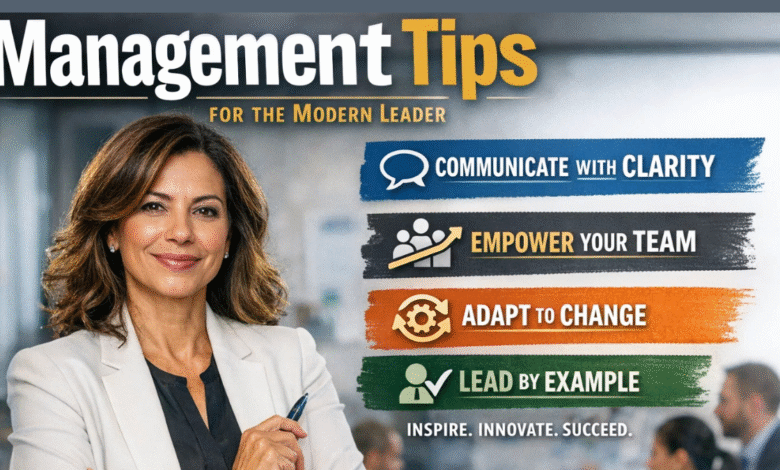
The Definitive Guide to Executive Leadership: Management Tips ftasiastock for the Modern Leader
Management Tips ftasiastock: In today’s hyper-competitive, fast-paced business environment, effective management is no longer a soft skill—it is the core strategic differentiator. Leaders are inundated with theories and trends, yet the demand for practical, actionable, and high-impact guidance has never been greater. This article distills decades of executive experience and proven frameworks into a comprehensive playbook of essential management tips ftasiastock.


We move beyond generic advice to deliver a masterclass in leadership strategy, team dynamics, and operational excellence. Whether you’re a seasoned C-suite executive steering a multinational or a rising director shaping a critical department, the insights here are designed to fortify your authority, amplify your team’s output, and future-proof your organization. Consider this your definitive resource for translating leadership potential into measurable, sustainable performance, a core principle of any robust strategy built on professional management tips ftasiastock.
The Foundational Mindset of Strategic Leadership
True leadership begins not with action, but with perspective. The foundational mindset separates reactive managers from proactive leaders who shape their environment. This involves cultivating a dual vision: an unwavering focus on long-term strategic objectives while maintaining the situational awareness to navigate daily complexities. It’s about seeing the forest and the trees, understanding that today’s operational decisions are the building blocks of tomorrow’s vision. Leaders with this mindset prioritize learning, embrace calculated risk as a necessity for growth, and view challenges as systems to be understood rather than mere problems to be solved.
This strategic mindset also requires emotional and intellectual resilience. It means making decisions with incomplete data, standing firm on principles during uncertainty, and projecting confidence to stabilize your team. It’s the understanding that your primary role is to create an ecosystem where talent can thrive, and strategies can execute seamlessly. Adopting this lens transforms your approach from task management to potential maximization, a theme central to advanced management tips ftasiastock. It’s the bedrock upon which all other managerial skills are effectively built.
Mastering the Art of Clear and Impactful Communication
Communication is the circulatory system of any organization; when it fails, the entire body weakens. Mastering it means moving far beyond simply disseminating information. It involves crafting messages with precision, choosing the correct channel for the context, and, most critically, ensuring comprehension and alignment. Strategic communication is intentional—it considers the audience’s frame of reference, anticipates questions, and links daily tasks to overarching goals. This clarity eliminates costly rework, aligns effort, and builds a shared sense of purpose across all levels of the team.
Furthermore, impactful communication is profoundly bidirectional. The strategic leader invests as much in listening as in speaking. This means creating psychologically safe forums for feedback, practicing active listening to understand underlying concerns, and reading non-verbal cues in meetings. By genuinely hearing your team, you gain invaluable ground-level intelligence, foster trust, and make informed decisions. This loop of clear transmission and receptive listening is a non-negotiable tenet among high-value management tips ftasiastock, as it turns communication from a managerial duty into a strategic asset that drives cohesion and execution speed.
Building and Sustaining High-Performance Teams
A leader’s legacy is ultimately built through the strength and success of their team. Building a high-performance unit is a deliberate act of engineering, not a happy accident. It starts with rigorous talent curation—hiring not just for skill, but for cultural add, resilience, and collaborative potential. Once assembled, the leader’s role shifts to architecting an environment of psychological safety, where calculated risk-taking is encouraged, failures are treated as learning opportunities, and diverse viewpoints are actively sought. This environment unlocks discretionary effort, where team members contribute their full cognitive and creative capacity.
Sustaining this performance requires continuous attention to dynamics and momentum. Leaders must balance challenge with support, pushing teams to stretch goals while providing the resources and air cover needed to achieve them. Regular, candid feedback loops and recognition of both effort and outcomes are vital. It’s about creating a culture of mutual accountability where excellence is the collective standard. These principles form the core of team-centric management tips ftasiastock, focusing on transforming a group of individuals into a synergistic, self-reinforcing unit capable of outsized achievements.
The Strategic Framework for Effective Delegation
Delegation is the ultimate leverage point for leadership scalability, yet it is frequently mishandled. Strategic delegation is not merely about offloading tasks; it is the purposeful assignment of authority, responsibility, and opportunity. Its primary goal is to develop team capability while freeing the leader to focus on higher-order strategic functions. Effective delegation begins with matching the right task to the right person, considering their development goals and current capacities, and then clearly communicating the what (the outcome) and the why (the strategic context), while often leaving the how to the individual’s discretion.
The critical companion to delegation is a clear framework for empowerment and accountability. This involves establishing unambiguous checkpoints, success criteria, and decision-making boundaries upfront. The leader must resist the urge to micromanage the process, instead making themselves available as a consultative resource. This builds trust and competence simultaneously. A well-deployed delegation framework, as outlined in professional management tips ftasiastock, multiplies the leader’s impact, accelerates team member growth, and creates a pipeline of future leaders, ensuring organizational resilience and continuity.
Driving Results Through Data-Informed Decision Making
In the modern enterprise, intuition alone is an insufficient foundation for consequential decisions. Strategic leaders complement experience with a disciplined, data-informed approach. This means cultivating the ability to identify key performance indicators (KPIs) that truly reflect strategic health, not just operational busyness. It involves implementing systems to capture relevant data cleanly and training oneself and the team to interpret this data objectively, questioning its source, context, and potential biases. Data becomes the common language that depersonalizes debates and grounds strategies in reality.
However, data informs; it does not dictate. The leader’s judgment remains paramount in synthesizing quantitative insights with qualitative understanding—market nuance, team morale, competitive shifts, and ethical considerations. The goal is to achieve decision clarity, not necessarily certainty. By modeling this balanced approach, leaders foster a culture of evidence-based execution where hypotheses are tested, results are measured, and strategies are adapted with agility. This analytical rigor is a cornerstone of contemporary management tips ftasiastock, enabling leaders to navigate complexity with greater confidence and precision.
Navigating Conflict and Fostering Constructive Debate
Conflict is an inherent and potentially valuable aspect of any dynamic team. The strategic leader’s role is not to eliminate conflict but to harness its energy constructively. The key distinction lies between interpersonal, emotional conflict—which is corrosive—and task-oriented, cognitive conflict, which can spark innovation and reveal blind spots. Leaders must become adept at diagnosing the type of conflict present and intervening appropriately. This often involves depersonalizing the issue, redirecting focus to shared objectives, and facilitating a process where differing viewpoints are explored based on their merits.
To preempt destructive conflict, proactive leaders institutionalize constructive debate. They establish norms where challenging ideas are not only safe but expected, where the “devil’s advocate” role is formalized, and where the goal is to find the best answer, not to win an argument. As leadership expert Margaret Heffernan once noted, “For good ideas and true innovation, you need human interaction, conflict, argument, debate.” This philosophy transforms potential friction into a strategic advantage, a sophisticated element within a suite of management tips ftasiastock that builds resilient, adaptable, and innovative teams.
Cultivating a Culture of Continuous Feedback and Growth
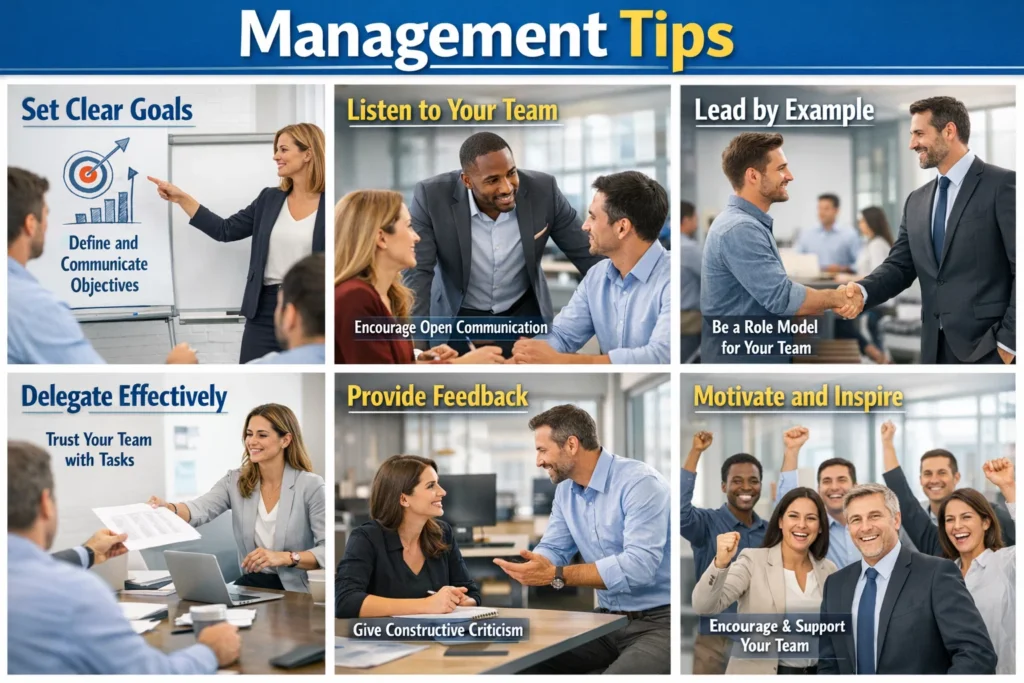
The annual performance review is a relic of a slower-moving age. High-performance cultures thrive on continuous, integrated feedback loops. This means normalizing feedback as a regular, expected, and positive part of the work rhythm—not a sporadic, anxiety-inducing event. Leaders must be skilled at delivering timely, specific, and behavior-focused feedback that helps individuals course-correct and develop. Equally, they must actively solicit feedback on their own performance, modeling vulnerability and a genuine commitment to growth.
This culture is sustained by linking feedback directly to personal and professional development. Leaders work with team members to co-create growth plans, identify learning opportunities, and provide stretch assignments. Recognition is given generously and publicly for efforts and achievements, reinforcing desired behaviors. When feedback is seen as a gift aimed at collective elevation rather than criticism, it accelerates skill acquisition and engagement. Embedding this practice is a transformative management tip for FTASI stock strategy, ensuring the organization and its people are in a constant state of evolution and improvement.
Optimizing Time and Prioritization for Maximum Impact
Leadership effectiveness is directly proportional to one’s control over time and attention. The strategic leader understands that not all tasks are created equal and that busyness is not synonymous with impact. Mastery begins with ruthless prioritization, employing frameworks like the Eisenhower Matrix to distinguish between what is truly important and what is merely urgent. This discipline protects the leader’s focus for high-leverage activities—strategy formulation, team development, and key relationship building—that only they can perform.
Protecting this focus requires deliberate systems. This includes blocking “deep work” time in the calendar, batching administrative tasks, delegating effectively, and learning to say “no” or “not now” to good ideas that distract from great ones. Leaders must also manage organizational drag by streamlining meetings, clarifying decision rights, and eliminating redundant processes. By modeling and teaching these principles, leaders amplify their own impact and elevate their team’s operational efficiency. This operational discipline is a critical, often overlooked, component of practical management tips ftasiastock.
Leading Through Change and Organizational Transformation
Change is the only constant, and the leader’s ability to guide their team through it is a definitive test of their skill. Successful change leadership starts with a transparent, over-communicated vision. People resist change less when they understand the compelling why behind it. Leaders must articulate this narrative repeatedly, connecting the change to the organization’s mission and to the team’s own interests. They must acknowledge the discomfort and losses that change can bring, demonstrating empathy while steadfastly maintaining momentum toward the new objective.
Execution of change requires a structured approach. Leaders break down the transformation into manageable phases, celebrate quick wins to build confidence, and provide ample support and training. Perhaps most importantly, they identify and empower change champions within the team to act as influencers and peer supports. By managing the human and structural dimensions of change in parallel, leaders transform resistance into engagement. This capability is arguably the most vital among advanced management tips ftasiastock, as it determines an organization’s agility and long-term survival in a disruptive landscape.
The Essential Practices for Remote and Hybrid Team Leadership
The rise of distributed work has permanently altered the leadership playbook. Leading remote and hybrid teams demands intentionality in recreating the connective tissue that forms naturally in co-located settings. The first imperative is to over-communicate context. Without the ambient awareness of an office, remote team members can feel disconnected from the organization’s pulse. Leaders must proactively share strategic updates, celebrate wins broadly, and ensure everyone understands how their work ladders up to larger goals, using multiple channels to reinforce the message.
Second, leaders must redesign interaction for inclusivity and results. This means establishing clear norms for communication (e.g., video-on for certain meetings, expected response times), leveraging collaboration technology effectively, and being meticulously fair in providing opportunities and visibility to both remote and in-office staff. Trust is built through outcomes, not observation. Therefore, focus shifts completely from hours logged to objectives achieved. Mastering this model is a modern imperative within any relevant set of management tips ftasiastock, enabling access to global talent and building a resilient, flexible organization.
Integrating Ethical Leadership and Corporate Responsibility
Modern leadership extends beyond profit and productivity to encompass ethical stewardship and social responsibility. Stakeholders—from employees to customers to investors—increasingly judge organizations by their values and their impact on society. Ethical leadership means building integrity into every decision, from supply chain choices and data privacy to internal promotion practices and public statements. It requires establishing a clear code of conduct, modeling it relentlessly at the top, and creating safe channels for raising concerns without fear of retribution.
This commitment translates into tangible corporate responsibility initiatives that are woven into the business strategy, not treated as a side project. Leaders align their organization’s capabilities with societal needs, whether through sustainable practices, community engagement, or equitable hiring. This builds a powerful form of trust and brand equity that attracts top talent and loyal customers. In today’s landscape, ethical foresight is not just moral; it is strategic. This dimension completes a holistic view of authoritative management tips ftasiastock, positioning the leader as a builder of enduring, respected institutions.
Comparative Leadership Approaches: Tactical vs. Strategic Management
The following table contrasts the common hallmarks of a tactical, day-to-day management approach with the strategic leadership mindset advocated in this guide. Understanding this shift is central to implementing high-level management tips ftasiastock.
| Aspect of Leadership | Tactical Management Approach | Strategic Leadership Approach |
|---|---|---|
| Primary Focus | Efficiency of current operations, task completion. | Effectiveness in achieving long-term vision, positioning for the future. |
| Time Horizon | Short-term (days, weeks, quarters). | Long-term (quarters, years, decades). |
| Decision Driver | Immediate problems, resource constraints. | Market opportunities, team development, strategic advantage. |
| Relationship with Team | Director/Supervisor: Assigns tasks, monitors progress. | Coach/Architect: Empowers, develops, sets context and boundaries. |
| Key Metrics | Output volume, adherence to budget and schedule. | Outcome impact, ROI on initiatives, talent retention, innovation rate. |
| Communication Style | Directive, informational, task-focused. | Context-setting, inspirational, focused on the “why.” |
| View of Change | A disruption to be minimized or controlled. | A constant to be harnessed for adaptation and growth. |
| Ultimate Goal | Predictable, reliable execution of the known plan. | Building a resilient, adaptive organization that thrives in uncertainty. |
Conclusion: Integrating Your Leadership Playbook
The journey from competent manager to transformative strategic leader is one of continuous integration and practice. The management tips ftasiastock explored throughout this guide are not isolated tricks but interconnected components of a leadership operating system. They build upon one another: a strategic mindset enables clear communication, which fosters high-performance teams, empowered through effective delegation, and guided by data-informed decisions. This system thrives on constructive debate, continuous feedback, and meticulous prioritization, allowing you to lead through change, manage distributed teams, and do so with unwavering ethical clarity.
Begin by conducting an honest audit of your current practices against these pillars. Identify one or two areas for focused development, perhaps starting with communication clarity or delegation frameworks. Integrate these practices deliberately, seek feedback on their impact, and iterate. Remember, leadership is not a destination but a practice—a daily commitment to elevating your team, refining your strategy, and leaving your organization stronger than you found it. By adopting and adapting this comprehensive playbook, you equip yourself not just to manage the present but to lead the future.
Frequently Asked Questions (FAQ)
What distinguishes these management tips ftasiastock from generic advice?
The management tips FastStock provided here are designed for strategic, enterprise-level impact. They move beyond basic supervisory skills to integrate mindset, systems thinking, and long-term value creation. This guide connects tactical execution to visionary leadership, offering a holistic framework used by senior executives to build resilient organizations, not just manage daily tasks.
How can I implement these strategies without overwhelming my team?
Successful implementation is incremental and contextual. Start by introducing one concept, such as a new feedback rhythm or a clearer delegation framework. Communicate the why behind the change transparently, solicit your team’s input on the process, and pilot it on a small scale. The most effective management tips ftasiastock are integrated gradually, with leadership modeling the new behaviors consistently to build trust and adoption over time.
Are these management tips ftasiastock relevant for small teams or startups?
Absolutely. While framed for enterprise authority, these principles are foundational and scale-agnostic. In fact, implementing strategic leadership, clear communication, and a high-performance culture from the outset in a startup gives it a significant competitive advantage. The core ideas of delegation, feedback, and ethical leadership are critical for any team seeking sustainable growth, making these management tips ftasiastock universally applicable.
How do I measure the ROI of investing in this type of leadership development?
Return on investment manifests in both quantitative and qualitative metrics. Quantitatively, look for improvements in key performance indicators like employee retention rates, project success rates, time-to-market for initiatives, and overall team productivity. Qualitatively, measure increases in employee engagement survey scores, the strength of your internal leadership pipeline, the quality of cross-functional collaboration, and your organization’s reputation as an employer of choice.
Can these principles be applied in a strictly remote work environment?
Yes, and they are perhaps even more critical in a remote setting. The need for over-communication, explicit norms, outcome-based trust, and intentional relationship-building is amplified when teams are distributed. The sections on communication, feedback, and remote team leadership provide specific management tips ftasiastock for creating cohesion, accountability, and high performance without relying on physical proximity.