
How Can Short Term Goals Best Lead Towards Accomplishing Long Term Career Goals?
When people ask, “how can short term goals best lead towards accomplishing long term career goals?”, they are really asking how small steps today can build a strong future tomorrow. It may sound simple, but this idea is one of the most powerful tools for success.
Think of your career like a long journey. You don’t reach your destination in one big jump you move step by step. Those small steps are your short term goals, and they guide you towards your bigger dreams. In this article, we’ll explore how short term goals work, why they matter, and how they can help you reach your long term career goals in a smart and effective way.
Understanding How Can Short Term Goals Best Lead Towards Accomplishing Long Term Career Goals?
To understand this idea clearly, let’s break it down.
- Short term goals are small, simple targets you can achieve in a short time (days, weeks, or months).
- Long term career goals are big dreams you want to achieve in the future (years ahead).
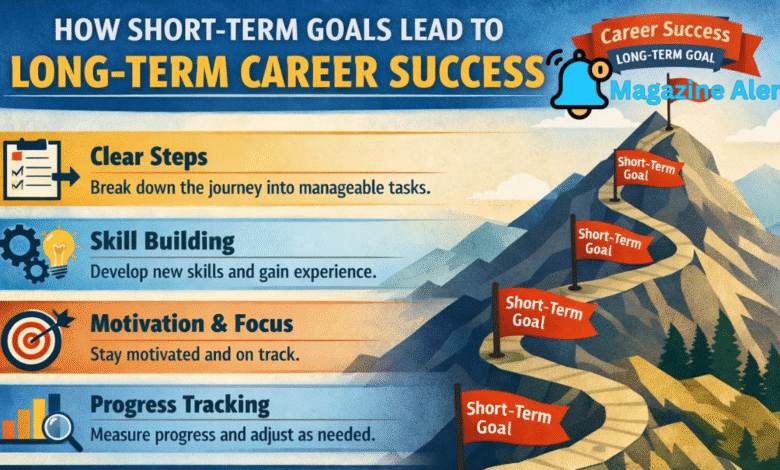
When you connect these two, magic happens. Short term goals act like stepping stones. They guide you forward, help you learn new skills, and keep you focused.
For example:
- Long term goal: Become a successful doctor
- Short term goals:
- Study science subjects
- Pass exams
- Apply to medical school
Each short term goal brings you closer to your long term career goal.
Why Short Term Goals Matter in Career Success
Short term goals are not just “small tasks.” They are powerful tools that help you grow.
Here’s why they matter:
- They make big dreams feel possible
- They keep you motivated
- They help you track progress
- They reduce stress by breaking work into small steps
Without short term goals, long term goals can feel overwhelming. But when you divide them, everything becomes easier and clearer.
The Connection Between Daily Actions and Big Career Dreams
Ever heard the saying, “Little drops make the ocean”? That’s exactly how careers are built.
Your daily actions studying, practicing, learning are all short term goals. Over time, they add up and create something big.
For example:
- Writing one page every day can turn into a book
- Learning one skill each month can build a strong career
So, when you wonder how can short term goals best lead towards accomplishing long term career goals?, remember this: small efforts done regularly lead to big success.
Setting Clear Short Term Goals That Support Your Career
Not all short term goals are helpful. They must be clear and connected to your future.
Here’s how to set good short term goals:
- Be specific (know exactly what you want)
- Make them measurable (track your progress)
- Keep them realistic (don’t aim too high too fast)
- Set a time limit (have a deadline)
Example Table of Goals
| Long Term Career Goal | Short Term Goal | Time Frame |
|---|---|---|
| Become a teacher | Complete teaching course | 6 months |
| Become a writer | Write 500 words daily | 1 month |
| Become a programmer | Learn one coding language | 3 months |
| Become a doctor | Study biology daily | 1 year |
This table shows how small steps connect to big dreams.
How Short Term Goals Build Confidence and Skills
Every time you complete a short term goal, you feel good. That feeling is called confidence.
Confidence is important because:
- It helps you believe in yourself
- It pushes you to try harder
- It keeps you moving forward
Also, short term goals help you build skills. For example:
- Practicing speaking improves communication
- Studying daily improves knowledge
- Working on projects improves experience
So, short term goals don’t just move you forward they make you stronger.
Staying Motivated Through Small Wins
Let’s be honest long term goals take time. Sometimes, it’s easy to feel tired or lose interest.
That’s where short term goals come in.
Each time you achieve one:
- You feel proud
- You stay motivated
- You keep going
These small wins act like fuel for your journey.
Try this:
- Celebrate small achievements
- Reward yourself after completing tasks
- Keep a list of completed goals
It may sound simple, but it works like a charm!
Overcoming Challenges with Short Term Planning
Life isn’t always smooth. You may face problems like:
- Lack of time
- Low motivation
- Failure or mistakes
But short term goals help you handle these challenges.
Instead of worrying about the whole journey, you focus on one step at a time.
For example:
- If you fail a test, set a short term goal to improve weak areas
- If you feel tired, take a break and restart with a small task
This approach keeps things manageable and reduces stress.
How Can Short Term Goals Best Lead Towards Accomplishing Long Term Career Goals in Real Life?
Let’s look at real-life situations.
Student Example
- Long term goal: Become an engineer
- Short term goals:
- Study math daily
- Complete homework on time
- Join science clubs
Job Seeker Example
- Long term goal: Get a good job
- Short term goals:
- Improve resume
- Learn new skills
- Apply to jobs weekly
Business Example
- Long term goal: Start a company
- Short term goals:
- Learn business basics
- Save money
- Build a network
In all these cases, short term goals guide people step by step.
The Role of Time Management in Achieving Goals
Time is one of your most valuable resources. If you manage it well, you can achieve both short and long term goals easily.
Here are some simple tips:
- Make a daily schedule
- Set priorities
- Avoid wasting time
- Take regular breaks
Good time management ensures that your short term goals are completed on time, which keeps you on track for your long term career goals.
Tracking Progress and Making Improvements
You can’t improve what you don’t measure.
Tracking your goals helps you:
- See what’s working
- Find mistakes
- Make better plans
You can track progress by:
- Writing goals in a notebook
- Using apps or planners
- Reviewing your work weekly
If something isn’t working, don’t worry adjust your plan. Flexibility is key.
Building Discipline Through Short Term Goals
Discipline means doing what you need to do, even when you don’t feel like it.
Short term goals help build discipline because:
- They require regular effort
- They create habits
- They improve focus
For example:
- Studying daily builds a habit
- Practicing skills regularly improves performance
Over time, discipline becomes a natural part of your life.
Creating a Strong Career Path Step by Step
A strong career doesn’t happen overnight. It is built step by step.
Here’s how short term goals help:
- They provide direction
- They reduce confusion
- They create a clear path
Instead of guessing what to do next, you always know your next step.
Common Mistakes to Avoid When Setting Short Term Goals
Even though short term goals are helpful, people sometimes make mistakes.
Avoid these:
- Setting too many goals at once
- Choosing unrealistic targets
- Ignoring long term goals
- Not tracking progress
Keep it simple. Focus on what truly matters.
Final Thoughts: How Can Short Term Goals Best Lead Towards Accomplishing Long Term Career Goals?
So, how can short term goals best lead towards accomplishing long term career goals? The answer is simple yet powerful.
Short term goals act as building blocks. They guide your actions, keep you motivated, and help you grow step by step. Without them, long term goals may feel far away and difficult to achieve.
When you set clear, realistic short term goals and work on them daily, you slowly move closer to your dreams. It’s not about big jumps it’s about steady progress.
In the end, success is not just about where you want to go, but how you get there. And short term goals are the path that leads you towards your long term career goals.
So start small, stay consistent, and keep moving forward your future self will thank you!
You may also read
Menstrual Cup How to Use: A Complete Beginner-Friendly Guide