
Procedural Drama: A Complete Guide to Understanding the Popular TV and Film Genre
Procedural drama is one of the most popular and long-lasting forms of storytelling in television and film. If you enjoy watching detectives solve crimes, doctors treat patients, or lawyers fight for justice in a structured and step-by-step way, then you have probably watched a procedural drama before.
This genre focuses on how professionals solve problems using a clear process or procedure. Each episode usually follows a case from beginning to end. Viewers love this format because it is exciting, easy to follow, and often teaches something new about real-world jobs.


In this complete guide, we will explore everything you need to know about procedural drama. We will look at its meaning, history, key elements, famous examples, benefits, and why audiences around the world continue to enjoy it.
What Is Procedural Drama?
A procedural drama is a type of television show or movie that focuses on the step-by-step process used by professionals to solve a problem.
The word “procedural” comes from the word procedure, which means a specific way of doing something. In these shows, the story follows a clear set of steps that professionals take to complete their work.
For example:
- Police officers investigate crimes
- Doctors diagnose and treat patients
- Lawyers prepare cases and argue in court
- Detectives gather evidence and question suspects
Each episode usually follows a similar structure. This makes it easy for viewers to understand the story, even if they watch episodes out of order.
The Origins of Procedural Drama
The history of procedural drama goes back many decades. It began with early radio shows and later became a huge part of television.
Early Beginnings
In the early 20th century, radio programs started telling stories about police work and crime investigation. These shows focused on the real methods used by law enforcement.
One famous early example was Dragnet, which began as a radio show in the 1940s and later became a television series.
Growth on Television
As television became more popular in the 1950s and 1960s, procedural drama quickly grew into a major genre.
During this time, audiences loved watching:
- Police investigations
- Courtroom battles
- Medical emergencies
The realistic approach made viewers feel like they were learning how real professionals worked.
Modern Procedural Shows
Today, procedural drama remains one of the most successful types of TV programs. Modern shows use advanced technology, strong characters, and complex stories to keep audiences engaged.
Key Characteristics of Procedural Drama
A procedural drama has several important features that make it different from other storytelling styles.
Step-by-Step Problem Solving
The most important feature is the structured process used to solve a case or problem.
For example, a police procedural might follow this pattern:
- Crime is discovered
- Investigation begins
- Evidence is collected
- Suspects are questioned
- The criminal is identified
- Justice is served
This clear structure helps viewers follow the story easily.
Self-Contained Episodes
Another important feature is that most episodes are self-contained. That means the story begins and ends within the same episode.
Viewers don’t need to watch every episode in order to understand what is happening.
Focus on Professional Work
Procedural dramas focus strongly on the professional duties of the characters.
Instead of focusing mainly on personal relationships, the story highlights:
- Investigation
- Diagnosis
- Analysis
- Decision-making
Realistic Techniques
Many procedural drama shows try to show real-world methods and tools used by professionals.
For example:
- Forensic science in crime shows
- Medical procedures in hospital dramas
- Legal arguments in courtroom dramas
Types of Procedural Drama
There are several different types of procedural drama, each focusing on a specific profession or type of investigation.
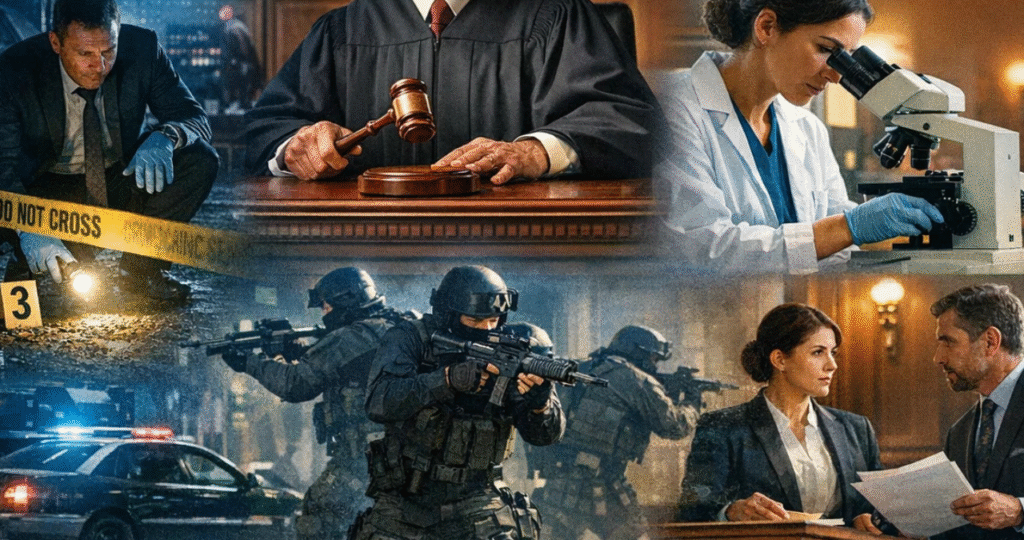
Police Procedural Drama
This is the most common type. These shows focus on police officers and detectives solving crimes.
Common themes include:
- Murder investigations
- Crime scene analysis
- Criminal profiling
- Arrests and interrogations
These shows often highlight teamwork and detective skills.
Medical Procedural Drama
Medical procedural dramas take place in hospitals and focus on doctors, nurses, and medical staff.
Typical storylines include:
- Diagnosing unusual illnesses
- Emergency surgeries
- Patient care
- Medical ethics
These shows often combine emotional stories with medical science.
Legal Procedural Drama
Legal procedural dramas follow lawyers and judges as they work through the justice system.
Viewers see:
- Courtroom trials
- Evidence presentation
- Legal arguments
- Jury decisions
These stories show how laws are applied in real-life situations.
Military Procedural Drama
These dramas focus on military investigations, intelligence work, and security operations.
They often include:
- Military law
- National security issues
- Tactical investigations
Structure of a Procedural Drama Episode
Most procedural drama episodes follow a similar storytelling structure.
Here is a typical format:
| Stage | What Happens |
|---|---|
| Opening Incident | A crime, medical emergency, or problem occurs |
| Investigation Begins | Professionals start gathering information |
| Evidence and Clues | New discoveries move the case forward |
| Obstacles | Mistakes, wrong suspects, or complications appear |
| Breakthrough | A key clue reveals the truth |
| Resolution | The case is solved and justice or closure is reached |
This format creates suspense while keeping the story organized.
Why Audiences Love Procedural Drama
There are many reasons why procedural drama remains so popular around the world.
Easy to Follow
Since each episode tells a complete story, viewers can watch without feeling lost.
You can jump into almost any episode and still understand the plot.
Educational Value
Procedural dramas often teach viewers about real-world professions.
People learn about:
- Forensic science
- Medical treatments
- Legal procedures
- Investigation methods
Satisfying Endings
Most procedural drama episodes end with a clear solution.
Viewers enjoy the feeling of closure when the problem is solved.
Strong Characters
Many procedural shows feature memorable characters such as brilliant detectives, skilled doctors, or determined lawyers.
These characters keep audiences coming back for more.
Famous Examples of Procedural Drama
Over the years, many procedural drama series have become extremely famous.
Some well-known examples include:
Crime and Police Shows
- Law & Order
- CSI: Crime Scene Investigation
- NCIS
- Criminal Minds
Medical Shows
- Grey’s Anatomy
- House
- ER
Legal Shows
- The Good Wife
- Suits
- Boston Legal
These shows have attracted millions of viewers around the world.
The Role of Realism in Procedural Drama
Realism plays a major role in procedural drama. Writers often research real-life professions to make their stories believable.
For example:
- Police advisors help crime shows
- Doctors assist with medical scripts
- Lawyers review courtroom scenes
This attention to detail helps make the story feel authentic.
However, some parts are still dramatized to keep the story exciting. Real investigations or medical procedures may take much longer in real life.
Differences Between Procedural Drama and Serial Drama
Many people confuse procedural drama with serial drama, but they are quite different.
| Feature | Procedural Drama | Serial Drama |
|---|---|---|
| Story Structure | Each episode has its own story | Story continues across many episodes |
| Viewing Order | Episodes can be watched in any order | Must watch in sequence |
| Focus | Problem-solving process | Character development and long plot |
| Examples | Crime investigation shows | Long story dramas |
Both styles are popular, but procedural drama is especially loved for its simple and satisfying format.
How Procedural Drama Influences Society
Believe it or not, procedural drama has influenced how people think about real professions.
Increased Interest in Careers
Many viewers become interested in careers such as:
- Police officers
- Forensic scientists
- Doctors
- Lawyers
Some students even choose their career paths after watching these shows.
Public Awareness
Procedural dramas also raise awareness about important issues such as:
- Crime prevention
- Medical conditions
- Legal rights
- Social justice
Cultural Impact
These shows often reflect society’s values and concerns. They explore topics like fairness, responsibility, and truth.
Challenges of Creating Procedural Drama
Producing a successful procedural drama is not easy. Writers and producers face several challenges.
Keeping Stories Fresh
Since many shows follow a similar structure, writers must constantly create new and interesting cases.
Balancing Realism and Entertainment
Too much realism may slow the story, while too much drama can make it unrealistic.
Writers must find the right balance.
Character Development
Even though episodes are self-contained, audiences still want to see characters grow and change over time.
The Future of Procedural Drama
Despite changes in television and streaming services, procedural drama remains extremely popular.
New technologies are helping the genre evolve.
Modern Trends
Today’s procedural shows often include:
- Advanced forensic science
- Cybercrime investigations
- International crime cases
- Psychological profiling
Streaming Platforms
Streaming services now produce many procedural series that mix traditional case-solving with deeper character stories.
This modern style attracts both old fans and new audiences.
Tips for Writing a Great Procedural Drama
For writers who want to create their own procedural drama, several key tips can help.
Research the Profession
Accuracy is important. Writers should learn about real procedures used by professionals.
Create Interesting Cases
Every episode needs a unique and engaging problem to solve.
Build Strong Characters
Even though the focus is on cases, memorable characters make the show more exciting.
Maintain Suspense
Good procedural dramas keep viewers guessing until the final reveal.
Final Thoughts on Procedural Drama
Procedural drama has become one of the most successful storytelling styles in television and film. By focusing on the step-by-step process of solving problems, this genre offers excitement, education, and satisfying conclusions.
From police investigations to medical emergencies and courtroom battles, procedural drama shows how skilled professionals work to uncover truth and deliver justice.
Its clear structure, engaging characters, and realistic methods make it enjoyable for audiences of all ages. Even after many decades, the popularity of procedural drama continues to grow as new stories and technologies bring fresh life to this classic genre.
In the end, procedural drama remains a powerful way to explore real-world professions, inspire curiosity, and tell meaningful stories that keep viewers hooked from beginning to end.
You may also read
A Man on the Inside: A Complete Guide to Understanding the Role, Meaning, and Impact