
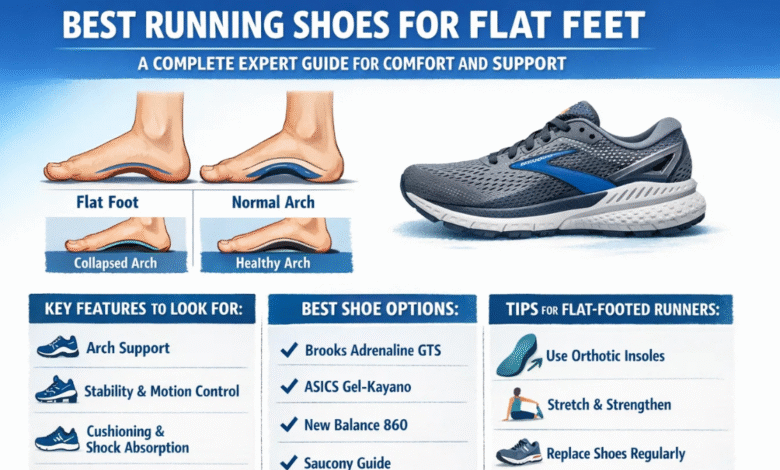
Best Running Shoes for Flat Feet: A Complete Expert Guide for Comfort and Support
When it comes to choosing the best running shoes for flat feet, the right pair can truly change your running journey. If you have flat feet, you already know that not every shoe feels good. Some may cause pain in your arches, ankles, knees, or even your lower back. But here’s the good news with the right support and smart design, you can run comfortably and confidently.
In this complete guide, we’ll explore everything you need to know about the best running shoes for flat feet. We’ll look at how flat feet affect your body, what features matter most, expert tips, and top shoe options that runners trust. So, lace up let’s dive in!
Understanding Flat Feet and Why They Matter
Flat feet, also called fallen arches, happen when the arch of your foot is very low or touches the ground completely. When you stand, your entire foot may press against the floor.
How Flat Feet Affect Running
When you run, your feet absorb shock and push your body forward. If you have flat feet:
- Your foot may roll inward too much (this is called overpronation).
- Your ankles may turn inward.
- Your knees and hips may move out of alignment.
- You may feel pain in your heels, arches, shins, or knees.
Over time, poor support can lead to injuries like:
- Shin splints
- Plantar fasciitis
- Achilles tendon pain
- Knee strain
That’s why finding the best running shoes for flat feet is not just about comfort it’s about protecting your body.
Why Regular Running Shoes May Not Work
Not all running shoes are made the same. Some are built for neutral feet with normal arches. If you wear these without proper support, your feet may collapse inward even more.
Here’s what often happens with regular shoes:
- Lack of arch support
- Soft midsoles that allow too much motion
- No stability features
- Extra strain on joints
Well, that’s a recipe for discomfort. The best running shoes for flat feet are specially designed to reduce overpronation and keep your stride stable.
Key Features of the Best Running Shoes for Flat Feet
Before you buy your next pair, make sure you understand what to look for. Not every shoe labeled “supportive” will meet your needs.
Strong Arch Support
Flat feet need firm arch support. This helps lift the arch slightly and reduce stress.
Look for:
- Built-in arch structures
- Dual-density foam
- Stability posts
Stability or Motion Control Design
Stability shoes guide your foot and prevent it from rolling inward too much.
- Stability shoes: Good for mild to moderate flat feet
- Motion control shoes: Best for severe overpronation
Firm Midsole Cushioning
Too-soft cushioning can make your foot unstable. You need cushioning that is firm but still comfortable.
Wide Base and Heel Support
A wider sole gives better balance. A strong heel counter (the back of the shoe) keeps your foot in place.
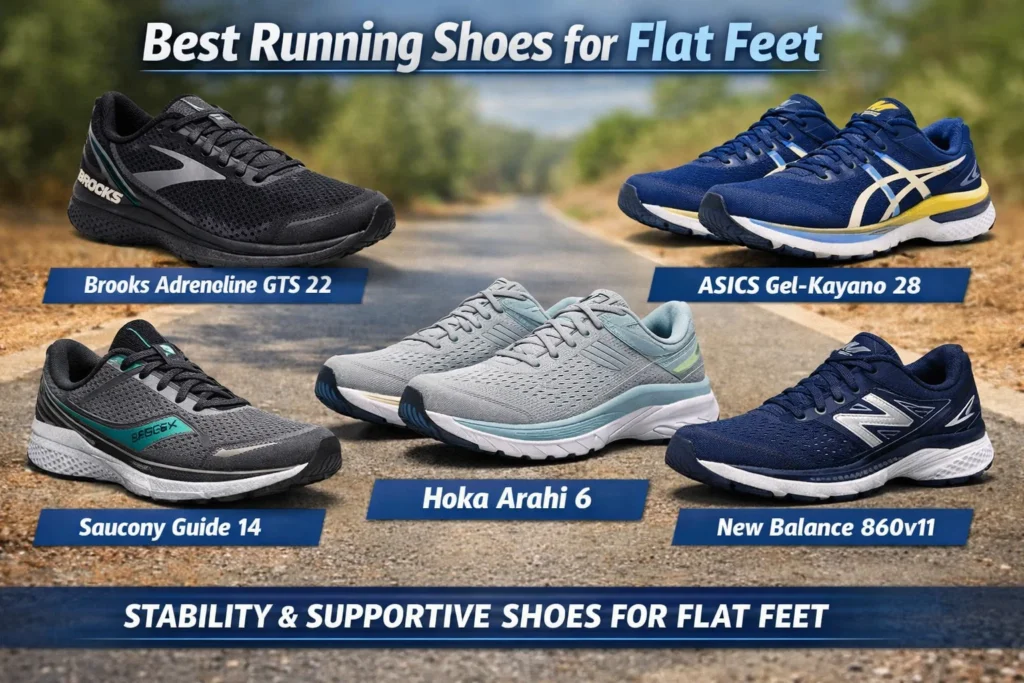
Best Running Shoes for Flat Feet Recommended by Experts
After years of research and runner feedback, experts often recommend the following models as some of the best running shoes for flat feet:
Brooks Sports – Adrenaline GTS
The Adrenaline GTS is a favorite among runners with flat feet.
Why runners love it:
- GuideRails support system
- Balanced cushioning
- Comfortable fit
It’s great for daily training and long runs.
ASICS – Gel Kayano
The Gel Kayano is known for strong stability and plush comfort.
Key features:
- GEL cushioning system
- Firm arch support
- Durable design
If you want comfort with control, this is a solid option.
New Balance – 860
The 860 model offers excellent stability without feeling stiff.
Benefits:
- Dual-density midsole
- Good shock absorption
- Wide size options
It’s ideal for runners who need support but still want flexibility.
Saucony – Guide
This shoe balances stability and lightweight comfort.
Why it stands out:
- Smooth ride
- Supportive arch
- Breathable upper
It works well for beginners and experienced runners alike.
Comparison Table of the Best Running Shoes for Flat Feet
| Brand | Model | Support Level | Cushioning | Best For |
|---|---|---|---|---|
| Brooks | Adrenaline GTS | Stability | Moderate | Daily runs |
| ASICS | Gel Kayano | Strong stability | Plush | Long distances |
| New Balance | 860 | Stability | Firm-moderate | Wide feet |
| Saucony | Guide | Mild stability | Balanced | Beginners |
This table helps you quickly compare the best running shoes for flat feet based on your needs.
How to Test If You Have Flat Feet
Not sure if you truly have flat feet? Try the simple wet test.
- Wet your feet.
- Stand on a piece of paper.
- Step off and look at your footprint.
If you see your entire foot shape without a curve inward, you likely have flat feet.
Still unsure? A podiatrist or sports specialist can check your gait and give expert advice.
Tips for Choosing the Best Running Shoes for Flat Feet
Let’s be honest shopping for running shoes can feel overwhelming. Here are some smart tips to make it easier:
- Shop in the evening (your feet are slightly larger).
- Bring your old running shoes for comparison.
- Try both shoes and walk or jog in-store.
- Make sure there’s space at the toe box.
- Don’t choose style over support.
And remember, the best running shoes for flat feet should feel comfortable from the start. If they hurt in the store, they won’t magically feel better later.
The Role of Custom Insoles
Sometimes even the best shoes need extra help.
Custom orthotic insoles can:
- Provide stronger arch support
- Improve alignment
- Reduce pain
If you have severe flat feet, combining supportive shoes with custom insoles may be your best option.
Common Mistakes Runners with Flat Feet Make
Oops! Even experienced runners sometimes make these mistakes:
- Choosing very soft shoes
- Ignoring mild pain
- Wearing worn-out shoes
- Skipping warm-ups
Flat feet require consistent support. Replacing your running shoes every 300–500 miles is a smart rule.
Exercises That Help Flat Feet
Shoes are important, but strengthening your feet matters too.
Try these exercises:
- Toe curls with a towel
- Calf raises
- Arch lifts
- Rolling a tennis ball under your foot
Strong muscles help support your arch naturally.
Caring for Your Running Shoes
Once you’ve found the best running shoes for flat feet, take care of them.
- Let them air dry after runs.
- Avoid washing them in machines.
- Rotate between two pairs if possible.
- Store them in a cool, dry place.
Good care extends their life and keeps your support strong.
When to See a Specialist
If you experience:
- Severe foot pain
- Swelling
- Ongoing knee or hip pain
It’s time to consult a medical expert. Sometimes flat feet need more than just good shoes.
Final Thoughts on the Best Running Shoes for Flat Feet
Choosing the best running shoes for flat feet is one of the smartest investments you can make in your health. With proper arch support, stability features, and firm cushioning, you can reduce pain and improve performance.
Don’t settle for discomfort. The right pair can help you run longer, feel stronger, and stay injury-free. Whether you choose Brooks, ASICS, New Balance, or Saucony, focus on fit and support first.
At the end of the day, the journey to finding the best running shoes for flat feet is about comfort, confidence, and caring for your body. When your feet feel good, everything else falls into place.
So go ahead lace up the best running shoes for flat feet and hit the road with confidence!
You may also read
Hyatt Centric Downtown Nashville: Your Complete Guide to a Stylish Stay in Music City