Why Is Tiger Balm Illegal in Some Countries?
Why Is Tiger Balm Illegal: Tiger Balm is one of those products that feels timeless. It sits in medicine cabinets across Asia, Europe, and North America, trusted for muscle pain, headaches, colds, and everyday aches. Yet despite its global popularity, many people are surprised to discover that it has been restricted, regulated, or even temporarily banned in certain countries. That surprise often leads to one pressing question: why is Tiger Balm illegal in some places while widely accepted in others?


The answer is layered. It involves regulatory frameworks, evolving medical standards, ingredient scrutiny, and consumer safety laws that vary significantly across borders. This article breaks down the real reasons behind Tiger Balm restrictions, separates myth from fact, and explains what legality truly means in different regions today.
Understanding What Tiger Balm Actually Is
Tiger Balm is a topical analgesic originally developed in the late nineteenth century, blending traditional herbal medicine with modern manufacturing. Its formula relies on a combination of essential oils and active compounds designed to stimulate circulation and create warming or cooling sensations on the skin.
Despite its natural branding, Tiger Balm is not a cosmetic. It is classified as a medicinal or therapeutic product in many jurisdictions, which subjects it to stricter oversight. This classification plays a key role in explaining why regulation, rather than popularity, determines where and how it can be sold.
The Ingredients That Trigger Legal Scrutiny
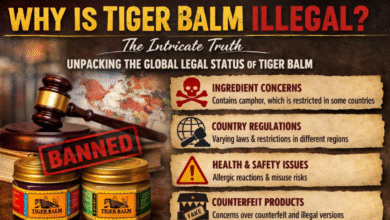
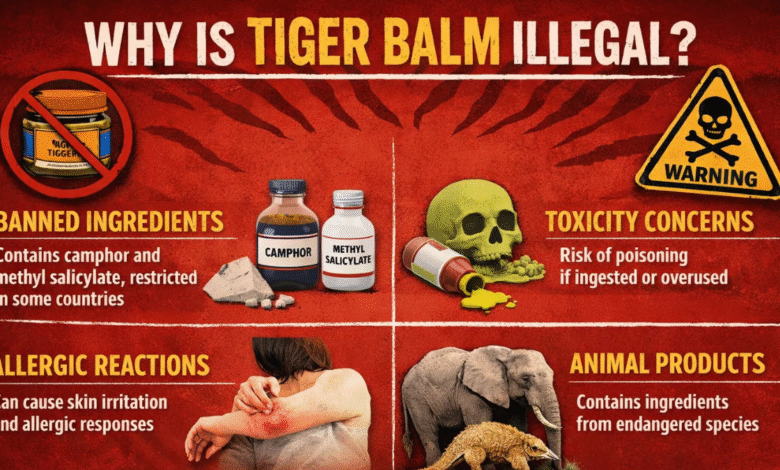
At the heart of the debate around why it is illegal are its active ingredients, particularly camphor, menthol, and clove oil. Camphor, in particular, has been flagged by health authorities due to potential toxicity if ingested or misused.
Some countries impose strict limits on camphor concentration in over-the-counter products. When Tiger Balm formulations exceed those limits, regulators may restrict sales or require reformulation. This does not mean the product is unsafe when used correctly, but it does mean it must meet local chemical safety thresholds.
How Camphor Regulations Differ Worldwide
Camphor is a naturally derived compound, yet its legal treatment varies dramatically across regions. In the United States, camphor is regulated by the FDA, which caps allowable concentrations in consumer products to reduce accidental poisoning risks.
In other countries, particularly those with more conservative chemical policies, camphor-based products are scrutinized even more closely. These differing standards are a major reason people encounter conflicting information when researching why it is illegal in certain places.
Historical Bans and Misunderstandings
Some reports of Tiger Balm being “illegal” stem from historical or temporary bans that no longer apply. In several countries, earlier versions of the product failed to meet updated labeling or packaging laws, leading to short-term removal from shelves.
Over time, reformulated versions returned to the market with compliant labeling and adjusted ingredient ratios. Unfortunately, outdated online information continues to circulate, reinforcing the misconception that Tiger Balm remains banned everywhere.
The Role of Consumer Safety Laws
Modern consumer safety laws prioritize preventing misuse, especially among children. Because Tiger Balm has a strong scent and high camphor content, regulators worry about accidental ingestion or overapplication.
In regions where poisoning incidents have occurred, authorities have responded by restricting sales channels, requiring child-resistant packaging, or limiting advertising claims. These measures contribute to the perception that Tiger Balm is illegal, even when it is simply regulated.
Why Medical Claims Matter Legally
Another reason behind restrictions relates to how Tiger Balm is marketed. In many countries, products that claim to treat pain or illness must undergo clinical evaluation or registration as medicines.
If Tiger Balm is sold with therapeutic claims without meeting those requirements, it may be removed from the market. This regulatory mismatch often explains why Tiger Balm is illegal in one country but freely sold in another with different labeling language.
Regional Differences in Herbal Medicine Acceptance
Cultural attitudes toward traditional medicine strongly influence regulation. In parts of Asia, herbal remedies are integrated into healthcare systems and supported by long-standing usage data.
In contrast, Western regulatory bodies often demand standardized clinical evidence. When Tiger Balm is evaluated through that stricter lens, authorities may impose limitations that do not exist in regions where traditional medicine is formally recognized.
Import Laws and Border Restrictions
Some people encounter legal issues with Tiger Balm when traveling internationally. Customs agencies may restrict imports of medicinal products that exceed personal-use quantities or contain controlled substances.
These import rules often spark online claims about illegality. In reality, the product may be legal for domestic sale but restricted for cross-border transport without proper documentation.
Mislabeling and Counterfeit Products
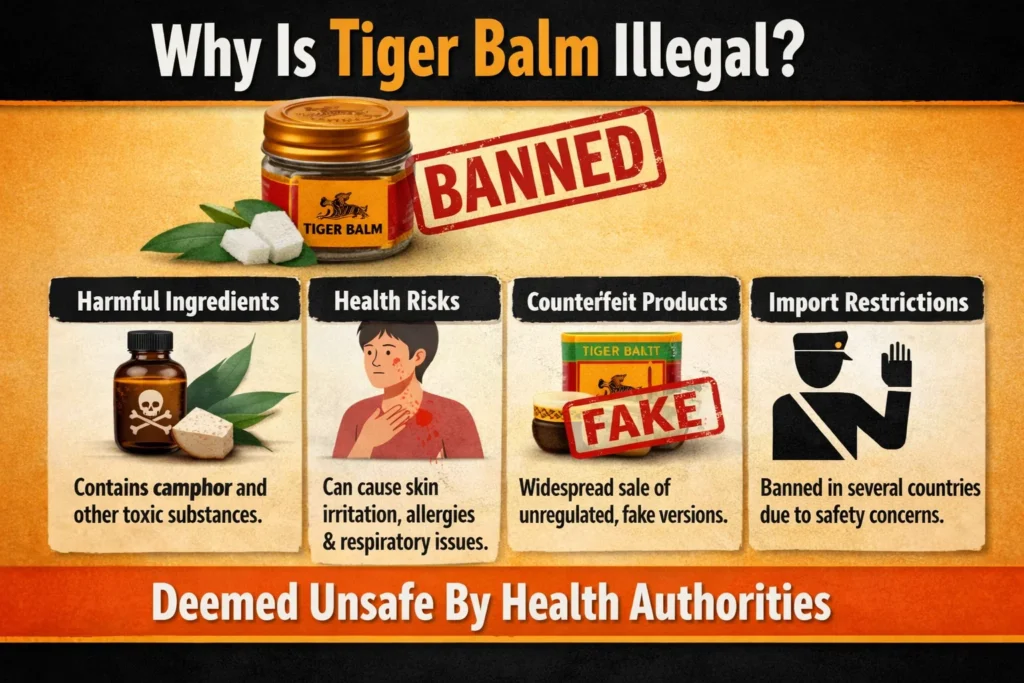
Counterfeit Tiger Balm products complicate the legal landscape. Fake versions may contain unregulated levels of camphor or undisclosed ingredients, prompting authorities to issue broad warnings or seizures.
When regulators crack down on counterfeits, headlines sometimes blur the distinction between illegal knockoffs and legitimate Tiger Balm, reinforcing confusion around why it is illegal in public discourse.
Comparison of Regulations by Region
Below is a simplified overview of how Tiger Balm is treated across major markets, highlighting the regulatory diversity that fuels confusion.
| Region | Legal Status | Key Restrictions | Notes |
|---|---|---|---|
| United States | Legal with limits | Camphor concentration capped | Sold as OTC topical analgesic |
| European Union | Mostly legal | Labeling and claims regulated | Some countries stricter than others |
| Southeast Asia | Fully legal | Traditional medicine acceptance | Widely used culturally |
| Australia | Restricted | Therapeutic Goods registration | Some formulations limited |
| Middle East | Varies by country | Ingredient approval required | Import permits sometimes needed |
The Impact of Child Safety Concerns
One recurring theme in regulatory discussions is child safety. Camphor ingestion can be dangerous for young children, leading to seizures or respiratory issues if misused.
As one toxicology expert noted, “Camphor isn’t inherently dangerous when applied correctly, but its margin for error is smaller than many people realize.” This concern drives stricter packaging and sales rules, not outright bans in most cases.
How Online Marketplaces Influence Perception
E-commerce has blurred regulatory boundaries. Products sold online may bypass local compliance checks, leading to takedowns or platform bans.
When major marketplaces remove listings, consumers often interpret this as proof of illegality. In reality, it is usually a compliance or documentation issue rather than a blanket prohibition.
Reformulations and Modern Versions of Tiger Balm
Manufacturers have responded to regulatory pressure by releasing reformulated versions with adjusted ingredient levels. These newer products are designed to comply with modern safety standards while preserving effectiveness.
Understanding these changes helps clarify why tiger balm is illegal in older references but is legally available today in updated forms.
Legal Alternatives and Comparable Products
In regions where Tiger Balm faces restrictions, alternative topical analgesics with similar effects are often recommended. These may use lower camphor concentrations or synthetic substitutes.
The availability of substitutes reduces the incentive for outright bans, favoring regulation instead. This approach aligns with broader trends in consumer health policy.
The Difference Between Illegal and Regulated
Perhaps the most important clarification is semantic. Illegal implies criminal prohibition, while regulated implies controlled access.
In most cases, Tiger Balm falls into the latter category. It is subject to rules, not bans. Misunderstanding this distinction fuels unnecessary alarm and misinformation.
Cultural Legacy Versus Modern Compliance
Tiger Balm’s century-long history gives it cultural legitimacy, but modern regulatory systems prioritize standardized safety data over tradition.
This tension explains many of the legal challenges the product faces. Tradition alone is no longer enough to guarantee unrestricted access in global markets.
How Travelers Should Approach Tiger Balm
For travelers, the safest approach is moderation and awareness. Carry small, personal-use quantities and check destination regulations before packing medicinal products.
Doing so avoids customs issues and reinforces that legality often depends on context rather than the product itself.
Conclusion: Why the Question Persists
The ongoing debate around why Tiger Balm is illegal persists because legality is fragmented, nuanced, and often misunderstood. Tiger Balm is not universally banned, nor is it universally unrestricted. It exists within a patchwork of regulations shaped by ingredient safety, medical claims, and cultural attitudes.
Understanding these layers replaces confusion with clarity. Rather than viewing Tiger Balm as forbidden, it is more accurate to see it as a regulated traditional remedy navigating modern health standards.
Frequently Asked Questions About Tiger Balm Legality
Is Tiger Balm illegal everywhere?
No, Tiger Balm is legal in many countries. Confusion about why it is illegal usually comes from regional restrictions rather than global bans.
Why is Tiger Balm restricted in some countries?
Restrictions often relate to camphor concentration, labeling requirements, or medical claim regulations, not because the product is inherently unsafe.
Can you bring Tiger Balm through airport security?
In small personal-use quantities, it is usually allowed, but customs rules vary. This is another reason people ask why Tiger Balm is illegal when traveling.
Has Tiger Balm ever been fully banned?
Some regions imposed temporary bans due to compliance issues, but these were often lifted after reformulation or relabeling.
Are modern versions of Tiger Balm safer?
Yes, many modern formulations are designed to meet updated safety standards, addressing concerns that originally fueled debates about why tiger balm is illegal.
You may also read
Brody Tate: Unraveling the Creative Tapestry of a Modern Visionary