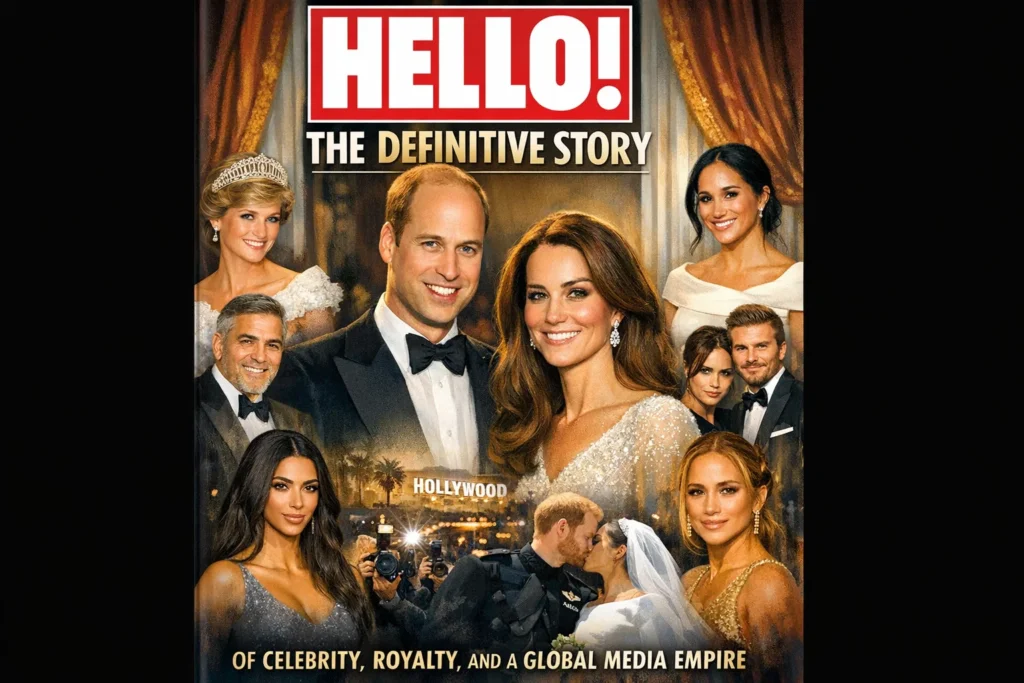
Hello Magazine: The Definitive Story of Celebrity, Royalty, and a Global Media Empire
Hello Magazine For decades, one name has stood as the undisputed arbiter of exclusive access, glossy glamour, and intimate portraits of the world’s most famous faces: Hello magazine. More than just a periodical, it has become a cultural institution, a unique blend of journalism, public relations, and aspirational fantasy. Its signature style a polite, positive, and meticulously curated glimpse behind palace gates and mansion doors has captivated millions of readers worldwide while simultaneously shaping the modern celebrity and royalty media landscape.


This deep dive explores the unparalleled phenomenon of Hello magazine, from its founding philosophy to its enduring power, examining how a single publication redefined the relationship between the elite and the public, creating a blueprint for respectful yet riveting coverage that few have ever successfully replicated.
The Genesis of a Glossy Phenomenon
The story of Hello magazine begins not with a focus on celebrity, but on a very specific niche: European royalty. Founded in Spain in 1944 under the name ¡Hola! by publisher Antonio Sánchez Gómez, the magazine was built on a revolutionary premise for its time. Instead of pursuing salacious gossip or critical exposés, it offered families of fame and title a platform for controlled, flattering, and family-friendly storytelling.
This “paid-for” or “approved” editorial model, where subjects often cooperated closely for a positive portrayal, was a stark contrast to the more aggressive paparazzi-driven press. The formula was a resounding success in the Spanish market, proving there was a massive audience hungry for beautifully photographed, aspirational content that felt like an invitation rather than an intrusion.
This foundational philosophy became the magazine’s north star when it launched its UK edition, Hello magazine, in 1988. Under the stewardship of Eduardo Sánchez Junco, Antonio’s son, the publication expertly transplanted its successful model to British shores. It arrived at a perfect cultural moment, as public fascination with the Royal Family and a burgeoning celebrity culture was reaching a fever pitch.
Hello magazine offered an alternative to the often-cynical British tabloids, positioning itself as a polite guest in the homes of the elite. This unique positioning allowed it to secure world-first exclusives most iconically, the first official photos of the newborn Prince William in 1982, licensed directly from the Palace that other outlets could only dream of, instantly cementing its authority and trust with both its subjects and its readers.
The Unmistakable Editorial Formula
At the core of Hello magazine‘s success is an editorial formula so consistent it has become its brand identity. Every issue is a masterclass in curated reality, presenting a world of elegance, harmony, and achievement. The photography is always lush, high-quality, and flattering, utilizing soft lighting and composed settings. The writing tone is uniformly celebratory, reverent, and devoid of criticism, focusing on milestones like weddings, births, career achievements, and charitable work.
This creates a comforting, predictable reading experience where readers know they will be uplifted rather than confronted with scandal or negativity. The magazine operates in a universe where every celebrity home is impeccably decorated, every royal is dutiful and graceful, and every event is a spectacle of beauty and joy.
This deliberate approach extends to its language and framing. Features are often presented as “exclusive tours,” “joyous revelations,” or “heartwarming interviews,” emphasizing access and shared celebration. The magazine famously avoids the term “paparazzi,” preferring to present its images as cooperatively obtained portraits.
This consistent voice builds a powerful parasocial relationship; readers feel they are being given a privileged, friendly look into the lives of the famous, rather than having details snatched against their will. For the celebrities and royals themselves, participating with Hello magazine offers a rare opportunity to control their narrative in a major publication, presenting their lives and projects exactly as they wish them to be seen, which is an incredibly valuable commodity in the often-hostile media ecosystem.
Royalty Reporting: A Realm of Exclusive Access
No publication is more synonymous with royal coverage than Hello magazine. Its relationship with royal families, particularly the British Royal Family, is the bedrock of its brand authority. The magazine has transcended mere reporting to become almost an official chronicler of royal milestones. Its historic coup with Prince William set a precedent, and it has continued to secure sanctioned exclusives for royal christenings, engagement portraits, and family photographs for decades.
This access is not granted lightly; it is earned through a decades-long demonstration of respect, discretion, and a guaranteed positive portrayal that aligns with the institution’s desire to manage its public image. For the Palace, Hello is a trusted partner in shaping public perception during carefully managed moments.
This special status creates a unique dynamic. When Hello magazine publishes a royal exclusive, it is treated by the global media as a quasi-official release. Newspapers and websites around the world will license and republish the images, often with credit to Hello as the source. This amplifies the magazine’s reach and reinforces its position as the gatekeeper to the most sought-after content in the world. The coverage itself is always dignified, focusing on family, duty, and tradition.
It presents royalty as both majestic and relatable, celebrating their public roles while offering a glimpse of their private joys. In an age of relentless social media speculation and invasive commentary, Hello magazine‘s royal reporting remains a bastion of polished, protocol-aware journalism that serves both the subject’s and the public’s interests in a uniquely symbiotic way.
The Celebrity Ecosystem: Symbiosis and Storytelling
For celebrities outside the royal sphere, Hello magazine operates as a powerful publicity tool within a mutually beneficial ecosystem. A cover feature or multi-page spread in the magazine is a coveted prize, signaling a certain level of prestige and public affection. Actors promoting a film, musicians launching an album, or television stars celebrating a personal milestone view Hello as a platform to connect with a large, engaged, and predominantly positive audience.
The exchange is straightforward: the celebrity grants unparalleled access to their home, family, or special event, and in return, they receive a glowing, professional profile that enhances their brand. This model has been used to announce pregnancies, showcase renovations of magnificent homes, and present a curated version of a celebrity romance or marriage.
The magazine’s role in this ecosystem extends beyond simple promotion. It often helps in reputation management or rebranding. A celebrity emerging from a period of negative press might choose Hello magazine for their first major interview, using its respectful tone to reshape their narrative. The famous “at home with” feature is a prime example, allowing stars to present themselves as tasteful, family-oriented, and down-to-earth despite their fame and wealth.
This carefully constructed authenticity is incredibly effective. For readers, it feels more genuine and intimate than a scripted red-carpet interview, fostering a deeper sense of connection. The magazine thus functions as a bridge, translating the rarefied world of celebrity into an aspirational yet approachable fantasy for the everyday person.
Global Expansion and Local Adaptation
The success of the Hello magazine brand is not confined to the Spanish and British markets. Recognizing the universal appeal of its formula, the company embarked on a strategic global expansion, launching licensed editions in numerous countries, including Canada, Greece, India, and several nations across the Middle East and Latin America.
This was not a simple translation exercise; it was a masterful act of cultural localization. Each edition retains the core DNA of respectful exclusives and glossy production but tailors its content to the fame hierarchies and cultural interests of its local audience. The Indian edition, for instance, features Bollywood stars and regional royalty with the same reverence the UK edition reserves for Hollywood and Buckingham Palace.
This global network provides the Hello magazine organization with unparalleled intelligence and reach. A celebrity on a world tour might be covered sequentially by multiple editions, each providing localized context. Major royal events, like a British royal wedding, become global spectacles coordinated across all editions, but with local commentary and angles added.
This strategy ensures the brand remains relevant and dominant in diverse media landscapes. It also creates a fascinating comparative study in global celebrity culture what constitutes fame, how it is portrayed, and what the public aspires to can vary significantly from one edition to another, yet all are unified under the polished, positive umbrella of the Hello brand philosophy.
The Digital Transformation and Multimedia Empire
Like all traditional media giants, *Hello magazine faced the monumental challenge of the digital revolution. Its response has been to evolve from a weekly print title into a robust, 24/7 multimedia brand. HelloMagazine.com is now a major digital destination, breaking news, publishing daily exclusives, and hosting vast archives of photo galleries and videos.
The digital platform allows it to compete in the real-time news cycle while maintaining its distinctive voice; even a breaking news update about a celebrity split will be phrased with more diplomacy than a typical gossip site. Social media channels, particularly Instagram, have become vital extensions, offering behind-the-scenes snippets, cover reveals, and engaging directly with the audience, thus democratizing access while driving traffic back to its owned platforms.
This expansion has also seen the brand diversify into new content verticals and formats. Successful spin-offs like Hello! Fashion and Hello! Beauty caters to specific luxury lifestyle interests, while video series and documentaries offer deeper dives. The launch of the HELLO! Podcast is a natural extension, bringing its signature interview style to an audio format.
Crucially, the digital presence has allowed Hello magazine to leverage its most valuable asset: its vast library of exclusive imagery and interviews. This content is perpetually rediscovered and shared online, introducing the brand to new generations of readers. The digital transformation ensures that the polite knock on the celebrity door is now accompanied by a notification on your phone, blending tradition with relentless modernity.
Cultural Impact and Sociological Lens
To dismiss Hello magazine as mere fluff is to underestimate its profound cultural impact. For decades, it has acted as a primary lens through which millions of people view and understand concepts of fame, success, beauty, and family. It presents a highly idealized, conflict-free version of life at the top, which serves both as escapist fantasy and a subtle guide for aspirational living.
The magazine has played a significant role in shaping public weddings, popularizing trends in interior design (the “Hello! kitchen” became a trope), and defining the aesthetics of celebrity motherhood. Its pages have documented the evolution of style, the rise and fall of star personas, and the changing face of the British monarchy, making it an inadvertent but valuable historical record of popular culture.
From a sociological perspective, Hello magazine is a fascinating study in mediated reality and consumption. It thrives on what scholar Daniel Boorstin called “pseudo-events” occurrences staged primarily for the purpose of being reported. The celebrity interview in their home, the first baby photo shoot, the tour of a renovated estate these are events created for and by the media, with Hello magazine as the preferred venue.
The magazine sells a fantasy of intimacy and access, allowing readers to feel they “know” the famous individuals portrayed. This consumption fulfills a human desire for connection and narrative, packaging the lives of the elite into comforting, digestible, and morally reassuring stories that reinforce certain social values around family, philanthropy, and achievement.
The Business Model: Behind the Glossy Cover
The financial engine that powers the Hello magazine empire is as sophisticated as its editorial output. Traditionally, its revenue has been a three-legged stool: newsstand sales, subscription income, and advertising. The cover price of Hello is premium, reflecting its positioning as a high-quality product. Its loyal subscriber base provides predictable revenue.
However, advertising is the cornerstone. Luxury brands in fashion, jewelry, automotive, real estate, and beauty clamor to place their products in its pages, aligning their own brands with the magazine’s aura of exclusivity and good taste. The advertisements are often indistinguishable from the editorial in their aesthetic, creating a seamless world of luxury that readers are invited to imagine themselves within.
A more nuanced, and often debated, aspect of its model is the relationship between editorial and commercial interests. While the magazine maintains a strict separation between advertising and editorial content in a traditional sense, its entire premise is based on a cooperative exchange with its subjects. This has led to criticism that it blurs the lines of journalism. Furthermore, the rise of native advertising and branded content has been adeptly embraced.
A luxury resort, for example, might be featured in a travel spread that aligns with a celebrity interview shot on location. This modern adaptation of its founding “paid-for” principle ensures the business remains viable in an era where print advertising revenue has declined globally, proving the brand’s commercial agility.
Navigating Controversy and Criticism
Despite its polished image, Hello magazine has not been immune to controversy and pointed criticism. Media purists have long accused it of being a platform for vanity publishing rather than journalism, arguing that its lack of critical distance and its financially negotiated access undermine its credibility. Competitors, particularly those from the tabloid tradition, have sometimes derided it as “Hello!-style PR,” suggesting its exclusives are merely paid-for advertisements disguised as news.
The magazine has also faced ethical dilemmas, such as the intense speculation around its landmark 2000 exclusive interview with the Earl and Countess of Wessex, which was part of a broader controversy involving a fake sheikh and a tabloid newspaper stunt, tangentially pulling Hello into a media ethics firestorm.
Perhaps its most famous confrontation was the legal battle with its arch-rival, OK! Magazine, in the mid-2000s, published photographs of the wedding of Michael Douglas and Catherine Zeta-Jones. Hello magazine published unauthorized snaps, leading to a landmark breach of confidence and privacy case in the UK courts, which was ultimately decided in favour of OK!.
This incident was starkly at odds with the brand’s usual modus operandi of sanctioned access and highlighted the fierce commercial competition in the celebrity-exclusive arena. The magazine has learned from these episodes, generally retreating further into its fortress of approved access and avoiding the legal and reputational risks of paparazzi-style tactics, reinforcing its commitment to being the “polite” choice in a ruthless industry.
The Competitive Landscape and Market Position
The marketplace Hello magazine operates in is intensely competitive, segmented into distinct tiers. Its most direct competitor has historically been OK! Magazine, which launched with a similar model but often pursued a slightly more sensationalist and commercial tone. The rivalry between the two defined the celebrity weekly sector for years.
On another front, high-fashion monthlies like Vogue compete for luxury advertising and A-list celebrity covers, but with a focus on style over personal life. At the other end of the spectrum, digital-native gossip sites and tabloid newspapers compete for breaking news and scandal, operating with a speed and aggressiveness that print cannot match.
Hello magazine‘s market position is a masterclass in differentiation. As analyzed in the table below, it carves out a unique space by combining the production values of a luxury monthly with the news cadence of a weekly, all while maintaining a tone of deference none of its rivals can consistently claim. In the digital age, its authority comes from being a trusted, brand-safe source.
Advertisers know their products will be seen in a positive environment, and celebrities know their story will be told with care. This allows it to command premium rates and secure exclusives that others cannot, even as overall print circulation declines. Its strength is not in being the fastest or the edgiest, but in being the most reliable and prestigious port of call for a certain kind of celebratory story.
| Feature | Hello Magazine | Tabloid Newspapers | High-Fashion Monthlies | Digital Gossip Sites |
|---|---|---|---|---|
| Primary Tone | Reverent, Celebratory | Sensational, Critical | Artistic, Aspirational | Cynical, Speculative |
| Source of Access | Sanctioned, Cooperative | Paparazzi, Leaks | Official PR, Studio Shoots | Tips, Agencies, Social Media |
| Relationship with Subject | Symbiotic, Contractual | Adversarial/Exploitative | Collaborative (Creative) | Distant/Observational |
| Core Product | Idealized Narrative | Breaking News & Scandal | Fashion & Image Crafting | Real-Time Rumor & Reaction |
| Business Model Emphasis | Premium Ads, Subs, Sales | Mass Sales, Online Clicks | Luxury Advertising | Programmatic Ads, Traffic |
| Reader Promise | Intimate, Positive Access | Shock, Revelations | Inspiration, Style Authority | Insider Knowledge, Community |
The Evolution of the “Hello!” Aesthetic
The visual language of Hello magazine is so distinctive that it has become an adjective in itself. The “Hello! Look” is characterized by crisp, bright, flawlessly composed photography. Interiors are always immaculate, bathed in natural light, and styled to perfection. Portraits are soft-focused and relentlessly flattering, presenting subjects at their most radiant and harmonious.
This aesthetic is not an accident; it is a deliberate construction designed to evoke feelings of warmth, success, and attainable perfection. Over the years, this look has evolved subtly becoming slightly less formal, incorporating more “candid” (yet still staged) moments, and embracing higher production values as technology improved but its core principles of beauty and positivity have remained unchanged.
This aesthetic extends beyond photography to the magazine’s entire design ethos. The layout is clean and spacious, allowing the images to breathe. Headlines are celebratory, and font choices are elegant. Even the paper quality is premium, reinforcing the tactile experience of luxury. This consistent visual branding creates powerful brand equity.
A reader can recognize a Hello spread from a glance, even without seeing the logo. In a world of chaotic and often negative visual media, the Hello magazine aesthetic offers a sanctuary of order and beauty. It sells a dream, and every pixel and page is meticulously crafted to sustain that dream, making the magazine itself a desirable object, a collectible keepsake of a perfect moment in a celebrity’s or royal’s life.
Strategic Partnerships and Brand Extensions
Understanding that its brand is its greatest asset, the Hello magazine organization has strategically extended its reach far beyond the newsstand. It has moved into events, hosting prestigious awards ceremonies like the Hello! Star Women Awards and Hello! Inspiration Awards, which gather its roster of famous faces for charitable and celebratory galas.
These events are covered extensively in the magazine, creating a virtuous circle of content generation and brand reinforcement. They position Hello not just as a reporter on celebrity culture, but as an active player and patron within it, further solidifying its relationships with the elite. The events also provide lucrative sponsorship opportunities for luxury brands seeking association with the magazine’s glamorous image.
Furthermore, the brand has leveraged its authority into licensed products and publishing ventures. Hello!-branded special editions, annuals, and books on topics like royal weddings or celebrity style are regular features in supermarkets and bookstores. There have been forays into television production, with behind-the-scenes documentaries and series.
These extensions are carefully managed to ensure they align with the core brand values of quality and positivity. Each partnership or new product serves to deepen the audience’s connection to the Hello magazine world, transforming it from a single publication into a lifestyle ecosystem. It is a classic media brand strategy: monetize trust and affinity across multiple platforms, ensuring relevance and revenue streams in a changing media landscape.
The Future in a Changing Media World
The future of Hello magazine, like all legacy media, is a story of adaptation. The decline in print circulation is an industry-wide challenge, not unique to Hello. However, the brand’s inherent strengths provide a formidable foundation for the future. Its trusted relationship with high-profile subjects is more valuable than ever in an era of social media misinformation and toxic online commentary.
Celebrities and royals will always need controlled, high-impact platforms to communicate major news, and Hello magazine remains a premier choice. The key will be translating the feeling of an exclusive, glossy magazine experience into digital and interactive formats that engage younger audiences who may never buy a physical copy.
We can expect the brand to continue investing heavily in video content, podcasting, and social media storytelling, particularly on visual platforms like Instagram and TikTok. The use of augmented reality (AR) to bring magazine covers or features to life is a natural extension. Personalization of digital content offering readers curated feeds based on their interests in specific royals or celebrities could enhance engagement. Furthermore, as the concept of fame itself fragments with the rise of influencers and micro-celebrities,
*Hello magazine may expand its definition of “celebrity” to include digitally-native stars while maintaining its signature tone. As media historian Professor Jane L. Stevenson notes, “Hello magazine has survived by understanding that its product is not paper and ink, but a feeling of privileged access and aspirational beauty. That feeling is timeless, even if the delivery mechanism must constantly evolve.” This insight captures the brand’s enduring challenge and opportunity.
Conclusion
From its origins as a niche royal watcher in Spain to its status as a global multimedia titan, Hello magazine has crafted a legacy that is both unique and incredibly influential. It successfully navigated the treacherous waters of celebrity and royal reporting by offering a simple bargain: dignity in exchange for access. This created a parallel media universe one of glossy perfection and relentless positivity that has captivated audiences for generations.
It has shaped how we see fame, documented cultural shifts with a polished sheen, and built a business model resilient enough to transition from the print-dominated 20th century to the digital 21st. While critics may question its journalistic rigor, its cultural and commercial power is undeniable. Hello magazine is more than a magazine; it is a carefully maintained fantasy, a powerful publicity machine, and an enduring testament to the public’s endless fascination with the lives of the extraordinary, presented through a lens that is, always, resolutely and politely, hello.
Frequently Asked Questions
What is the main difference between Hello magazine and other celebrity weeklies?
The defining difference is tone and access. Hello magazine operates on a model of cooperation and positivity, often working directly with celebrities and royals to produce sanctioned, flattering features. Its main competitor, OK!, has historically had a more commercial and sometimes edgier approach. While both secure exclusives, Hello is renowned for its polite, reverential, and family-friendly presentation, setting it apart from more gossip-driven publications.
How does Hello magazine get such exclusive access to royals?
Hello magazine earns exclusive royal access through decades of building a reputation as a trustworthy, discreet, and positive partner. Royal households, particularly the British Royal Family, see it as a controlled channel to release official images and news during major personal milestones. This relationship is based on mutual benefit: the Palace manages its public image favorably, and Hello magazine secures content that reinforces its brand authority and drives massive sales and attention.
Is the content in Hello magazine paid for by the celebrities featured?
This is a nuanced area. While Hello magazine does not typically pay a direct “fee for interview” in a straightforward cash transaction, the exchange is fundamentally commercial. The celebrity grants exclusive access and photo rights, and in return, they receive a multi-page, high-production-value spread that serves as powerful positive publicity. The magazine also pays for the costs of the shoot (photographers, styling, etc.). This symbiotic “value exchange” is the bedrock of its business model, differing from traditional journalism where payment to sources is often forbidden.
Does Hello magazine have an online presence?
Yes, Hello magazine has an extensive and dynamic online presence. HelloMagazine.com is a major digital destination updated throughout the day with news, features, and galleries. The brand is also highly active on social media platforms like Instagram, Facebook, Twitter, and TikTok, where it shares content, engages with followers, and drives traffic. It has expanded into podcasts and video series, transforming from a weekly print title into a 24/7 multimedia brand to stay relevant in the digital age.
Why is Hello magazine so popular despite not having gossip or scandal?
Hello magazine is popular precisely because it offers an alternative to gossip and scandal. It provides aspirational escapism a curated, beautiful, and conflict-free look into the lives of the famous. Readers are drawn to its consistency, positivity, and high production values. It fulfills a desire for connection and narrative without the emotional toll of negativity or invasion. In a media landscape often filled with cynicism, Hello magazine offers a reassuring fantasy of elegance and harmony that continues to resonate with a massive global audience.