
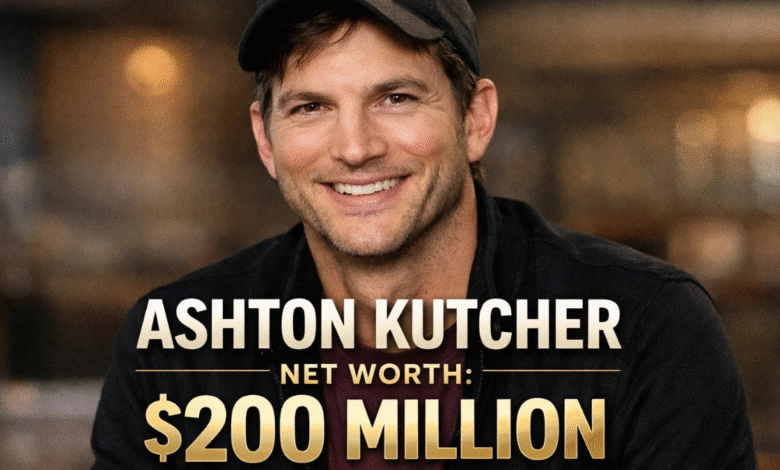
Ashton Kutcher Net Worth: The Actor, Investor, and Mogul Redefining Celebrity Wealth
Ashton Kutcher Net Worth is a name that instantly conjures images of a charming, goofy actor from classic sitcoms like That ‘70s Show. Yet, to define him solely by his Hollywood career is to miss the far more compelling story of a strategic mind that has quietly built one of the most impressive financial portfolios in modern celebrity. His journey from a biochemical engineering student in Iowa to a beloved television star, and ultimately to a powerhouse Silicon Valley investor, is a masterclass in career evolution and wealth generation. Today,
Ashton Kutcher’s net worth is a testament not to luck, but to a unique blend of foresight, risk tolerance, and a deep understanding of technological disruption. This figure, estimated to be well over $300 million, represents a fortune meticulously constructed beyond the glare of the paparazzi, in the boardrooms and seed rounds of the tech world. This article will dissect the multifaceted empire of Ashton Kutcher, moving beyond the basic salary figures to explore the investment philosophy, business ventures, and calculated risks that have solidified his status as a true financial authority and redefined what it means to be a wealthy celebrity in the 21st century.


The Foundation: Modeling and Early Acting Paydays
Long before venture capital, Ashton Kutcher’s initial foray into wealth began with a combination of serendipity and marketable looks. While studying engineering at the University of Iowa, he won a modeling competition, which led to signing with the prestigious Next modeling agency. This early work provided his first substantial income outside of odd jobs, introducing him to a world of commercial opportunity. The real seismic shift, however, came with his iconic role as Michael Kelso on That ‘70s Show. While not a massive earner initially, the show’s enduring success in syndication has provided a steady, lifelong stream of residual income, forming a reliable financial bedrock.
His transition to film with movies like Dude, Where’s My Car? and Just Married solidified his box-office draw, commanding salaries in the low millions per picture. The true inflection point in his entertainment earnings was his role as Walden Schmidt on Two and a Half Men, where he reportedly earned a staggering $700,000 per episode. These acting roles collectively built a foundation of tens of millions of dollars, capital which became the crucial fuel for his future ambitions. It was this pool of Hollywood-earned capital that he would astutely leverage to build something far more substantial and enduring.
The Pivot Point: From Actor to Tech Investor and Visionary
A common misconception is that Ashton Kutcher stumbled into tech investing as a hobby. In reality, it was a deliberate and studied pivot. His early curiosity about the internet led him to explore emerging platforms, and he quickly grasped their potential to reshape communication and commerce. He famously hired a personal tutor to school him in the intricacies of the tech startup ecosystem, treating it with the same dedication as a new acting role. This proactive education demystified Silicon Valley and allowed him to engage with founders on their own intellectual turf, moving beyond celebrity endorsement to genuine partnership.
His first major, public-facing step into this world was co-founding Katalyst Media in 2000, a production company focused on digital content. While its success was mixed, it served as a critical learning lab for the digital media landscape. The true visionary leap came with his early investment in Skype in 2009. Alongside other investors, he bet on a voice-over-IP service that was acquired by Microsoft for $8.5 billion, netting him a return reported to be in the tens of millions. This wasn’t just a lucky bet; it was a signal that Kutcher possessed a sharp eye for disruptive network effects, a theme that would define his entire investment thesis moving forward.
A-Grade Investments: The Venture Capital Powerhouse
To understand the scale of Ashton Kutcher’s net worth, one must look to A-Grade Investments, the venture firm he founded with talent manager Guy Oseary and billionaire Ron Burkle in 2010. This was the vehicle that transformed him from a savvy angel investor into an institutional force. A-Grade’s strategy was uniquely positioned at the intersection of pop culture and cutting-edge technology, leveraging the partners’ network and marketing intuition to identify consumer-facing tech trends before they became mainstream. The firm’s portfolio reads like a roadmap of the 2010s digital revolution, featuring legendary successes that have massively amplified Kutcher’s financial standing.
The fund’s most celebrated win is its early investment in Airbnb. A-Grade led a significant seed round for the home-sharing platform when it was still a niche concept, an investment that reportedly turned roughly $30 million into over $120 million upon the company’s IPO. Similarly, their prescient bet on Uber, participating in a 2011 Series B round, generated returns estimated to be in the nine-figure range for the fund. Other landmark investments include Spotify, Pinterest, and Warby Parker. The performance of A-Grade is the single largest contributor to the exponential growth of Ashton Kutcher net worth, proving his ability to systematically identify and back generation-defining companies.
Sound Ventures: The Evolution into a Institutional Fund
Following the monumental success of A-Grade, Kutcher and Oseary launched Sound Ventures in 2015. This marked a maturation of their strategy, evolving from a friends-and-family style fund into a more traditional, structured venture capital firm with outside limited partners. Sound Ventures manages hundreds of millions in capital and focuses on a broader thesis, including artificial intelligence, frontier technology, and biotechnology. This shift demonstrates Kutcher’s commitment to being a lifelong investor, not just a celebrity dabbler, and ensures his wealth generation continues at an institutional scale.
Sound Ventures’ portfolio includes heavy-hitters like the AI research company OpenAI, the fintech giant Robinhood, and the aerospace manufacturer SpaceX. The firm also made a highly publicized investment in Neighborly, a municipal bonds platform, showcasing a willingness to explore less glamorous but fundamentally important markets. By building Sound Ventures, Kutcher has ensured his investment activities are sustainable, scalable, and insulated from the volatility of an acting career. The firm is now a permanent fixture in Silicon Valley, a key pillar supporting and growing Ashton Kutcher’s net worth for decades to come.
Ongoing Entertainment Income and Production Work
Despite his deep tech involvement, Ashton Kutcher has never fully abandoned the entertainment industry, which continues to provide significant income. His role as a producer and host on the hit Netflix series The Ranch combined both upfront salary and backend points, a lucrative package. Furthermore, his long-running role as the co-host and producer of Shark Tank-style venture capital show Beyond the Tank keeps him in the public eye while synergistically reinforcing his brand as an investment expert. These roles are strategically chosen, often blending his dual identities.
His production company, Katalyst, may have evolved, but Kutcher remains involved in content creation that aligns with his interests. More importantly, his Hollywood profile grants him unparalleled access and deal flow in the tech world. Founders are eager to partner with a investor who can offer not just capital, but massive promotional power and branding expertise. This creates a virtuous cycle: his entertainment fame fuels his investment success, which in turn elevates his prestige and earning power in entertainment. It’s a self-reinforcing ecosystem that continuously feeds his overall wealth.

Real Estate and Tangible Asset Portfolio
Like many ultra-high-net-worth individuals, a portion of Ashton Kutcher’s net worth is anchored in tangible assets, particularly luxury real estate. His property portfolio reflects a blend of personal taste and investment savvy. For years, he and his former wife, actress Mila Kunis, owned a stunning, sustainably-built home in the Beverly Hills area, which they sold in 2022 for a reported $10 million. They also purchased a sprawling $10 million ranch property in Santa Barbara, offering privacy and a connection to nature, a stark contrast to the tech hub of Los Angeles.
These properties are more than just homes; they are significant stores of value and, in the case of the ranch, a potential long-term family asset. While not as explosively growth-oriented as his venture investments, a well-curated real estate portfolio provides stability, tax advantages, and diversification. It acts as a hedge against the inherent volatility of startup investing and the fluctuating income of an acting career. This tangible asset base ensures that his wealth is not entirely dependent on the success of illiquid, private company shares, showcasing a holistic approach to asset management.
Philanthropy and Impact-Driven Investments
Ashton Kutcher’s financial narrative is incomplete without acknowledging his profound commitment to philanthropy and social impact. He co-founded Thorn: Digital Defenders of Children in 2012 with then-wife Demi Moore, leveraging his tech expertise to combat online child sexual exploitation. Thorn builds software tools used by law enforcement to identify victims and track perpetrators, a cause Kutcher has advocated for passionately before the U.S. Congress. This work represents a significant allocation of his time, resources, and personal capital, reflecting a deep desire to use his platform and skills for societal good.
His impact investing also extends to his venture portfolio. He has shown a consistent interest in backing companies that solve real human problems, from Airbnb’s model of unlocking economic opportunity for homeowners to Uber’s transformation of urban mobility. In a way, his entire investment thesis can be seen as impact-oriented, focusing on technologies that disrupt stale industries and empower individuals. This blend of traditional charitable giving and mission-driven investing demonstrates a modern approach to wealth, where generating financial returns and creating positive change are not mutually exclusive goals.
Public Persona and Brand Endorsements
The Ashton Kutcher brand itself is a valuable commercial asset. His authentic transition from “pretty boy” actor to respected tech thinker has made him an incredibly compelling figure for certain endorsements. He has served as a product strategist and brand ambassador for Lenovo, a role that specifically utilized his tech credibility rather than just his face. He was also the face of Nikon cameras for a time, aligning with his known interest in photography. These deals, while likely not the largest contributors to his net worth, are highly lucrative and low-time-commitment additions to his income stream.
More importantly, his public persona directly benefits his core investment activities. His massive social media following and continued media presence give any startup he backs an immediate publicity boost. This “Kutcher Effect” can be worth millions in equivalent marketing spend, making his venture capital firm uniquely attractive to founders. He has meticulously managed his reputation, avoiding scandal and cultivating an image of intelligent curiosity. This carefully maintained brand equity is an intangible yet powerful asset that compounds the value of all his other endeavors, further solidifying the impressive scale of Ashton Kutcher’s net worth.
Comparative Wealth Analysis: Kutcher Versus Traditional Hollywood A-Listers
To fully appreciate the uniqueness of Ashton Kutcher’s financial journey, it is instructive to compare his wealth generation model to that of traditional Hollywood A-list actors. While top-tier stars like Dwayne “The Rock” Johnson or Robert Downey Jr. command enormous upfront salaries (often $20 million+ per film) and profit participation, their wealth is overwhelmingly tied to their continuous labor in front of the camera. Their net worth, while colossal, is primarily a function of their extreme per-project earnings and personal brand licensing. Kutcher’s path represents a fundamental shift from trading time for money to having capital work for him.
The following table illustrates this key dichotomy in wealth structure:
| Wealth Dimension | Traditional Hollywood A-Lister (e.g., A-List Movie Star) | Ashton Kutcher’s Model |
|---|---|---|
| Primary Wealth Source | Upfront salaries, box-office profit participation, endorsements. | Venture capital investment returns, ownership of company equity. |
| Wealth Character | Active, Linear Income. High earnings directly tied to ongoing work and star power. Requires constant output. | Passive, Exponential Growth. Capital gains from assets that grow independently of daily work. |
| Scalability | Limited by time; one can only star in so many films per year. | Highly scalable; one investment can appreciate 100x without additional time input. |
| Long-Term Trajectory | May peak and decline with career popularity, though residuals provide longevity. | Designed for perpetual growth; fund structures and equity can appreciate for decades. |
| Industry Risk | Highly exposed to the volatility of Hollywood trends and personal marketability. | Diversified across the global technology sector, uncorrelated with entertainment. |
This comparison underscores why Ashton Kutcher net worth is so distinctive. He has built a financial engine that operates independently of his celebrity, one that continues to grow whether he is on a film set or not. As venture capitalist and LinkedIn co-founder Reid Hoffman once observed of such transitions, “The most successful celebrity investors are those who approach it with the discipline of a student and the strategic patience of a founder.” Kutcher embodies this principle, having studied the field and built a lasting institution in Sound Ventures.
Common Misconceptions and Strategic Clarifications
A prevalent myth is that Ashton Kutcher’s investment success is merely a product of his fame, allowing him privileged access to “sure thing” deals. This drastically undersells his acumen. While access is a benefit, it is worthless without the analytical skill to pick winners from the thousands of pitches received. Many celebrities have money and access but have lost fortunes on bad tech bets. Kutcher’s success stems from a disciplined thesis focused on consumer platforms with network effects, a deep partner network in Guy Oseary and Ron Burkle, and a genuine, grunt-work approach to due diligence that many celebrity investors lack.
Another misconception is viewing his investments as lucky, one-off bets like Skype. The reality is a story of systematic, fund-based investing. A-Grade and Sound Ventures are structured funds that make dozens of bets, knowing many will fail, but a few will generate outsized returns that cover all losses and create enormous wealth. This is the core of venture capital math, and Kutcher has mastered it. His journey is not about picking a single winner, but about building a portfolio and an institution designed to repeatedly find and fund disruptive innovation over multiple economic cycles.
The Future Trajectory of Wealth Growth
Looking forward, the trajectory of Ashton Kutcher’s net worth is poised for continued, likely accelerated, growth. Sound Ventures’ focus on frontier technologies like artificial intelligence and biotechnology places it at the epicenter of the next wave of innovation. Investments in companies like OpenAI position him to benefit from the AI revolution in a way that could dwarf even the returns from the social media era. His wealth is now intrinsically linked to the growth of the global tech ecosystem, which shows no signs of slowing its pace of transformation.
Furthermore, his own evolution as an investor suggests he may expand into later-stage private equity, public market investing, or even launching a family office to manage his now vast personal fortune. He may also increase his role in philanthropy through the Chan Zuckerberg Initiative-esque model, using his tech mindset to tackle large-scale social problems. One thing is certain: Ashton Kutcher will not be resting on his laurels. His career has been a continual narrative of learning and adapting, and his financial strategies will undoubtedly follow the same pattern, ensuring that his net worth figure is a moving target, ever upward.
Conclusion: Redefining Celebrity Wealth in the Digital Age
Ashton Kutcher’s financial story is far more than a tabloid headline about a rich actor. It is a blueprint for the modern mogul. He has demonstrated that celebrity, when coupled with genuine intellectual curiosity, strategic discipline, and a high tolerance for risk, can be leveraged to build an empire that transcends its origin. Ashton Kutcher’s net worth, estimated at over $300 million, is not merely a number but a reflection of a successfully executed pivot from trading time for money in Hollywood to having capital and insight work relentlessly on his behalf in the global arena of innovation.
His journey redefines what it means to be a wealthy celebrity in the 21st century. The old model of maximalist spending and flashy assets is being supplanted by a new paradigm of stealth wealth generation through equity, intellectual property, and foundational investments in the future. Kutcher stands as the archetype of this shift: a charismatic frontman who became a serious backstage architect of the digital world. His legacy will likely be less about the characters he played and more about the companies he helped build, the technologies he helped scale, and the powerful example he set for leveraging fame not as an end, but as a starting capital for building something truly enduring and transformative.
Frequently Asked Questions (FAQs)
How much is Ashton Kutcher’s net worth currently?
As of the latest reliable estimates from financial publications and analyses of his investment portfolio, Ashton Kutcher’s net worth is conservatively estimated to be over $300 million. This figure is a composite of his residual acting income, production fees, real estate holdings, and most significantly, the enormous returns from his venture capital funds, A-Grade Investments and Sound Ventures.
What is Ashton Kutcher’s most successful investment?
While his early bet on Skype was a major public win, his most successful investment in terms of sheer scale and return is widely considered to be his fund’s early investment in Airbnb through A-Grade. This single investment is reported to have returned over $100 million on an initial outlay, representing a monumental win that fundamentally altered the scale of his wealth and cemented his reputation in Silicon Valley.
Does Ashton Kutcher still make money from That ‘70s Show?
Yes, Ashton Kutcher continues to earn substantial residual income from That ‘70s Show. Syndication royalties for hit television series provide lifelong revenue streams for principal cast members. Every time the show airs in reruns on cable, streaming platforms like Netflix, or through syndication deals, Kutcher and his co-stars receive payments, contributing a steady, passive flow to his overall income.
How did Ashton Kutcher get into venture capital?
Kutcher’s entry into venture capital was deliberate and studious. After an early interest in internet companies, he proactively educated himself about startups and investing. His first major angel investment was in Skype in 2009, which yielded a huge return. This success, combined with his partnership with savvy businessman Guy Oseary, gave him the confidence and track record to formally launch the venture fund A-Grade Investments in 2010, marking his official transition into the VC world.
What percentage of Ashton Kutcher’s net worth comes from acting versus investing?
The vast majority of Ashton Kutcher’s net worth likely 85% or more is now derived from his venture capital investments and the exponential returns from companies like Airbnb, Uber, and Spotify. While his acting career provided the initial capital (tens of millions) and continues to offer income, it was the strategic deployment of that capital into tech startups that multiplied it many times over, making investments the dominant source of his fortune.
You may also read
The Truth About Ruth Jones Net Worth: The Million-Dollar Empire Built on Grit and Gavin & Stacey