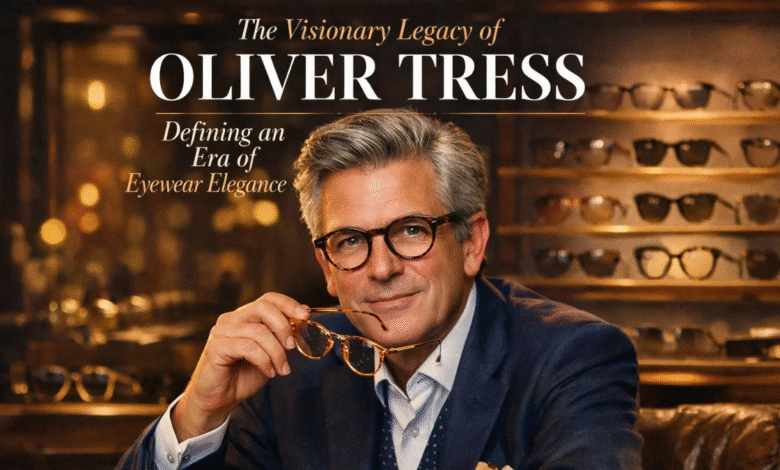
The Visionary Legacy of Oliver Tress: Defining an Era of Eyewear Elegance
Oliver Tress: In the world of luxury eyewear, few names carry the weight, mystique, and enduring influence of Oliver Tress. To many, the name is synonymous with the iconic brand Oliver Peoples, a label that revolutionized how the world perceives glasses—transforming them from mere vision correction tools into paramount symbols of style, identity, and artistry. Yet, the man behind the name, Oliver Tress, remains an enigmatic figure, a visionary whose quiet dedication to craft over clamor built an empire rooted in authenticity and timeless design.
His story is not one of loud marketing campaigns or fleeting trends, but of a profound respect for heritage, an obsessive attention to detail, and an almost alchemical understanding of the relationship between face, frame, and personality. This article delves deep into the legacy of Oliver Tress, exploring how his philosophy created a benchmark for luxury eyewear that continues to resonate decades later, influencing countless other brands while maintaining its unique, coveted position on the bridges of noses from Rodeo Drive to the streets of Tokyo.


The journey of Oliver Tress is inextricably linked to the cultural tapestry of Los Angeles in the 1980s. It was a time of excess, bold expression, and a burgeoning fascination with vintage aesthetics. Into this landscape, Tress introduced a concept that felt both novel and nostalgically familiar: eyewear as a carefully curated, historically informed fashion statement.
He didn’t just sell glasses; he offered a narrative. Each frame told a story, drawing inspiration from the golden age of Hollywood, classic American design, and European craftsmanship. The success of Oliver Peoples, and by extension the enduring fascination with Oliver Tress himself, lies in this powerful confluence—where the past is meticulously reimagined for the present, creating pieces that feel instantly classic yet perpetually contemporary. It’s a legacy built not on the loud pronouncements of a founder, but on the whispered quality of acetate, the precise hinge of a temple, and the subtle curve of a lens.
The Origins and Philosophy of a Quiet Visionary
The foundation of what would become the Oliver Tress legend was laid not in a corporate boardroom, but in a small, unassuming boutique on Sunset Boulevard in West Hollywood in 1986. Co-founded with his brother Dennis, the original Oliver Peoples store was more than a retail space; it was a carefully constructed environment that reflected Oliver Tress’s core philosophy.
The store was designed to feel like a vintage optician’s office, filled with antique examination equipment and wooden display cases, creating an atmosphere of trust, expertise, and timeless style. This was a deliberate contrast to the sterile, mass-market optical shops of the time. Tress understood that buying luxury eyewear was an intimate experience, a personal choice that required guidance, patience, and a deep knowledge of the product.
Central to the philosophy of Oliver Tress was an almost archival approach to design. He was a passionate collector of vintage eyewear, scouring flea markets and auctions for frames from the 1920s through the 1960s. These pieces weren’t mere relics; they were his library, his source code. He studied their proportions, their material aging, and their construction techniques. This relentless research informed the first Oliver Peoples collections, which were less about invention and more about exquisite reinterpretation.
The goal was never to create a literal replica, but to capture the spirit of a bygone era—the glamour of Old Hollywood, the intellectuality of mid-century modernism, the rebelliousness of the jazz age—and refine it with modern manufacturing techniques and superior materials. For Oliver Tress, quality was non-negotiable. He insisted on using premium acetate from Italy, hand-polishing each frame to a specific luster, and ensuring comfort and durability that fast-fashion eyewear could never match. This commitment positioned an Oliver Peoples frame not as an accessory, but as an heirloom.
The Design Ethos: Where Craft Meets Character
Delving into the design ethos championed by Oliver Tress reveals a set of principles that became the brand’s secret language. First and foremost was the concept of “face culture.” Tress and his early team, including legendary designer Larry Leight, who was instrumental in shaping the brand’s aesthetic, believed that the right frame should harmonize with and enhance the wearer’s unique facial structure and personality. This was a departure from the one-size-fits-all approach.
The iconic shapes associated with Oliver Peoples—the O’Malley, the Sheldrake, the M-4—were born from this philosophy. They are not overly logo-driven or ostentatious; their identity is in their silhouette, their subtle keyhole bridges, their sculpted temples, and their nuanced color palettes.
The materials and construction tell another part of the story. Oliver Tress insisted on a level of craftsmanship that is felt as much as it is seen. As one industry insider noted, “The hinge on an Oliver Peoples frame has a specific sound and motion—a smooth, weighted click that signals quality.” The acetate is layered, not solid-colored, allowing for depth and variation that changes with light, much like a precious stone. Colors were never garish; they were given evocative names like “cognac,” “honey vintage,” and “black velvet,” reflecting a natural, sophisticated elegance. This table illustrates the core pillars of the Oliver Tress design ethos:
| Design Pillar | Description | Manifestation in Frames |
|---|---|---|
| Historical Authenticity | Deep research and reverence for vintage styles from 1920s-1960s. | Classic shapes like round, cat-eye, and wayfarer derivatives with period-accurate details. |
| Archival Quality | Use of premium, often vintage-sourced materials and construction meant to last for decades. | Italian Mazzucchelli acetate, hand-polishing, metal core wires in temples for strength. |
| Subtle Branding | Discreet, intelligent branding that doesn’t overpower the design. | Tiny, engraved script on the interior of the temple or subtle metal insignia. |
| Wearer-Centric Design | Frames designed to complement individual facial architecture and personal style. | Multiple sizing, nuanced bridge and temple designs for universal fit and comfort. |
| Narrative Color | Colorways that tell a story and develop a natural patina over time. | Layered acetate tones, sun-fading effects, and classic tortoiseshell patterns. |
This meticulous approach ensured that every pair bearing the Oliver Tress influence was not a disposable trend item, but a companion for the discerning individual. It was eyewear designed for a lifetime, meant to develop a personal patina and become part of the wearer’s own story—a concept that is at the very heart of sustainable luxury, though the brand never needed to loudly proclaim it.
Cultural Impact and the Hollywood Connection
The rise of Oliver Peoples and the mystique of Oliver Tress are deeply intertwined with the culture of Hollywood, but in a uniquely organic way. This was not a story of paid celebrity endorsements or product placement deals. Instead, it was a genuine embrace by the creative community—stylists, costume designers, actors, and directors—who discovered the brand’s West Hollywood boutique.
They recognized in Oliver Tress’s creations something that other eyewear brands lacked: a sense of character and history that could instantly define a role or complete a personal look off-screen. The frames possessed a chameleon-like quality; they could convey intelligence, mystery, rebellion, or sophistication depending on the context and the wearer.
This symbiotic relationship propelled the brand to global fame. In the late 80s and throughout the 90s, Oliver Peoples frames began appearing on the faces of Hollywood’s most influential figures. Johnny Depp, Brad Pitt, Winona Ryder, and Tom Cruise were often photographed wearing them, both in films and in their personal lives. Perhaps one of the most significant moments was the appearance of the now-legendary “O’Malley” model on actor John Malkovich.
The frame’s intellectual, slightly eccentric aesthetic perfectly complemented his persona, cementing its status as an icon. Costume designers for films like “Fear and Loathing in Las Vegas” and “Men in Black” turned to Oliver Peoples to build character authenticity. As a noted stylist once remarked:
“Oliver Tress understood something fundamental: glasses are the first thing you notice on a face. They are a window into a character’s soul, or a shield to hide behind. The frames from Oliver Peoples never looked like costumes; they looked like they belonged to the person.”
This authentic, grassroots adoption by taste-makers created an aura of exclusive cool around the brand. It wasn’t about being seen with a logo; it was about being in the know—about understanding the reference, appreciating the craft, and choosing a frame that felt personally authentic. This cultural cachet, carefully cultivated by Oliver Tress’s focus on product over promotion, turned Oliver Peoples into a global phenomenon and set a new standard for how luxury eyewear could integrate into popular culture.
The Evolution and Expansion of an Empire
The journey from a single Sunset Boulevard boutique to a global luxury powerhouse required strategic evolution, all while staying true to the core principles established by Oliver Tress. A pivotal moment came with the involvement of designer Larry Leight, whose creative vision became instrumental in defining the brand’s signature aesthetic for decades.
Under this leadership, the brand expanded its offerings, introducing the now equally iconic subsidiary line, Oliver Peoples OV939, named after the brand’s original phone number. This line often played with more contemporary, fashion-forward interpretations of the classic DNA, appealing to a newer generation while maintaining quality.
The acquisition of Oliver Peoples by the global luxury conglomerate Luxottica in 2006 marked a significant chapter. For purists, there was concern that the brand’s soul might be diluted. However, the transition was largely managed with respect for its heritage. The design studio remained in Los Angeles, and the commitment to quality materials and craftsmanship was upheld.
The global distribution and logistical power of Luxottica allowed the Oliver Tress philosophy to reach an international audience on an unprecedented scale. Furthermore, the brand continued to innovate under the corporate umbrella, launching collaborations that felt organic, such as partnerships with Japanese fashion houses, which honored a shared commitment to meticulous craft.
Simultaneously, the legacy of Oliver Tress inspired a new generation of independent eyewear brands. The success of Oliver Peoples proved there was a vast market for high-quality, design-driven frames outside the traditional optical mainstream. It paved the way for the “independent eyewear movement,” encouraging designers to focus on niche aesthetics, artisanal production, and direct-to-consumer storytelling. In many ways, every contemporary brand that emphasizes “handcrafted acetate” or “vintage-inspired design” owes a debt to the path forged by Oliver Tress.
His legacy is not frozen in the 1980s; it is a living, evolving standard that continues to shape the industry, proving that timeless design and uncompromising quality have a permanent place in the market.
Oliver Tress Today: A Living Standard in Modern Eyewear
In the contemporary eyewear landscape, where trends can be born and die on social media in a matter of weeks, the philosophy of Oliver Tress stands as a beacon of permanence. The brand that bears his name continues to operate with the same foundational values, even as it navigates the digital age. For the modern consumer, an Oliver Peoples frame represents a conscious choice against fast fashion. It is an investment in an object of design that is meant to last, to age gracefully, and to become a signature part of one’s personal style over the years, not just a season.
The process of discovering and acquiring a frame has evolved, but the ethos remains. While the original boutique experience is still revered, the brand’s online presence and authorized dealers worldwide strive to translate that sense of discovery and expertise. The narrative is still central; lookbooks and campaigns often evoke a cinematic feel, telling stories of Los Angeles light, artistic pursuit, and individual character. The designs continue to balance reverence for the archives with subtle innovation, introducing new materials like titanium and modern lens technologies while ensuring the classic silhouettes remain untouched in their essence.
Ultimately, the story of Oliver Tress is a masterclass in building a legacy on substance. It reminds us that in a world of noise, quiet confidence, unwavering quality, and a deep respect for history can create not just a brand, but an icon. The frames are more than products; they are touchstones of a particular aesthetic intelligence. They ask the wearer to consider not just how they look, but who they are and what story they want to tell. As we move further into the 21st century,
this human-centric, craft-obsessed approach feels more relevant than ever. The name Oliver Tress may not be on every billboard, but his vision is on the faces of those who understand that true style is not about being seen with the right label, but about being seen through the right lens—a lens crafted with intention, history, and an unparalleled eye for beauty.
Conclusion: The Enduring Reflection of a Visionary
The narrative of Oliver Tress is ultimately a testament to the power of a singular, unwavering vision. In an industry often swayed by the winds of fast-paced trends and aggressive marketing, Tress built an empire on the bedrock of authenticity, craftsmanship, and timeless narrative. He recontextualized eyewear, moving it from the realm of medical necessity or flashy accessory into the domain of personal heritage and sophisticated design.
The frames that emerged from his philosophy are not merely worn; they are experienced. They engage the senses—the weight on the face, the sound of the hinge, the depth of the acetate—and they engage the intellect, offering a connection to design history and cinematic lore.
Today, as we look at the crowded landscape of luxury goods, the legacy of Oliver Tress serves as a crucial reminder. It proves that deep authenticity cannot be fabricated, that quality communicated through touch and experience will always find its audience, and that building a story around a product is infinitely more powerful than simply slapping a logo on it.
The man himself may prefer the background, letting the products speak for themselves, but his influence is indelibly etched onto the face of modern style. To choose a frame born from the world of Oliver Tress is to participate in a continuing story of elegance, character, and impeccable taste—a story that began on a quiet stretch of Sunset Boulevard and now reflects beautifully on faces across the globe.
Frequently Asked Questions About Oliver Tress
Who exactly is Oliver Tress?
Oliver Tress is the co-founder and namesake of the iconic luxury eyewear brand Oliver Peoples. Alongside his brother Dennis, he opened the first Oliver Peoples boutique in West Hollywood in 1986. He is renowned as a visionary in the eyewear industry, shifting the perception of glasses from simple vision correction to essential, crafted fashion items.
His philosophy was rooted in a deep appreciation for vintage American and European eyewear design, superior materials, and an intimate, personalized retail experience. While he maintains a relatively low public profile, his influence and exacting standards defined the brand’s DNA and set a new benchmark for luxury eyewear globally.
What makes Oliver Peoples frames so special and expensive?
The distinctiveness and value of Oliver Peoples frames lie directly in the principles established by Oliver Tress. They are not mass-produced; they involve high-level craftsmanship using premium materials like Italian Mazzucchelli acetate, which is layered for depth and color variation. Each frame undergoes extensive hand-finishing, polishing, and assembly.
The designs are the result of meticulous research into vintage styles, reinterpreted with modern ergonomics. Furthermore, the brand invests in subtle, intelligent details—from custom hinges to engraved temples—and offers a wide range of sizes to ensure a perfect, face-specific fit. You are paying for archival design, artisanal construction, and a timeless aesthetic that transcends seasonal trends.
Are Oliver Peoples and Oliver Tress the same thing?
While deeply connected, they are not precisely the same. Oliver Tress is the person, the co-founder and visionary, who established the brand’s core ethos. Oliver Peoples is the company and brand name he created. The name “Oliver Peoples” itself was inspired by two sets of vintage eyewear ledgers Tress discovered, one labeled “Oliver” and the other “Peoples.”
He combined them to create a brand name that evoked a sense of history and collective identity. So, when people refer to the style or quality of Oliver Peoples, they are inherently referring to the legacy and standards set by Oliver Tress.
How can I tell if my Oliver Peoples glasses are authentic?
Authenticating Oliver Peoples frames involves checking several details championed by Oliver Tress. First, examine the craftsmanship: authentic frames have flawless polishing, no mold lines or bubbles in the acetate, and smooth, precise hinge movement. Look for the branding: it is always subtle. You should find “Oliver Peoples” engraved in a distinctive, elegant script on the inside of the temple arm, often alongside the model name and size.
The “OP” logo on the temples is usually a small, metal plaque or a discreet etching. Authentic frames come with a high-quality case, a branded microfiber cloth, and documentation detailing the model and lens specifications. Purchasing from an authorized retailer is the best guarantee.
What is the future of the brand now that Oliver Tress is not directly involved?
Following the acquisition by Luxottica and as the brand has globalized, Oliver Tress has taken a less hands-on role. However, the brand’s future seems focused on stewarding its original legacy while adapting to a new era. The design headquarters remain in Los Angeles, and collections continue to draw from the vintage archives he helped build.
The brand expands through initiatives like the Oliver Peoples OV939 line and selective collaborations that align with its design values. The core commitment to quality materials and timeless, face-centric design—the very pillars of the Oliver Tress philosophy—continues to guide the brand, ensuring it remains a benchmark for luxury eyewear even as it evolves.
You may also read
The Enduring Enigma of Louise Dublin: Unraveling a Name’s Legacy